
Living First: Client-Led Design
As a designer you would think it would be difficult to work with clients who have design taste completely different than my own. I think in past years, you hired a designer based on their signature “look” that you wanted for your home. The designer was truly the hired expert. The look of that particular designer made it easy to envision what your rooms could transform to and certainly made the outcome predictable. But as they say, times have changed. Enter client led design. At Home by Tim + Chris our key philosophy is led by our clients, their stories and their lifestyle. As Jenis, our Lead Designer will also echo: “the timeless part of any design is the client. It’s about a collaborative approach that results in spaces that feel collected and cohesive.”We’ve long believed that great design begins with understanding who you are, what feels comfortable, inspiring, and meaningful.
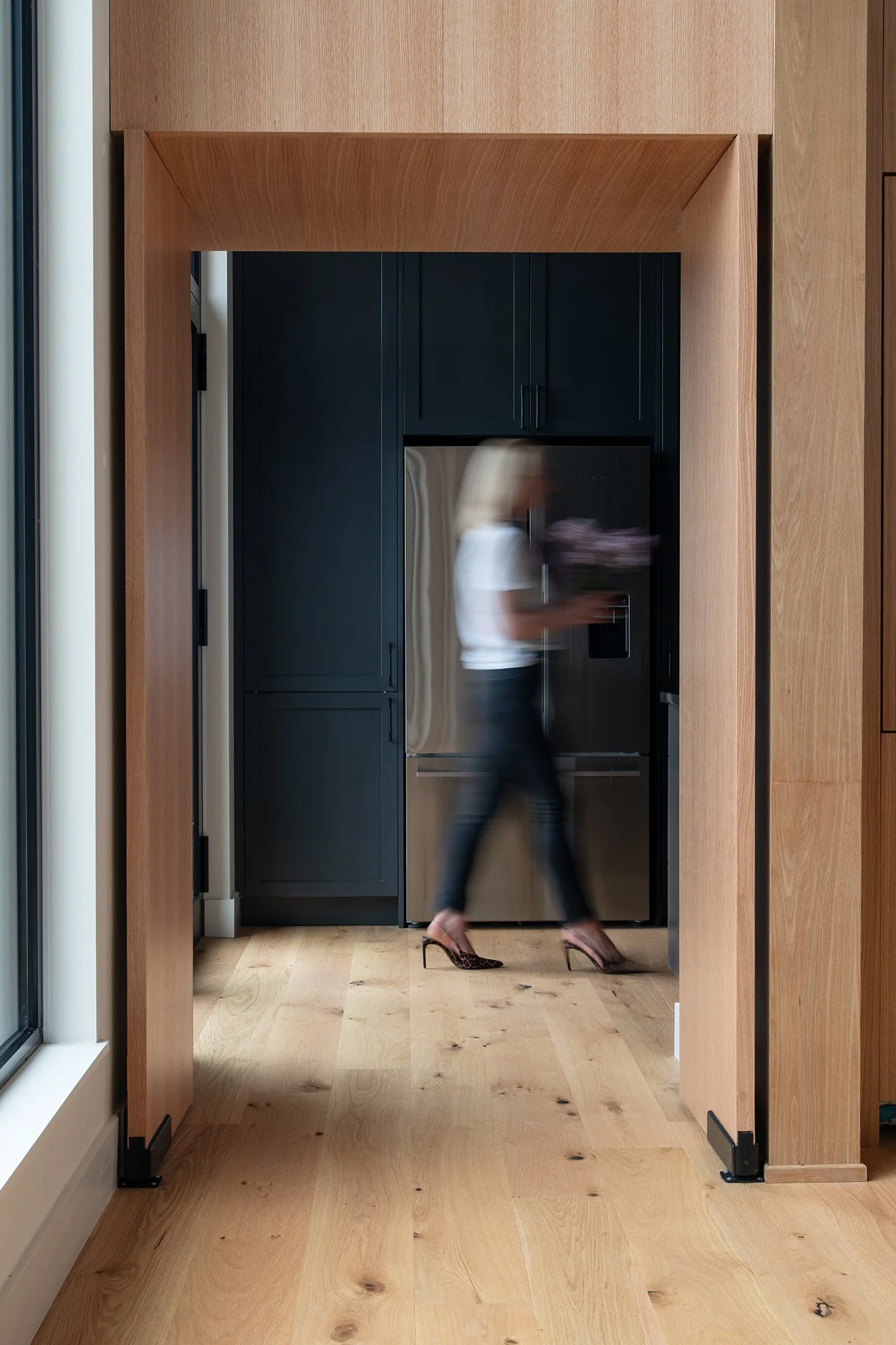
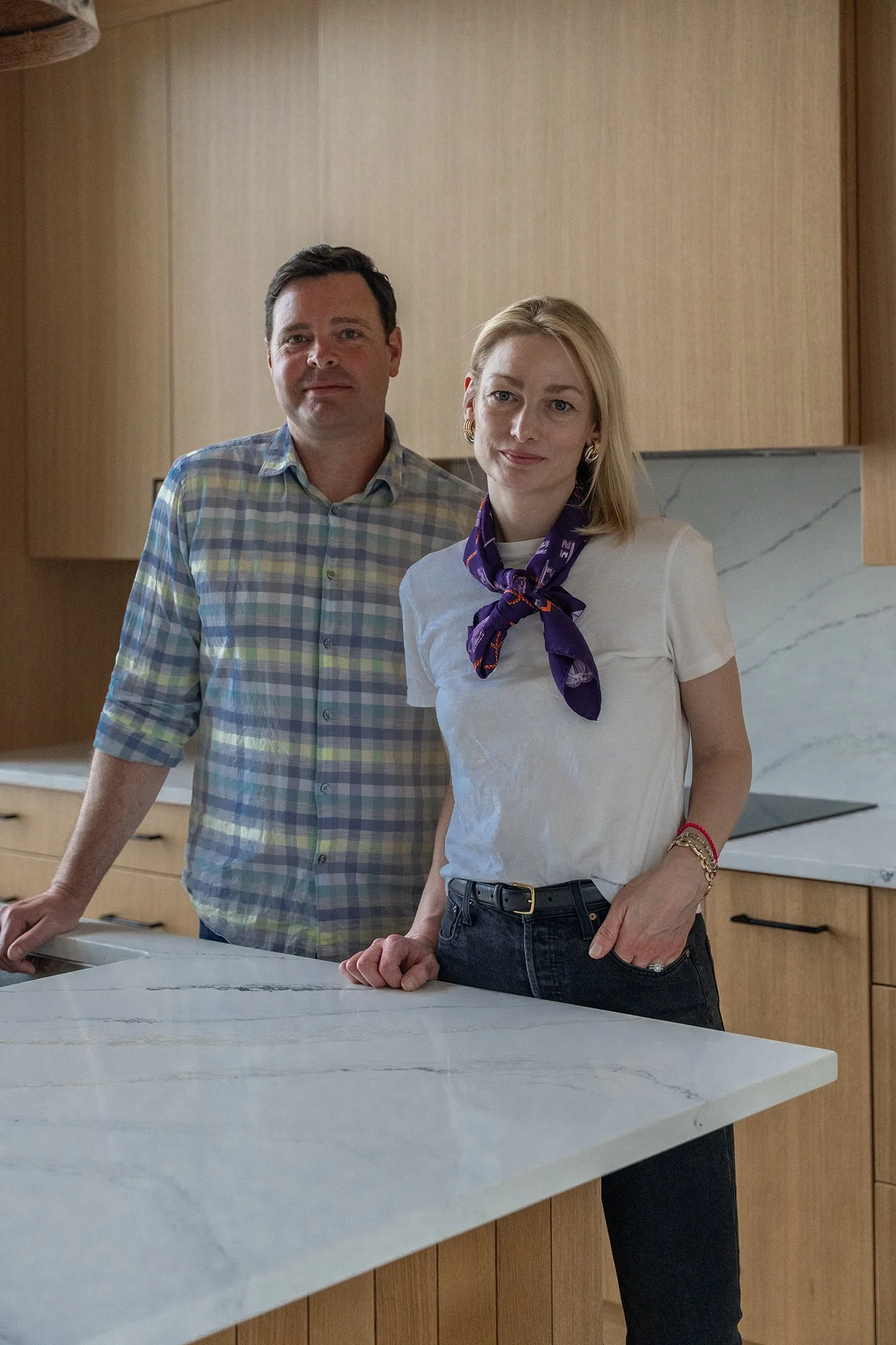
Jenis reiterates: “My design philosophy is that the most timeless part of any design is the client. Great design begins with understanding who you are, what feels comfortable, inspiring, and meaningful to you. My work is personal, thoughtful, and entirely unique to each home and family. My creative approach is collaborative, resulting in spaces that feel collected and cohesive.”
The Kawarthas is inspiring enough on its own however, applying both form and functionality to design also comes into play. Farm, town or lake, living in our region means adapting to seasonal weather, creating space for seasonal things, and finding low maintenance solutions for both interior and exterior home and cottage needs.
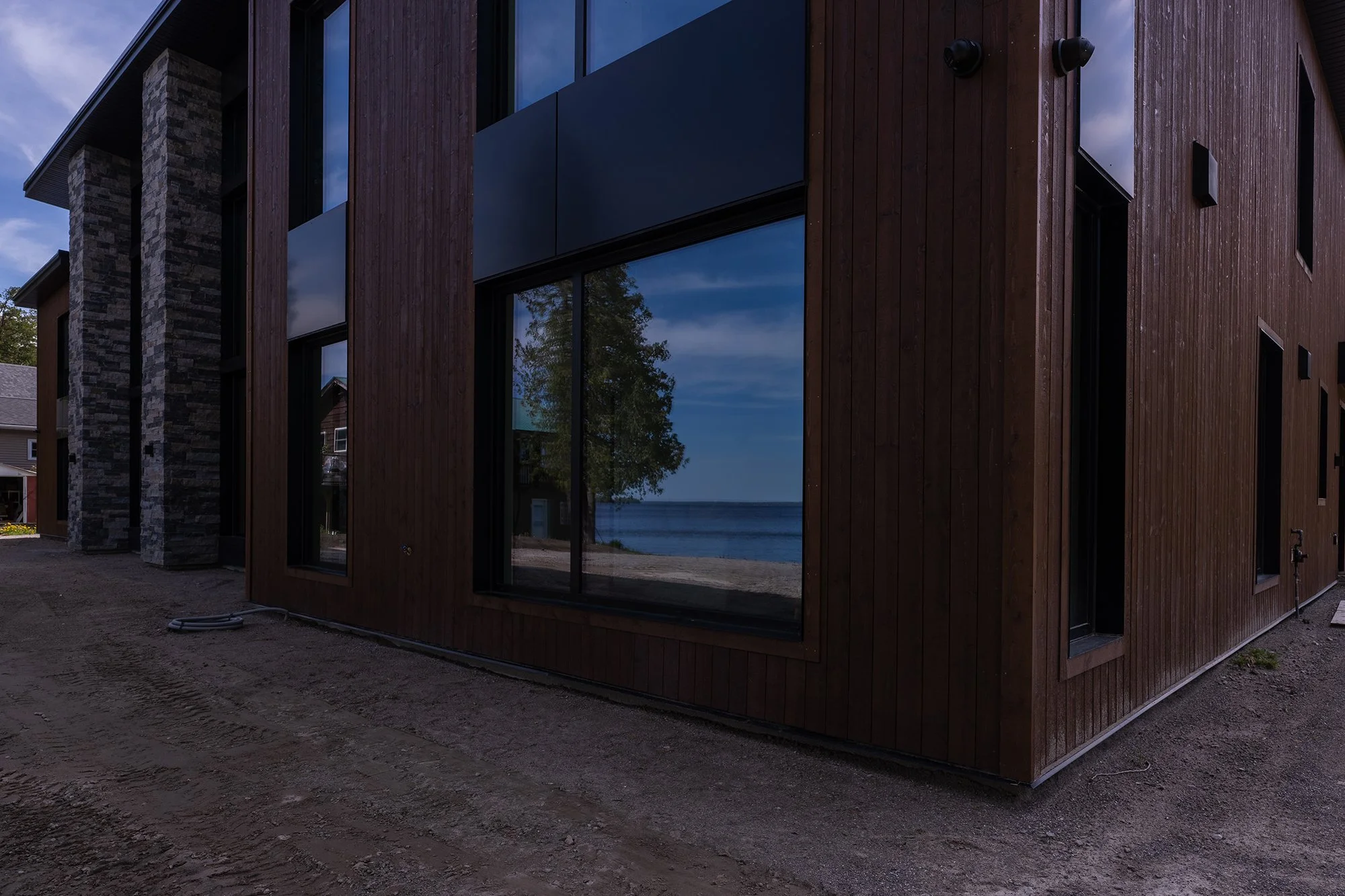
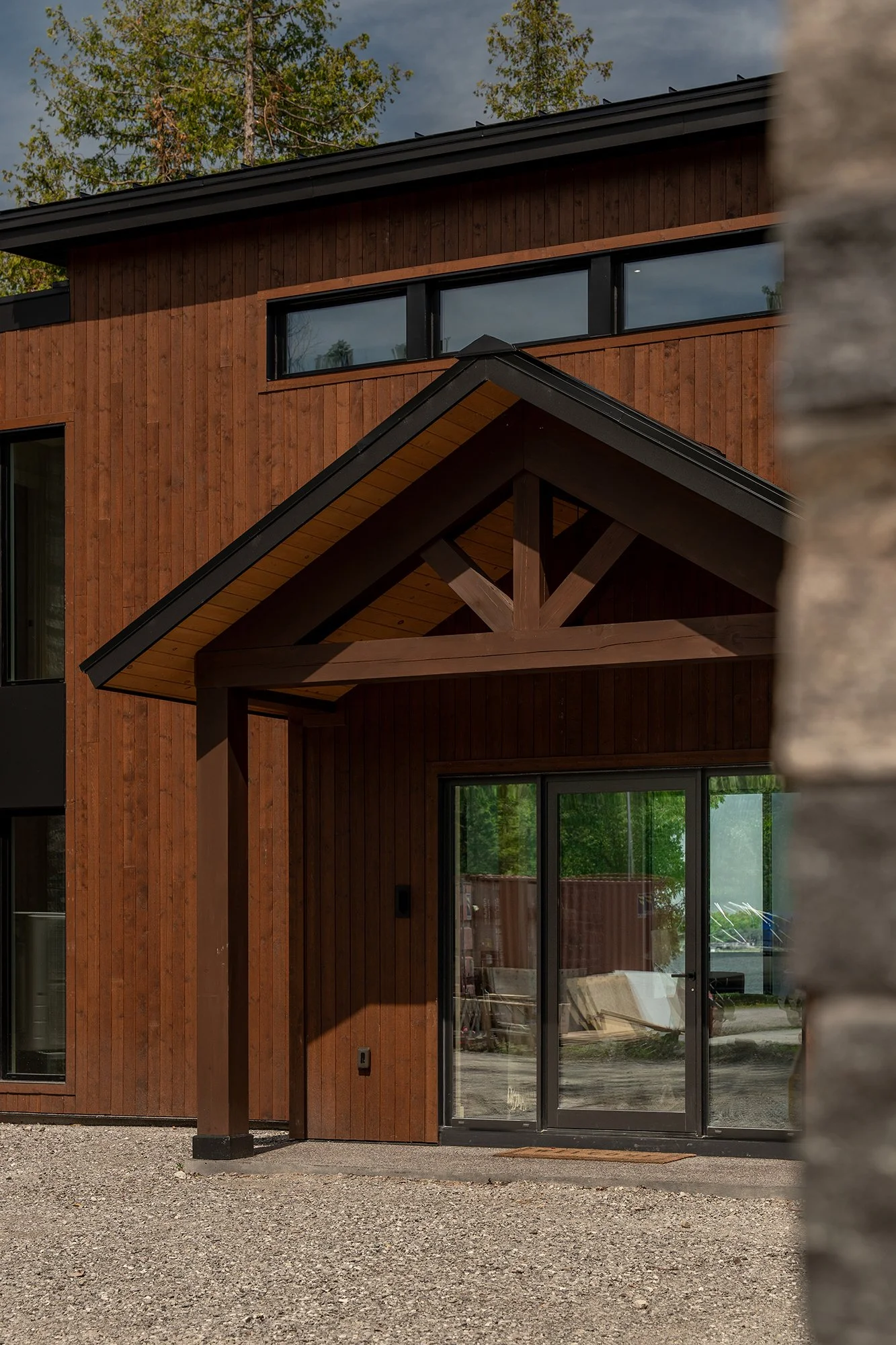
Cottage country design isn’t just about fitting a look into the area, it’s also about creating spaces that function across all four seasons. By balancing form and function, we design homes and cottages that not only reflect our client’s personal style and taste, but also feel practical, resilient, and deeply satisfying to live in year-round.
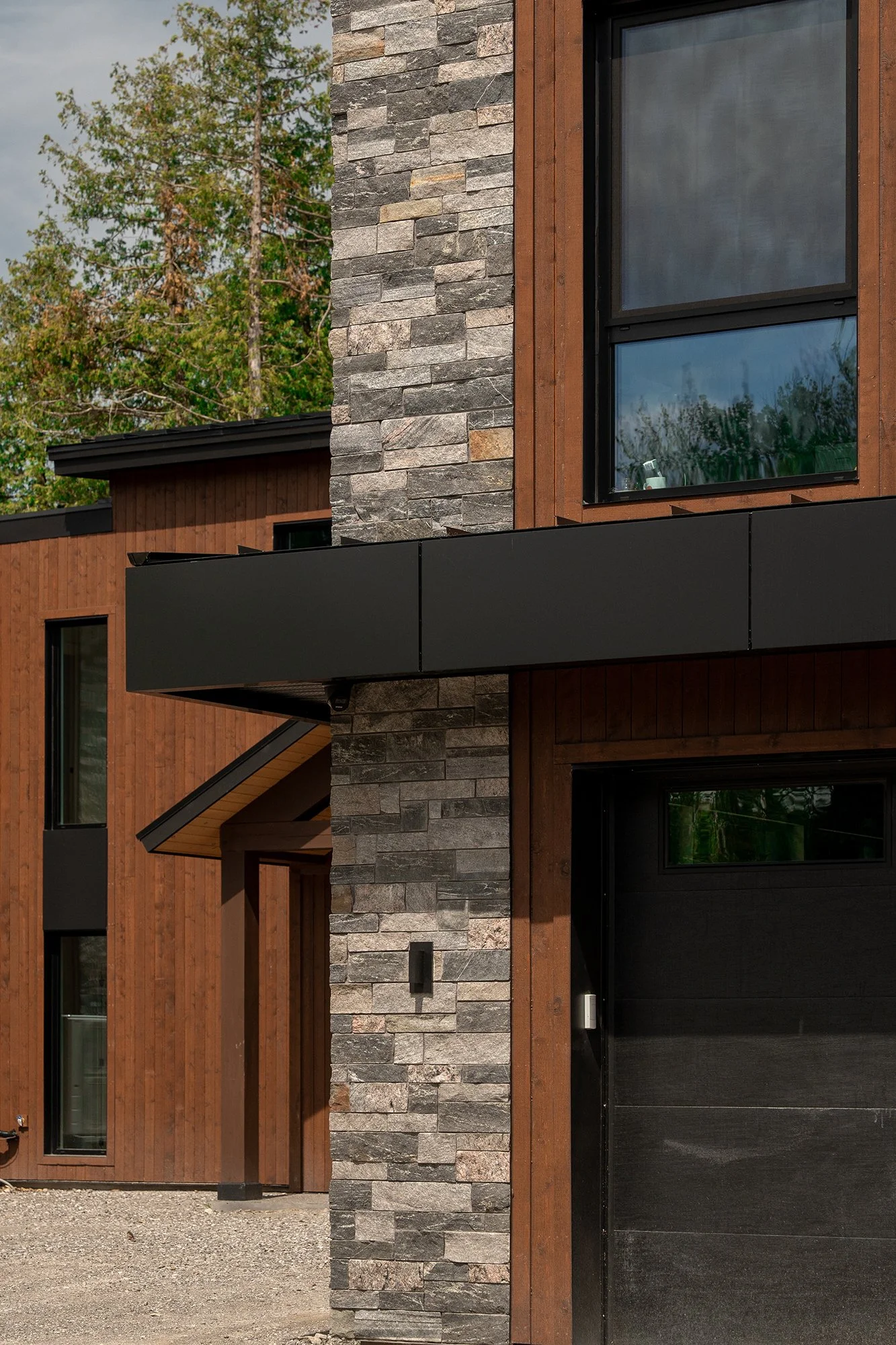
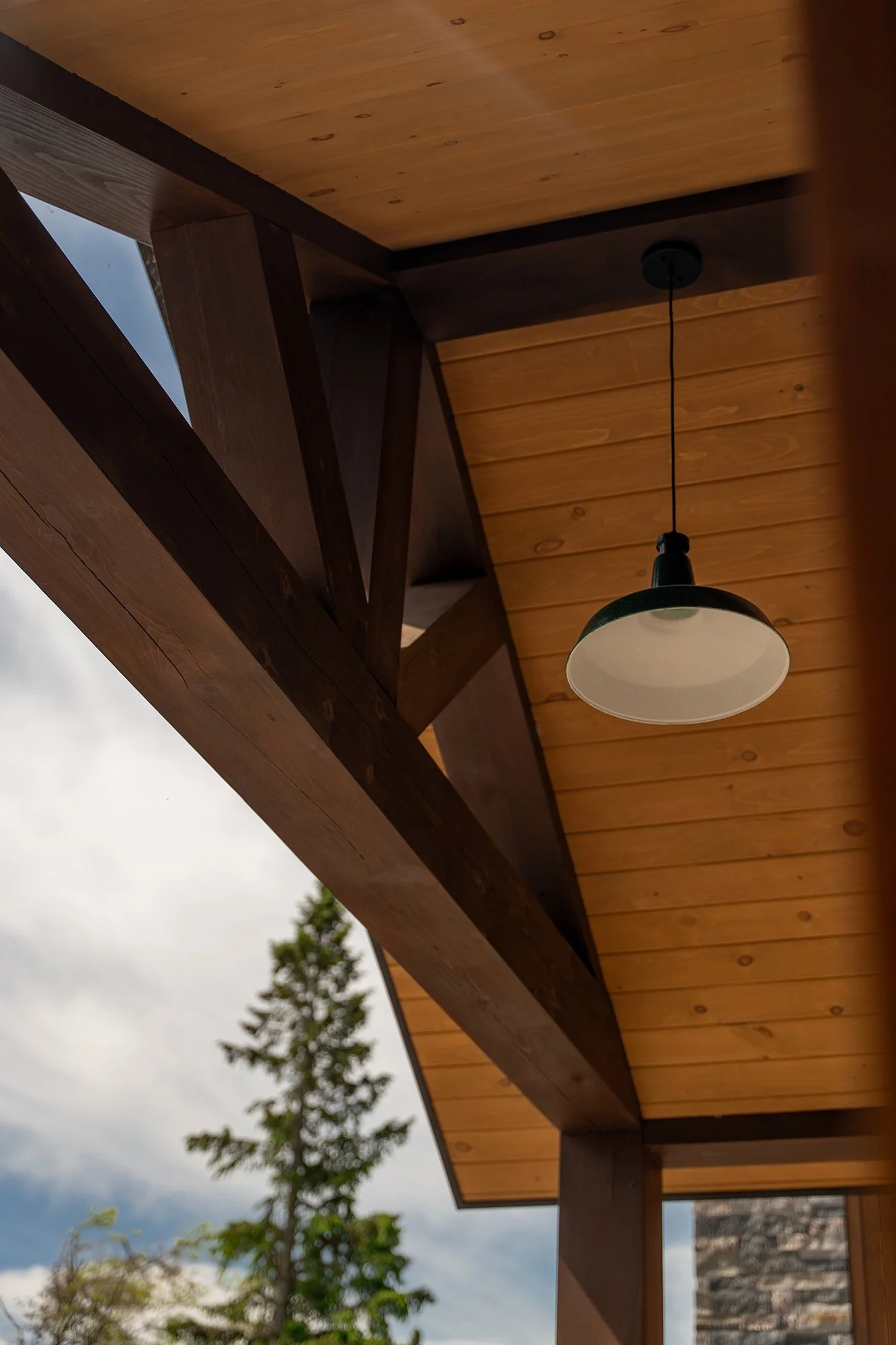
Our Balsam Lake client led the innovative wish list for how the envelope of the home would be an energy efficient design with extensive insulation and special thermal breaks to prevent thermal conduction from the outside of the building into the internal living spaces. The heating and control system is state of the art, with air to glycol heat pumps to control radiant floor heating, and three air to air heat pumps to control the room air in several separate zones. Fresh air changes and humidity is also controlled by zones across the house. This allows the owner to manage energy usage when occupancy varies throughout the house. In addition, the low slope roof profiles, will be fitted with solar panels, invisible from grade, to offset energy costs. Our client knew what was integral to their build and we were able to plan and design for his story around energy efficiency.
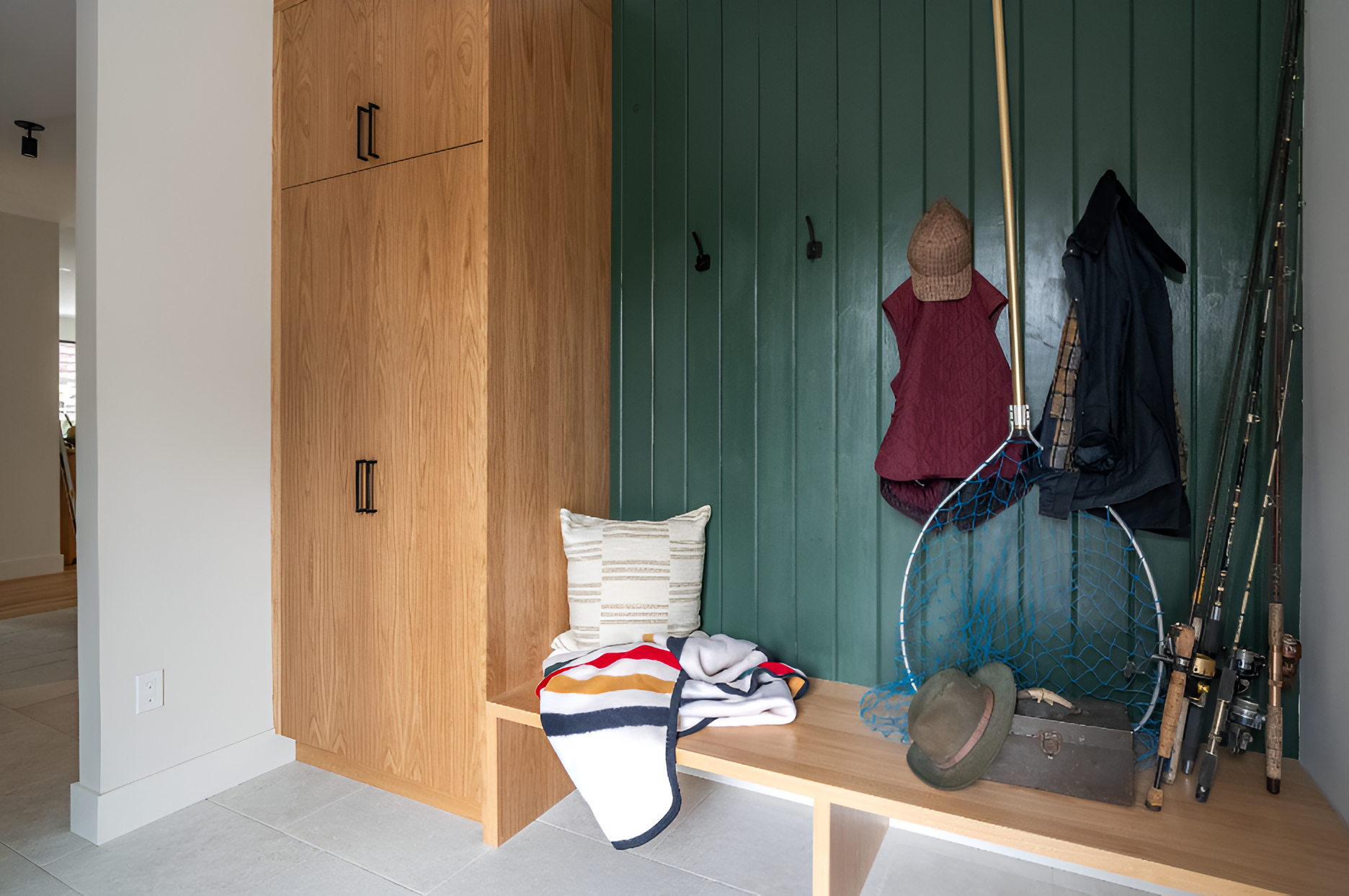
Slow design uses our own things rather than store them away. This amplifies the interesting past-times and hobbies that our clients often have. If we showcase this side of their lives, it ends up being a collection of fun and colourful accessories that we work into the everyday flow of life.
Lately we’ve been writing about slow design and how the rooms we design are meant to be experienced, not simply viewed from a distance. They are spaces to move through, gather in, rest, and live within, where light, texture, sound, and comfort all play a role. When a room is designed with experience in mind, it supports everyday moments and emotional connection, making the space feel not only beautiful, but deeply human and inviting. When our clients lead the design approach, the result is a highly personal, meaningful space that feels connected to how they live and who they are.
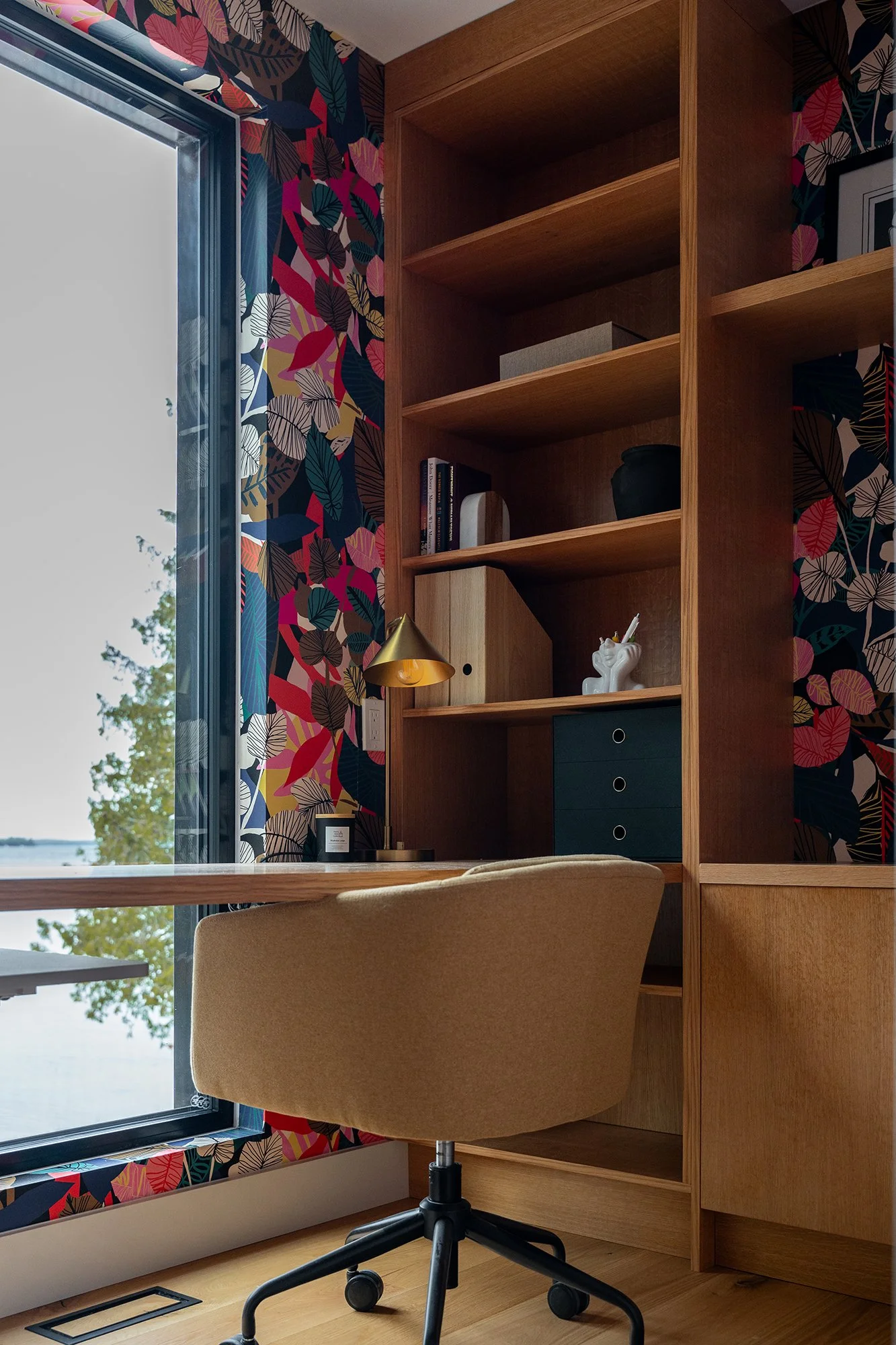
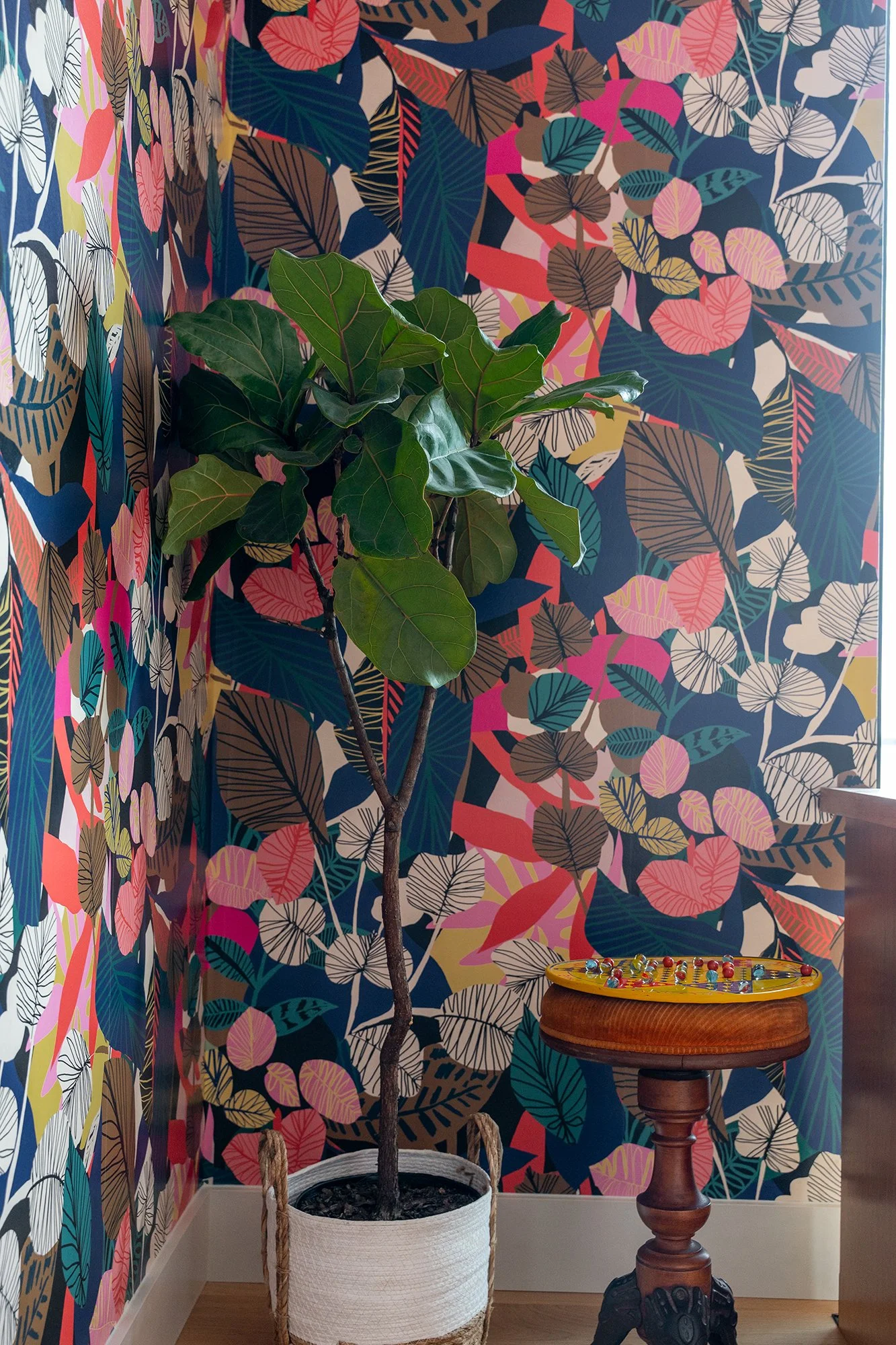
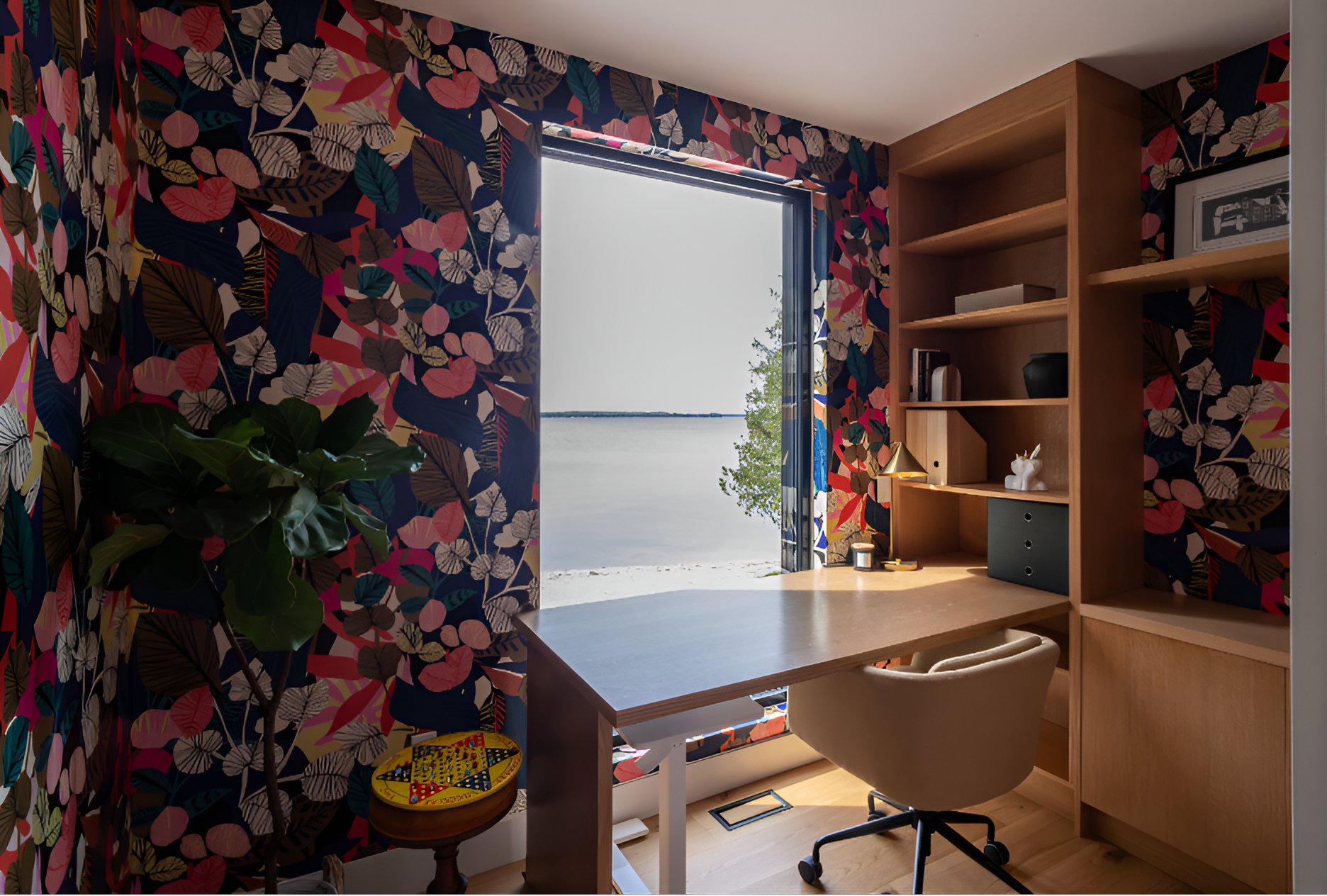
Home offices are an example of where experience is paramount. These are personal spaces that need to feel inviting, inspirational and connected to the person doing the work there. In this home office we used wallpaper to brighten and wrap the space in a feminine energy that allows our client to work remote when she can.
Less about trends more about you
Within each and every one of us is our own unique design nature. Banishing trends and following our own design intuition is about listening to what feels right. Trends are loud, fleeting and rarely meant for YOU. When you use your own instinct your space stops performing and starts belonging. Colours resonate because they came from your own energy, textures comfort because they’re chosen for how you personally live and every object in your home or cottage will have meaning beyond aesthetics. This is where authenticity lives. People don’t just walk into these spaces and admire them, they feel them. They sense the story, the intention, the personality. A home designed from intuition doesn’t chase approval; it creates connection, and that’s something no trend can ever deliver.
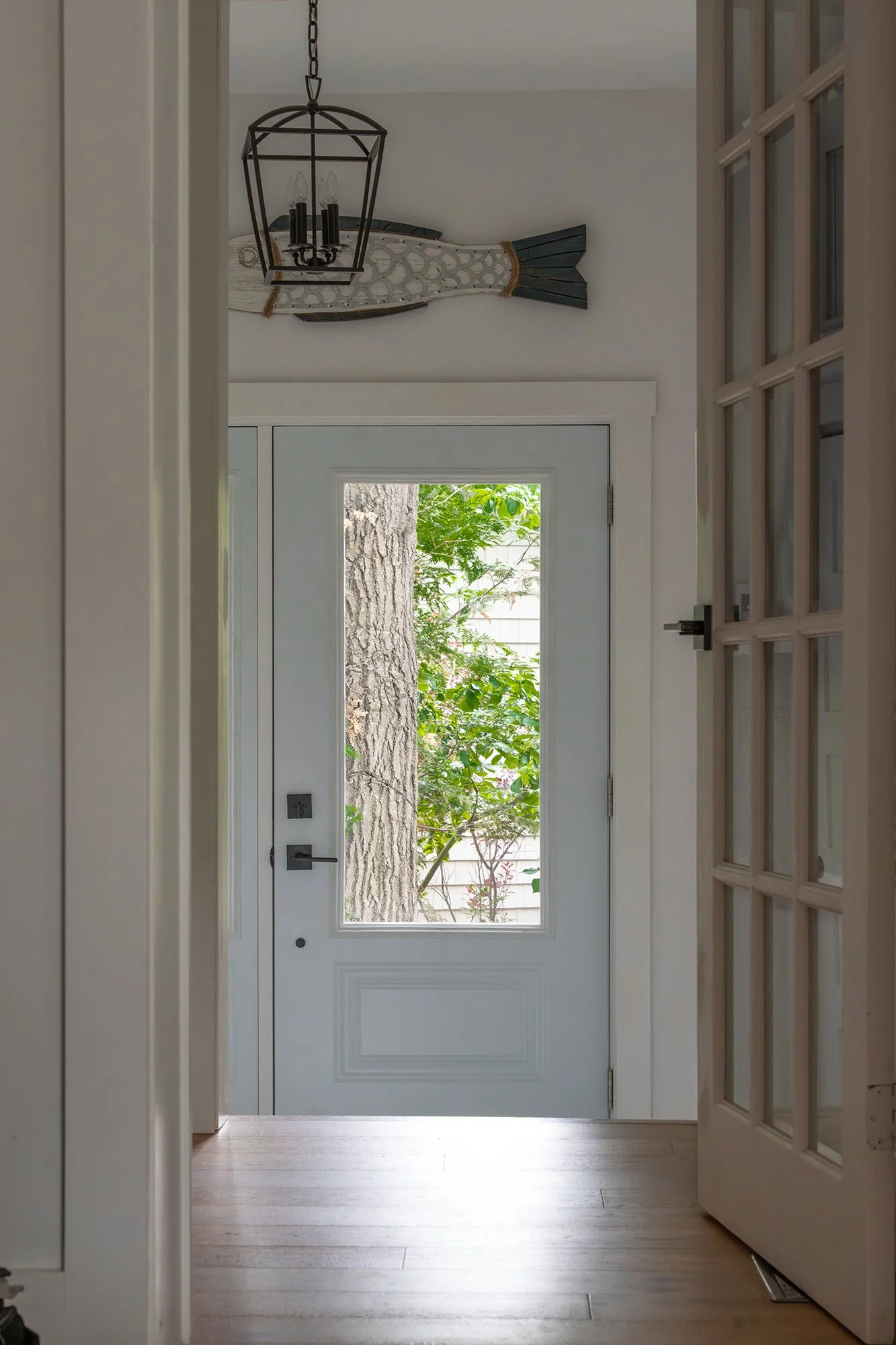
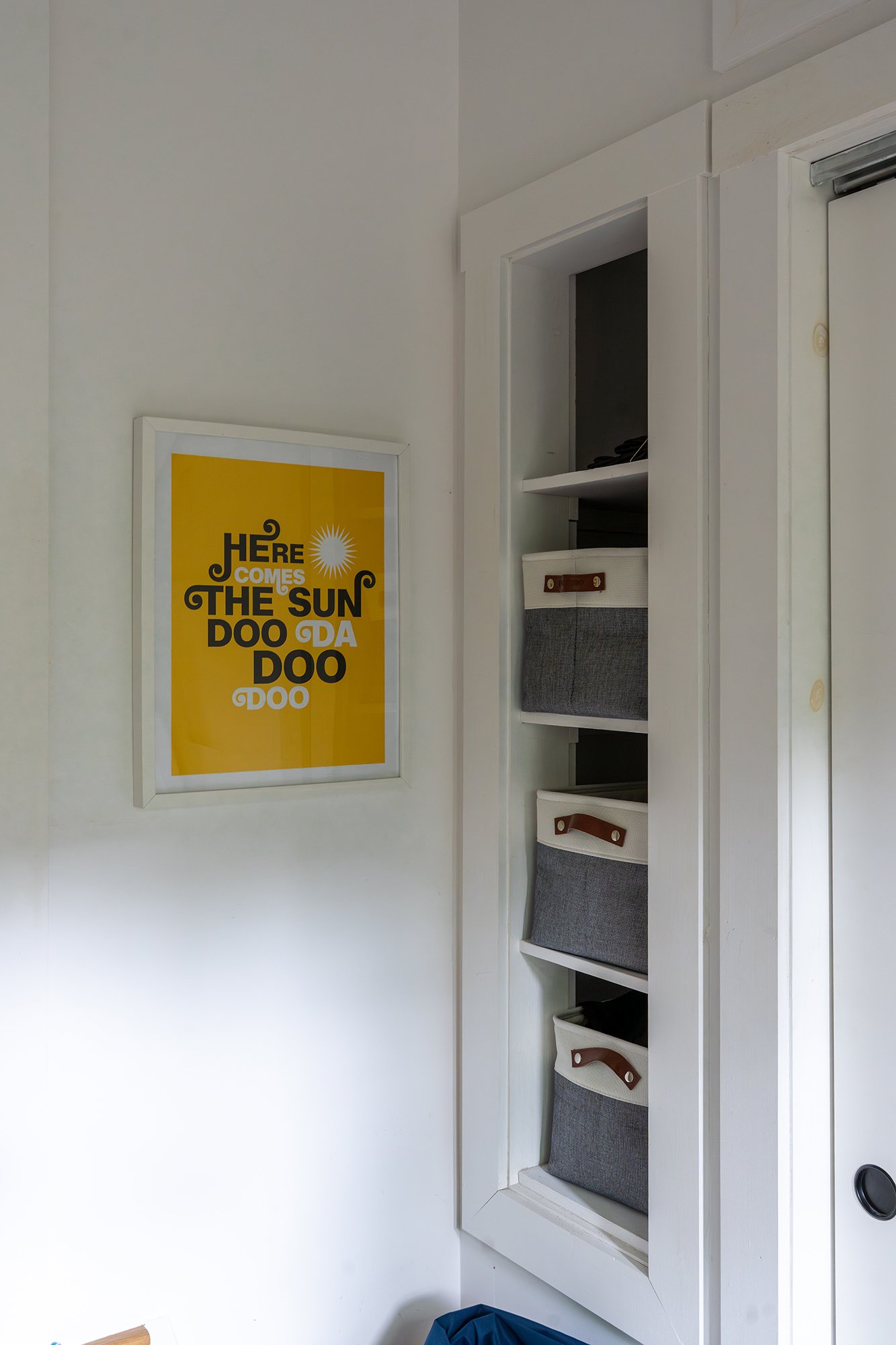
Whimsical art in our Project Corn Cob is a clear indicator of what tells a personal story for our client! Colours and elements of the old mix with the new to create interest and add warmth.
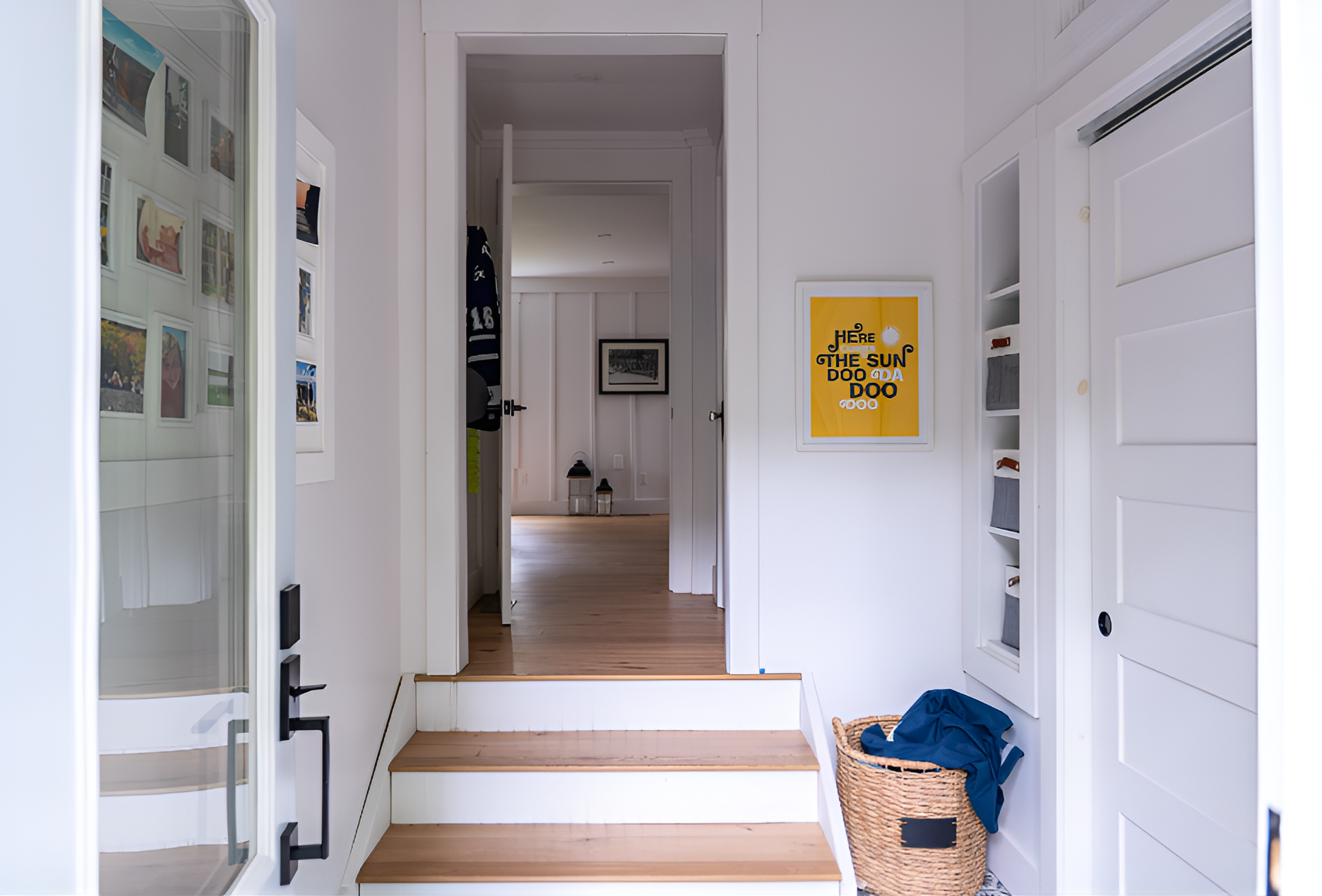
Personal, inviting and nostalgic.
Doing what makes you happy in interior design is absolutely the goal but that’s also where an interior designer adds real value. A good designer helps you clarify what actually makes you happy and translates that feeling into a cohesive, functional space. Often, clients have great instincts and strong taste, but they need help editing, prioritizing, and pulling everything together so it feels intentional rather than disconnected.
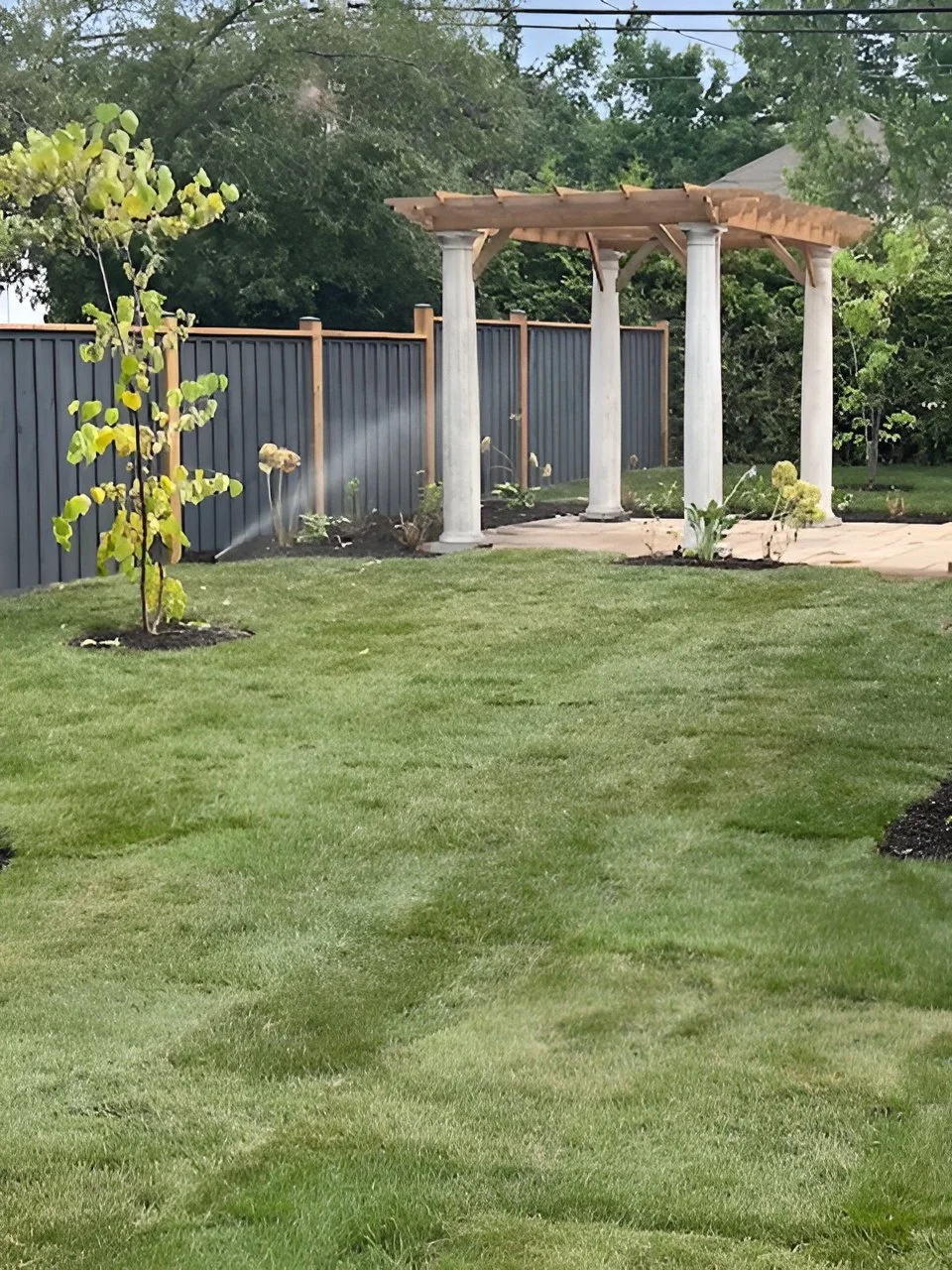
Our Bobcaygeon farmhouse project demonstrates how personal style can be integrated into overall design with the help of a designer. Our client had these old columns which we repurposed into a chic outdoor pergola!
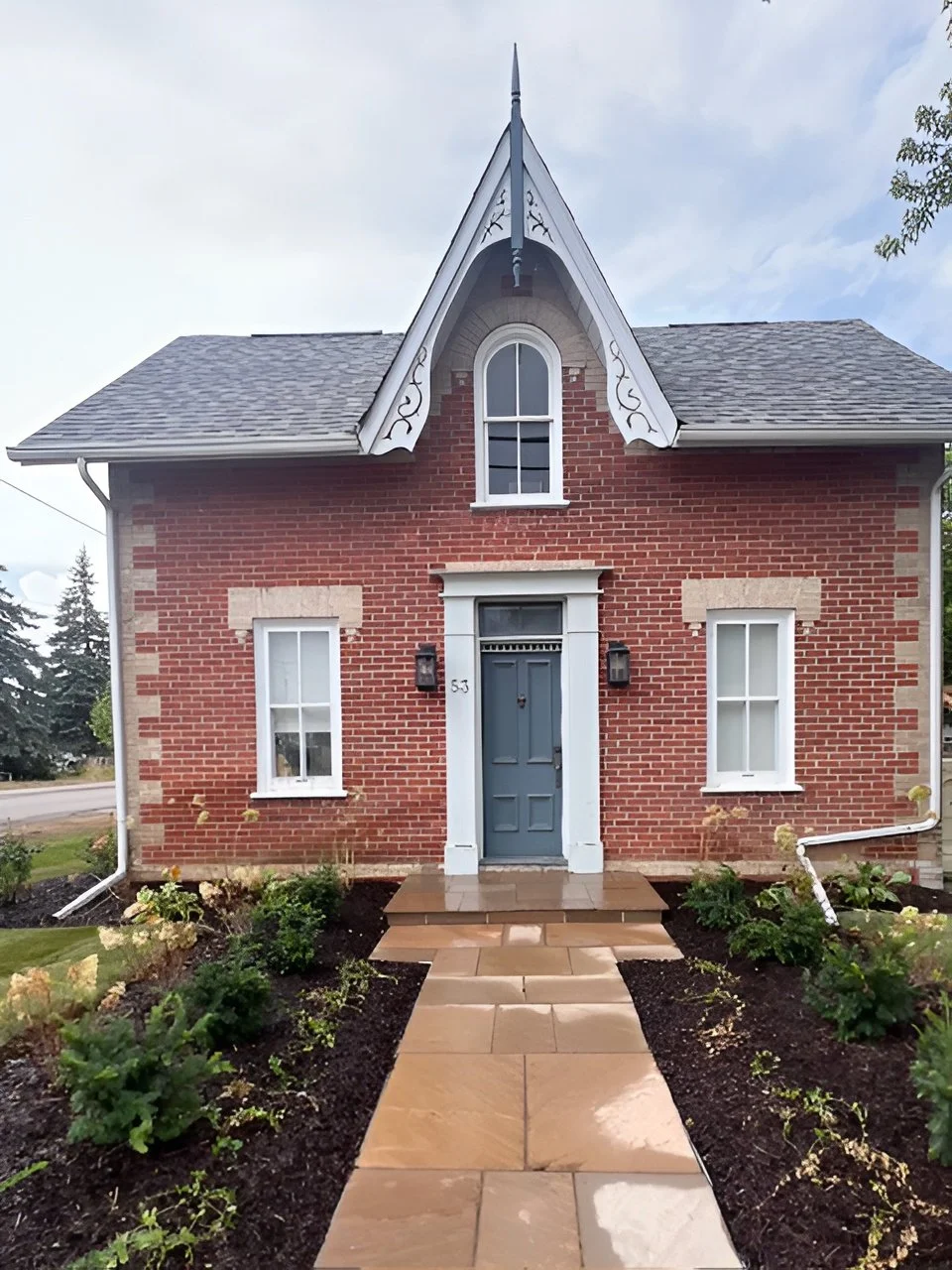
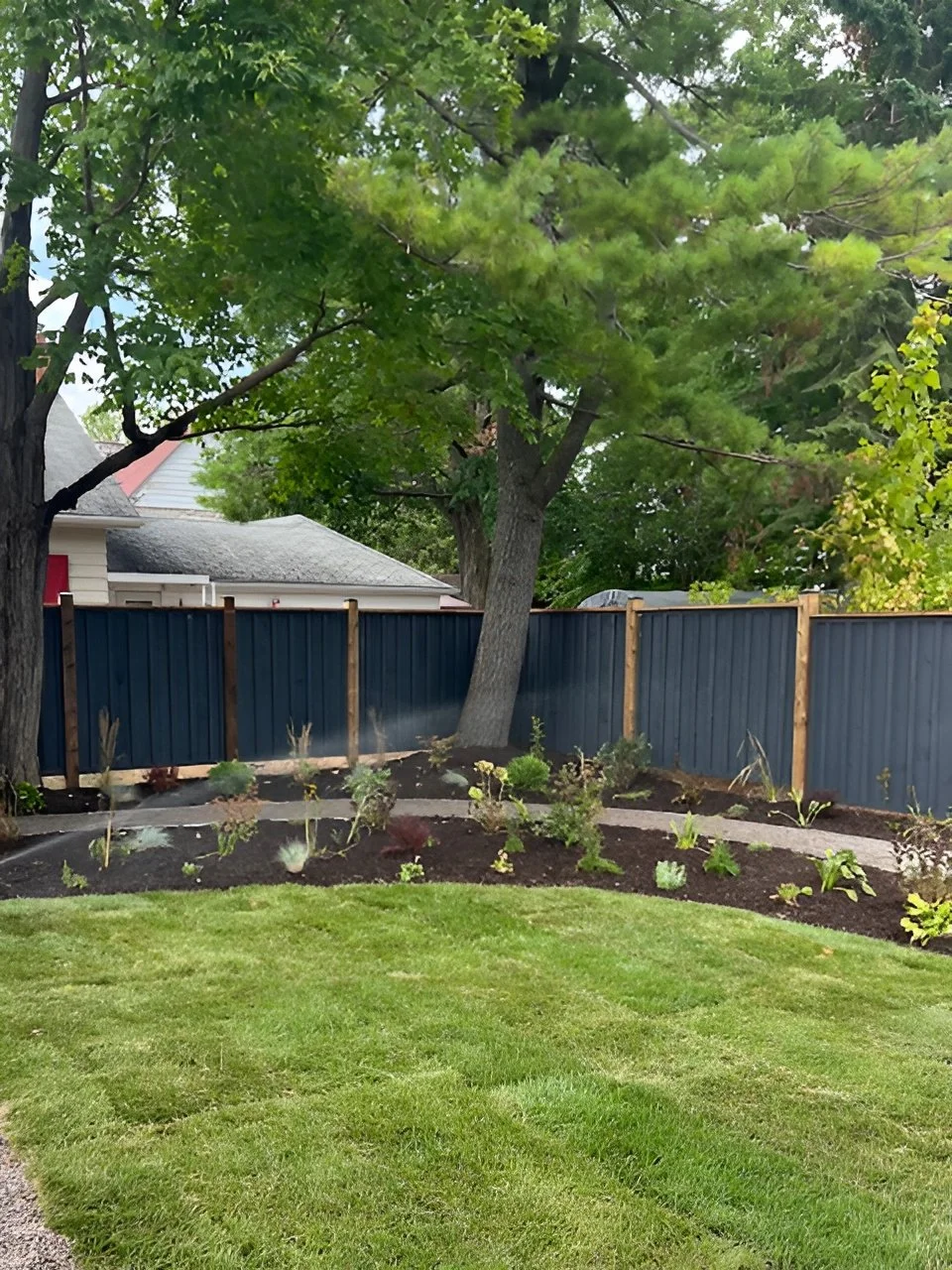
Sometimes the style of home or cottage we purchase, is the story in itself! Exterior design is another opportunity to follow your instinct and add your own personal touch. Your connection to nature can shape a space far more powerfully than any trend ever could.
The advantage of working with a designer is perspective and expertise. Designers understand proportion, scale, flow, and how materials perform in real life especially across seasons, lifestyles, and long-term use. They help you avoid costly mistakes, source pieces you wouldn’t easily find on your own, and balance emotion with practicality. Ultimately, a good designer doesn’t replace your vision; they elevate it, turning what you love into a home that truly works, feels personal, and stands the test of time.
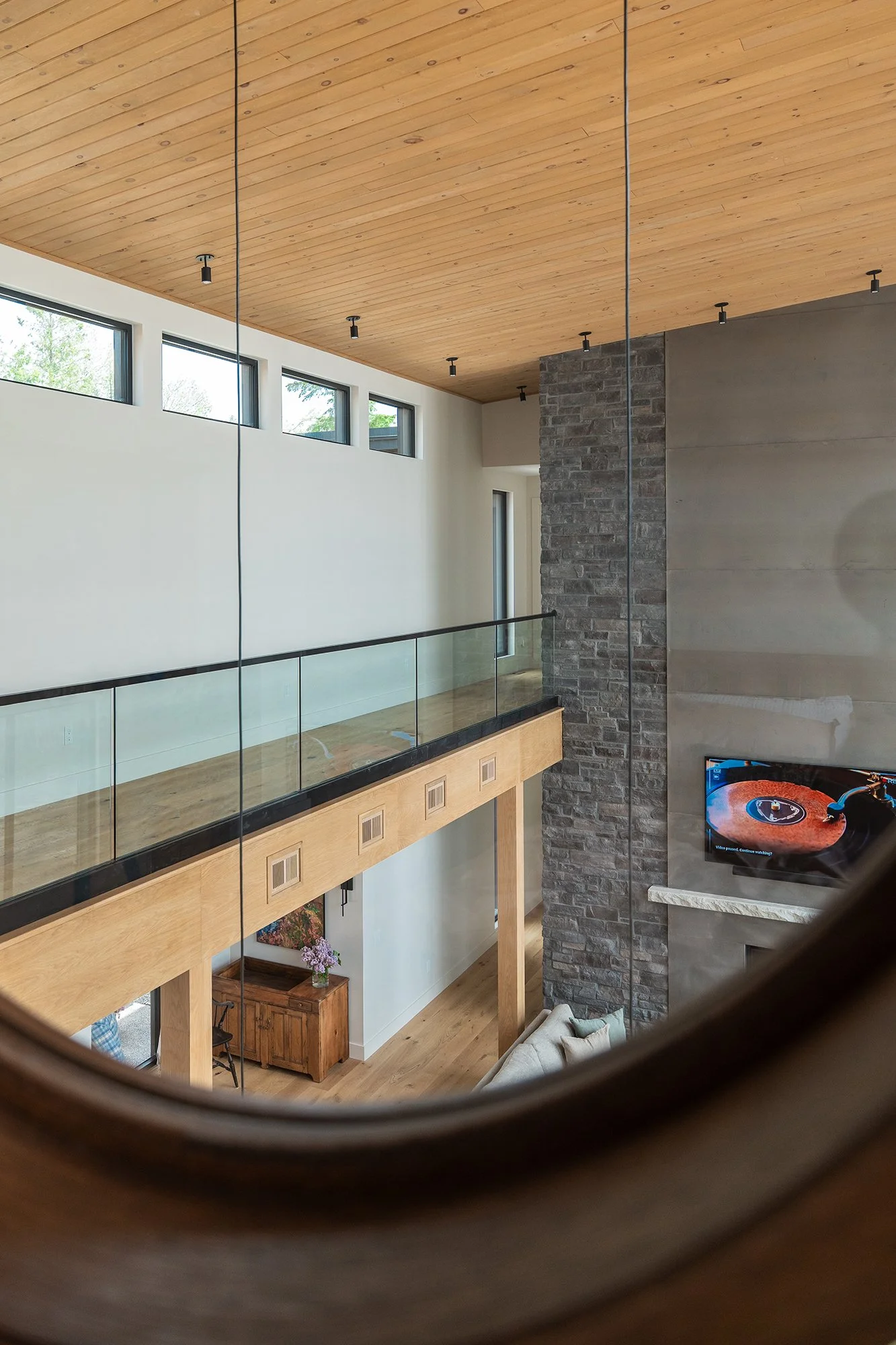
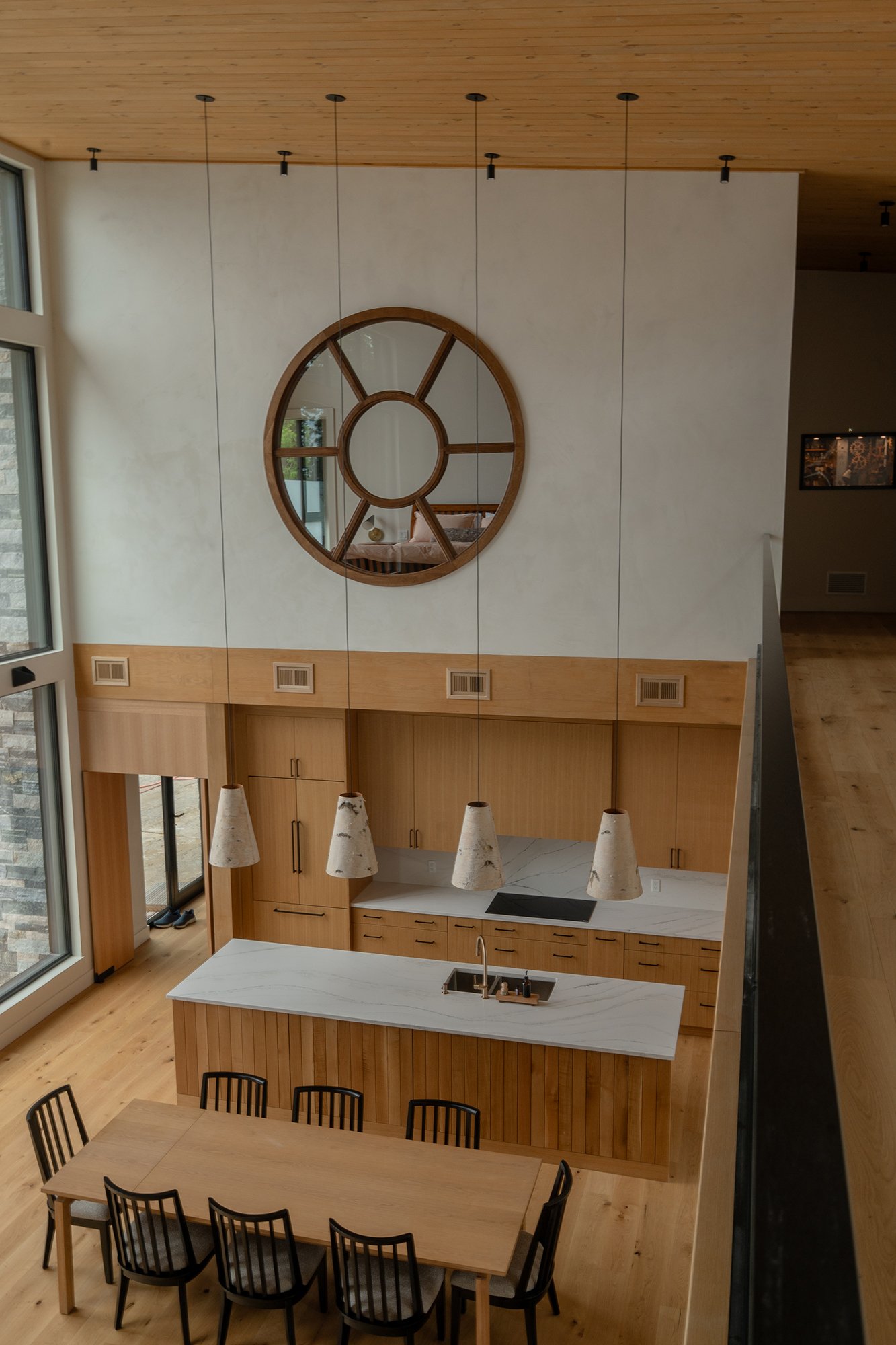
Scale, flow and materials unite in this project to demonstrate how a designer can create connection and a sense of wonder using glass, stone and wood. The grand architecture connects two living spaces and provides an open and spacious feel in the great room.
Where the possibilities lie
An interior designer also acts as a trusted guide, helping you see possibilities you may not have considered and challenging choices that don’t fully serve the space or your lifestyle. While happiness is personal, design benefits from structure, restraint, and experience. A designer knows when to lean in and when to pull back. The result is not a home or cottage that looks designed for the sake of it, but one that feels effortless, balanced, and deeply aligned with how you want to live.
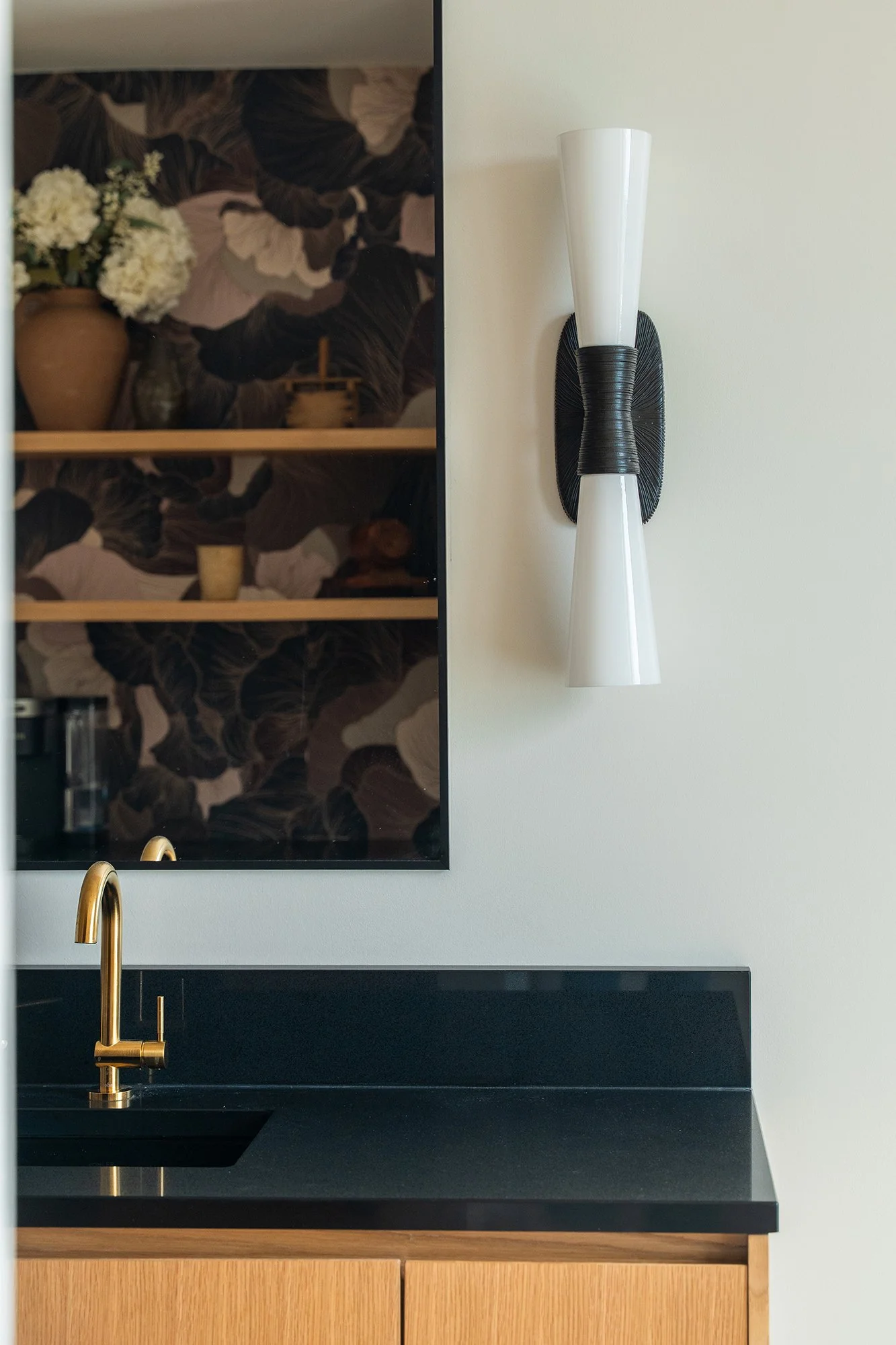
A lean in moment when we realized this bathroom shelving built-in could use a pop of special wallpaper to accent the overall room.
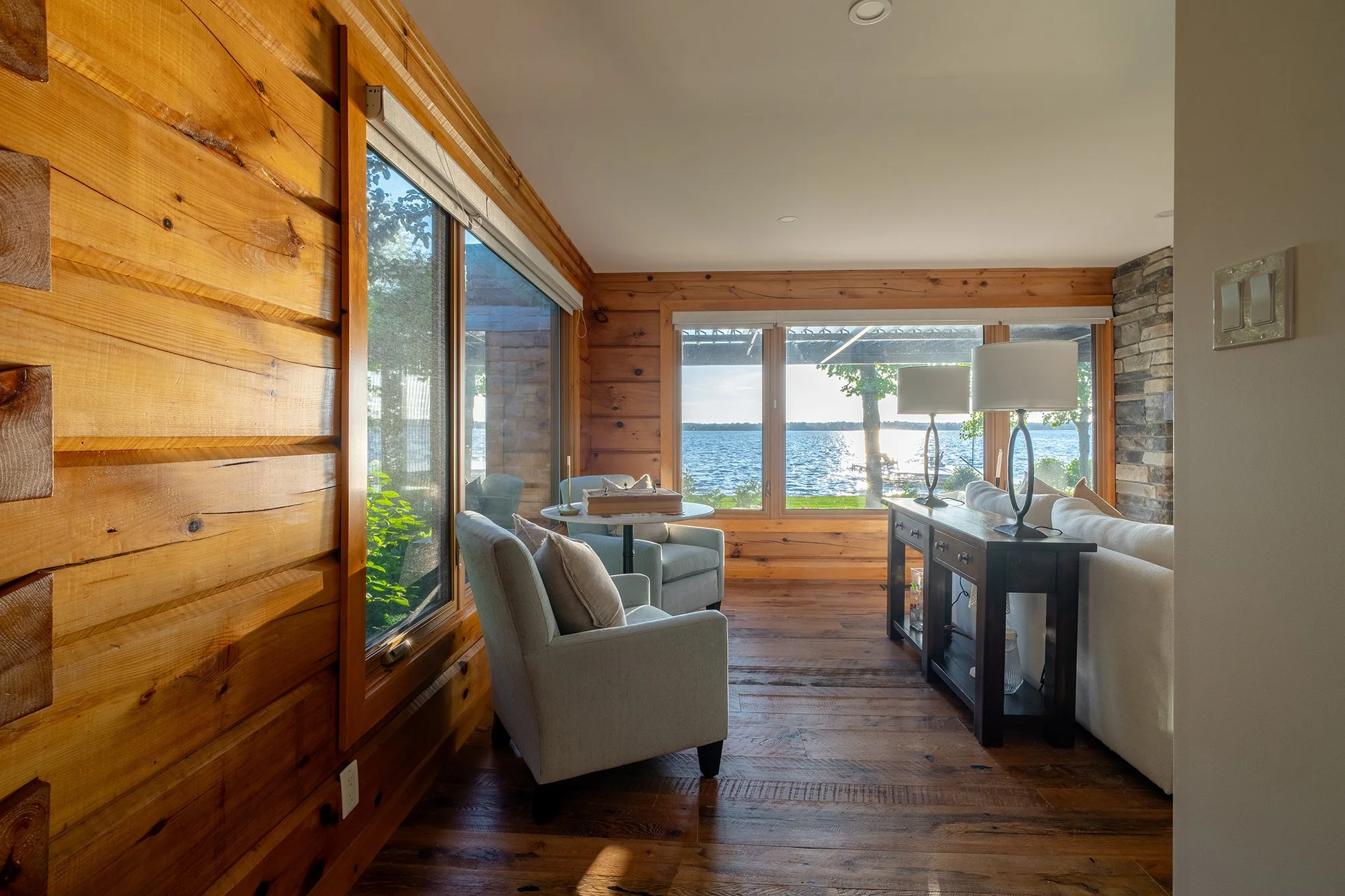
Seeing a nook as a game spot is a use of space that a designer intuitively knows will play a role in the client’s lifestyle.
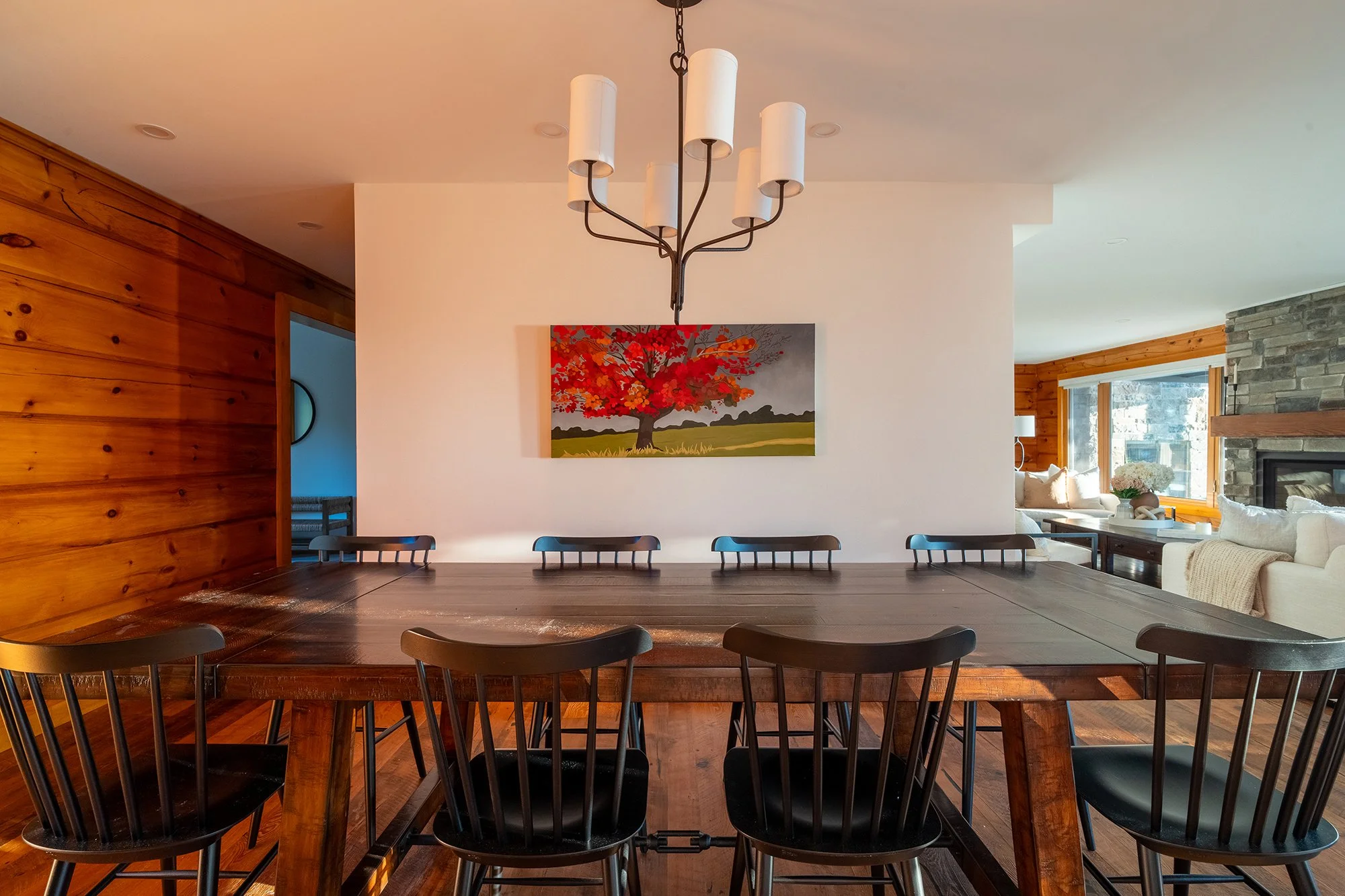
Things like how artwork can play into this dining area and elevate the entire room, is how a designer lends value with personifying a space.
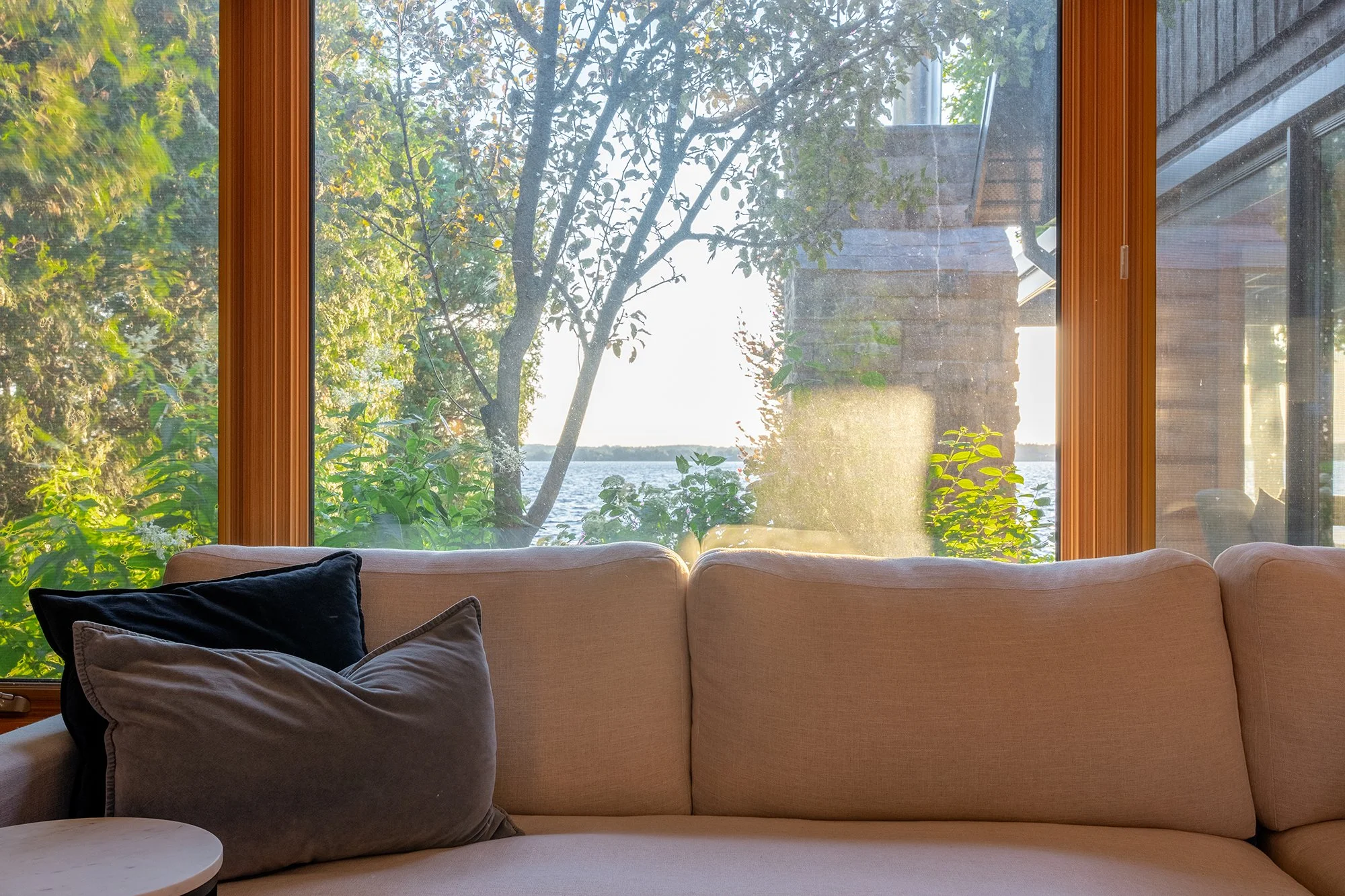
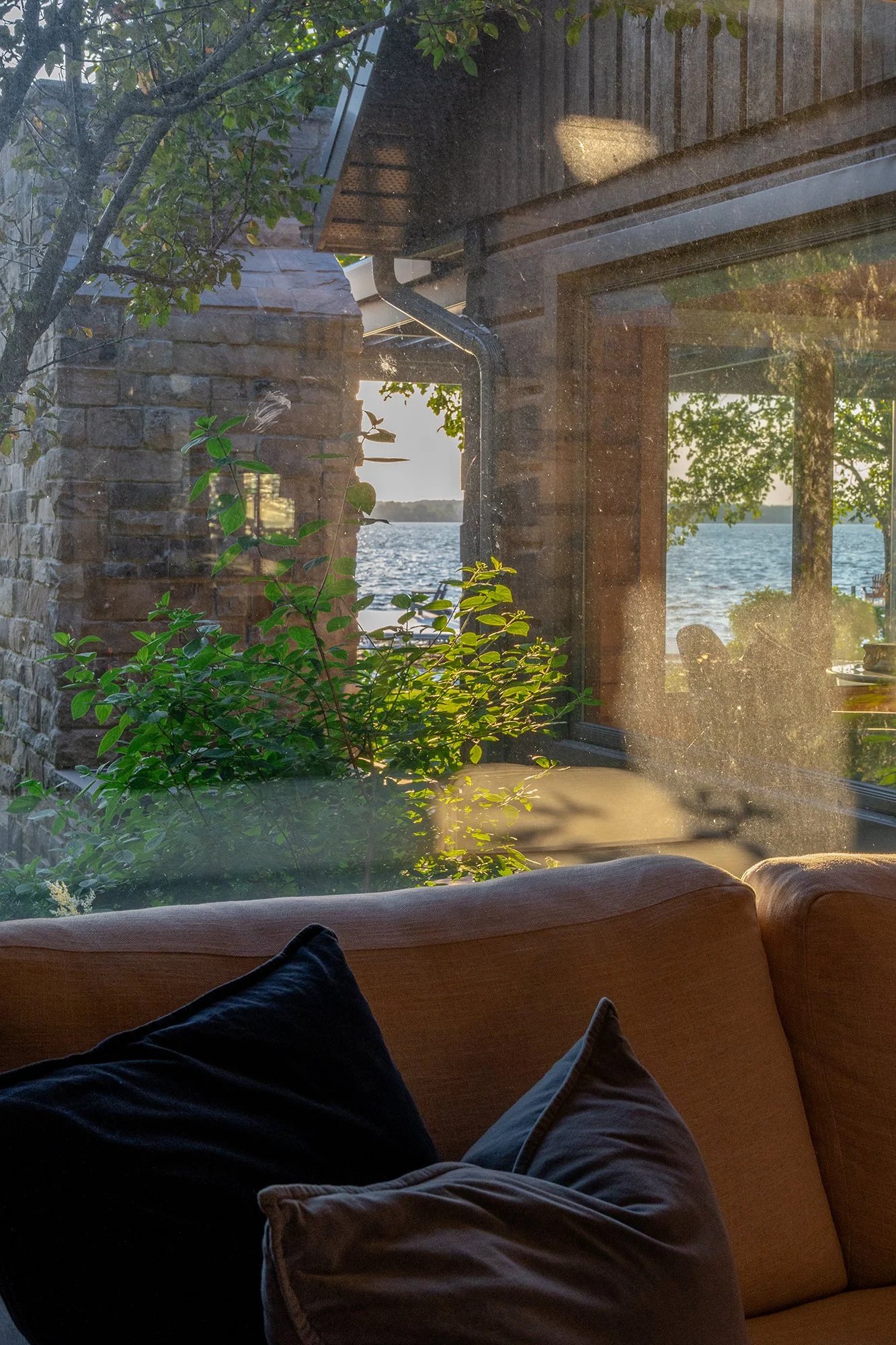
Views and furniture positioning are key elements designers use to plan how your lifestyle moves and connects throughout a home or cottage.
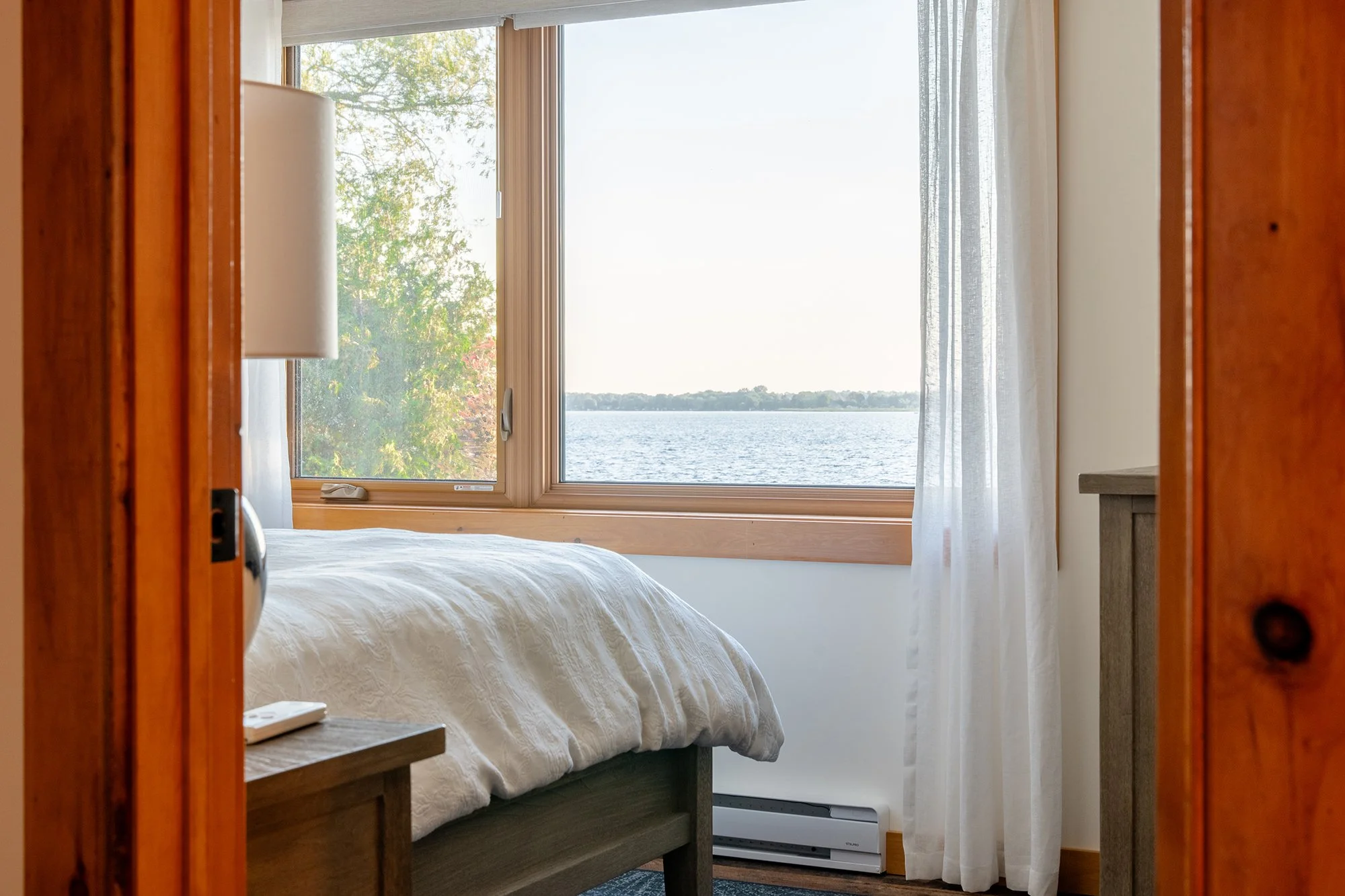
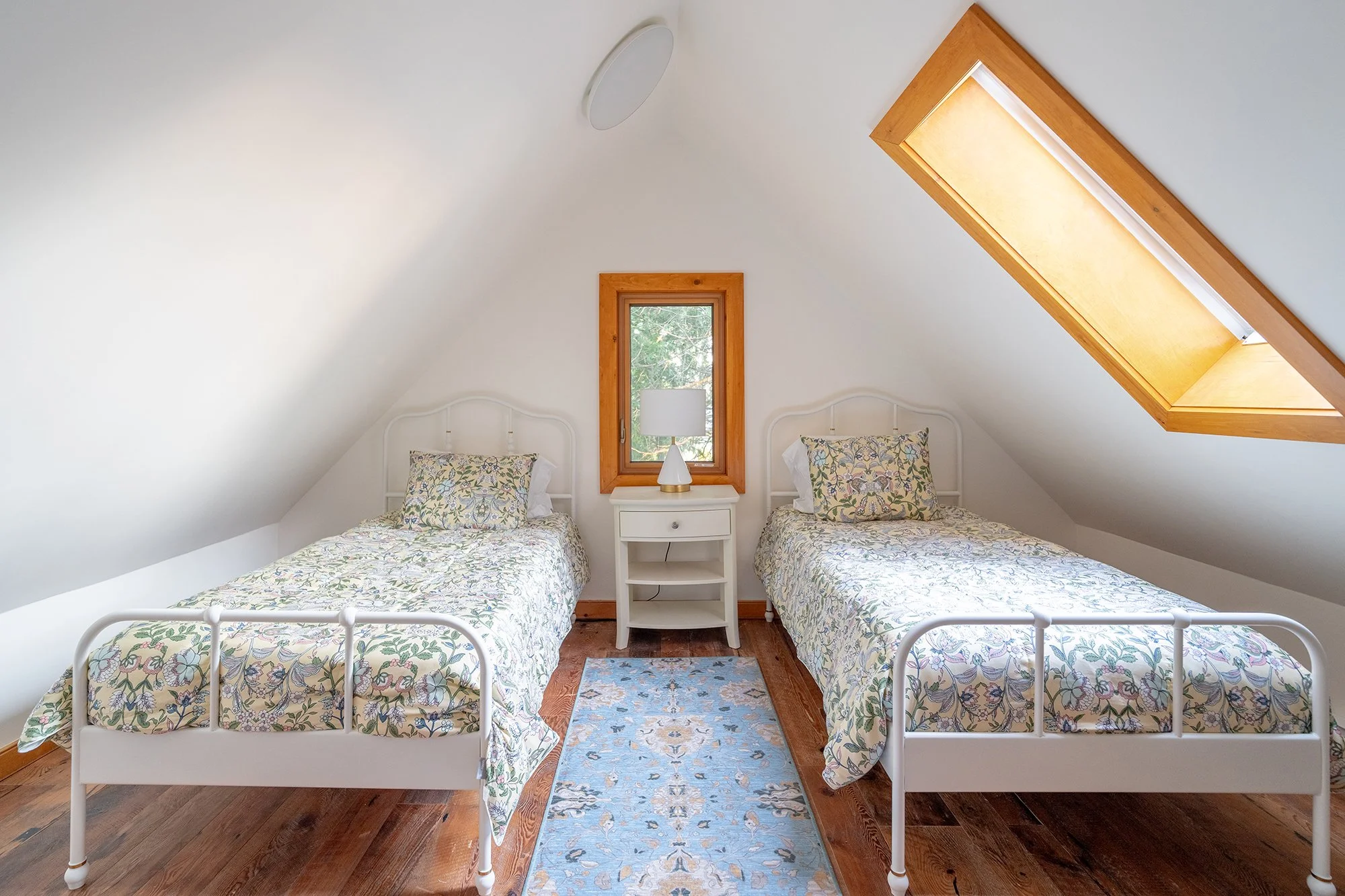
Layouts in certain spaces can be tricky, a designer knows how to work with scale, configuration and furniture in order to gain functionality and optimize flow.
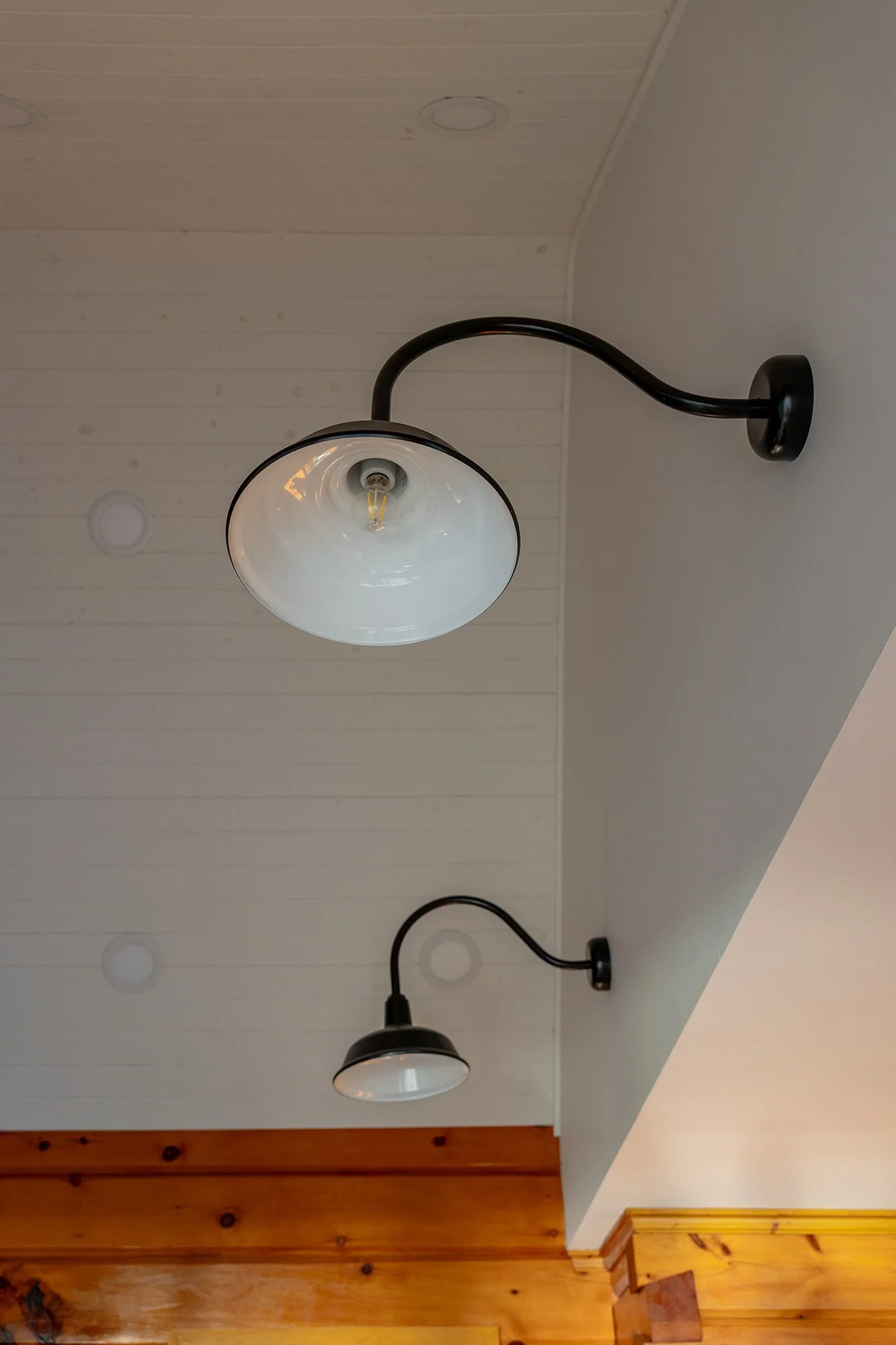
An interior designer adds real value to lighting by thinking far beyond where a fixture simply fits. Lighting is planned around how you live, move, and feel in your home.
Designers layer lighting whether it’s ambient, task, or accent to support different activities throughout the day, from cooking and reading to relaxing and entertaining. They consider sightlines, ceiling heights, furniture placement, and natural light so fixtures don’t glare, cast awkward shadows, or feel randomly placed. Thoughtful lighting can visually expand a space, highlight architectural details, and create warmth and atmosphere that overhead lighting alone never achieves.
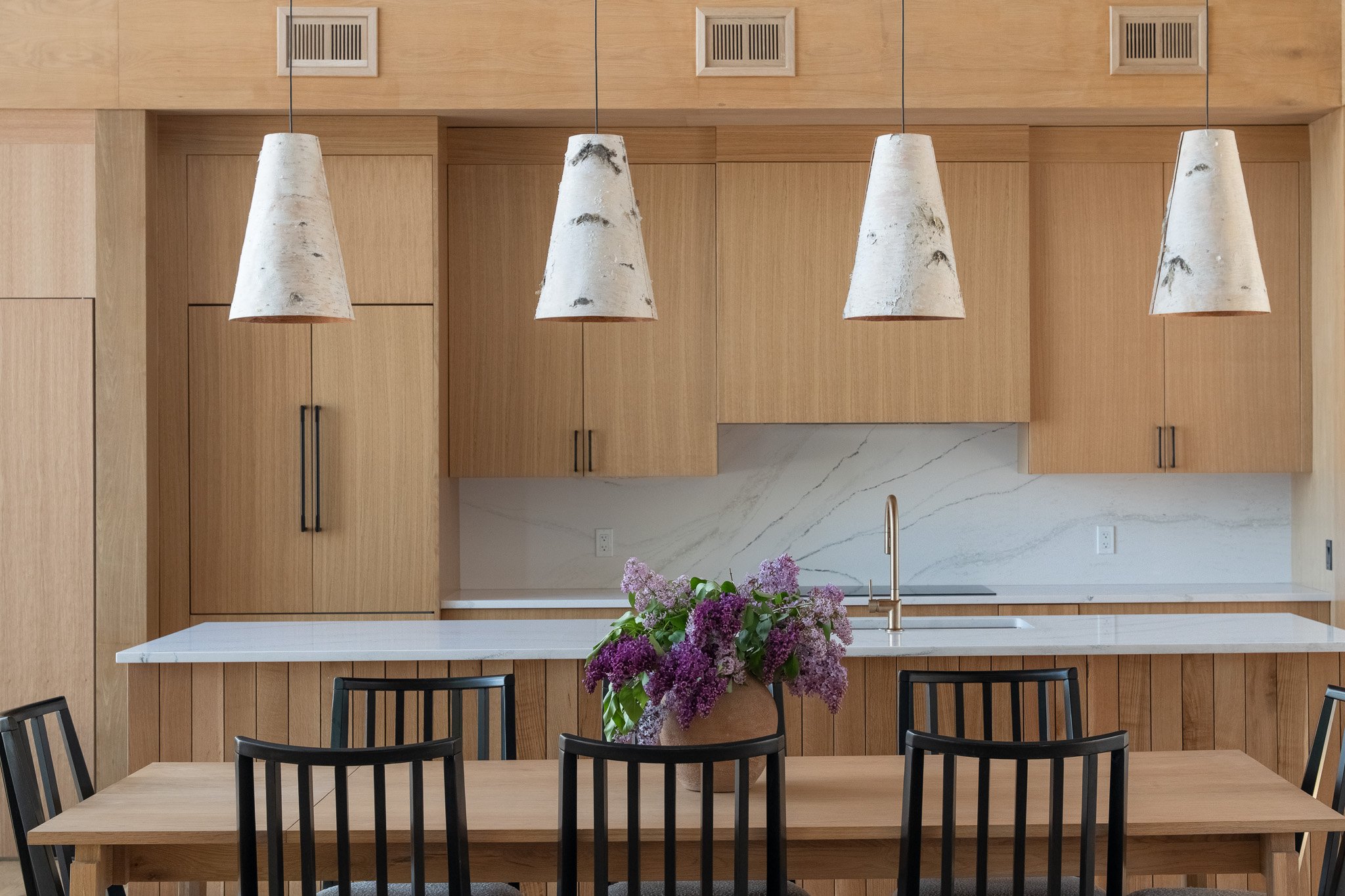
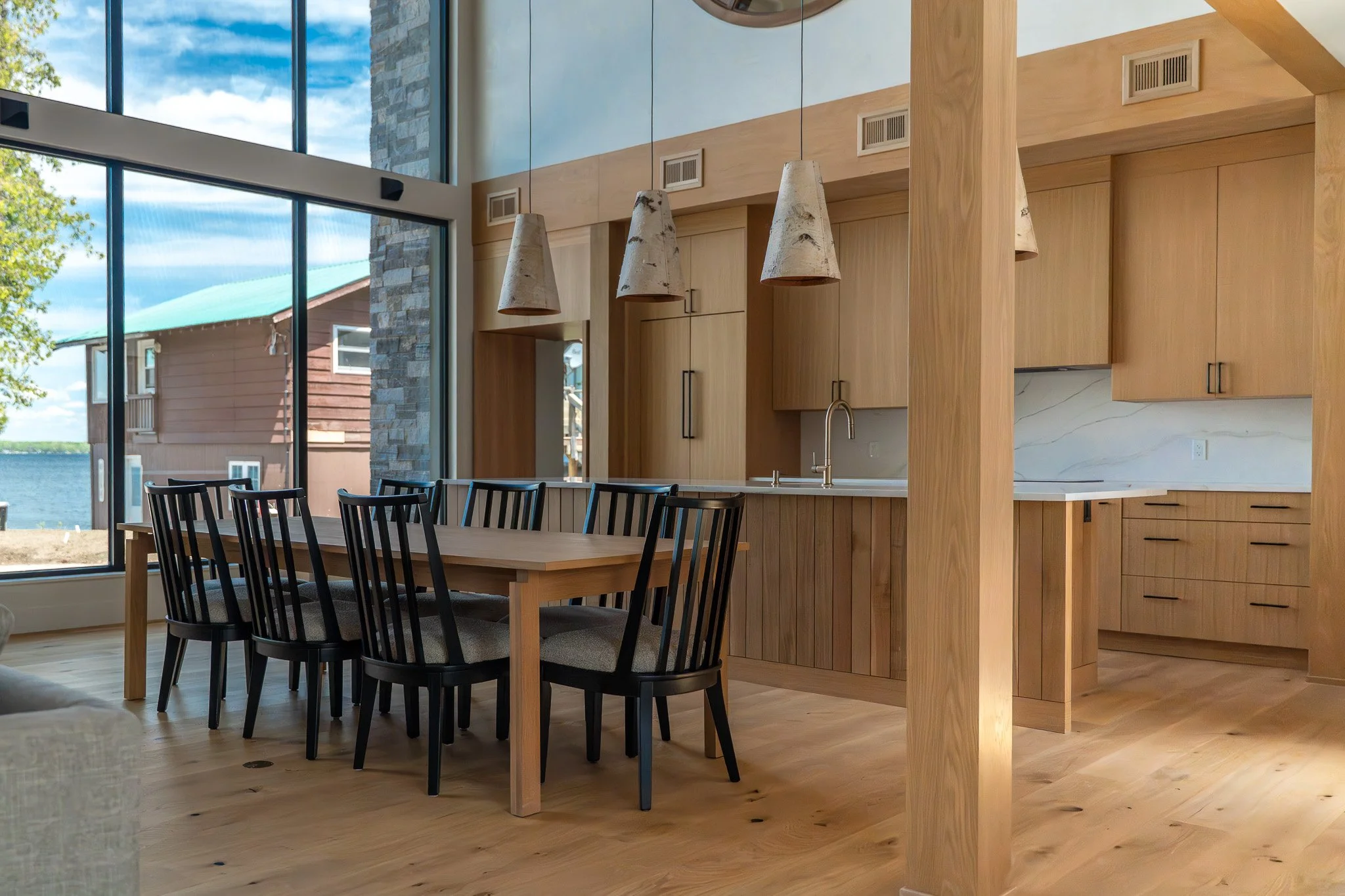
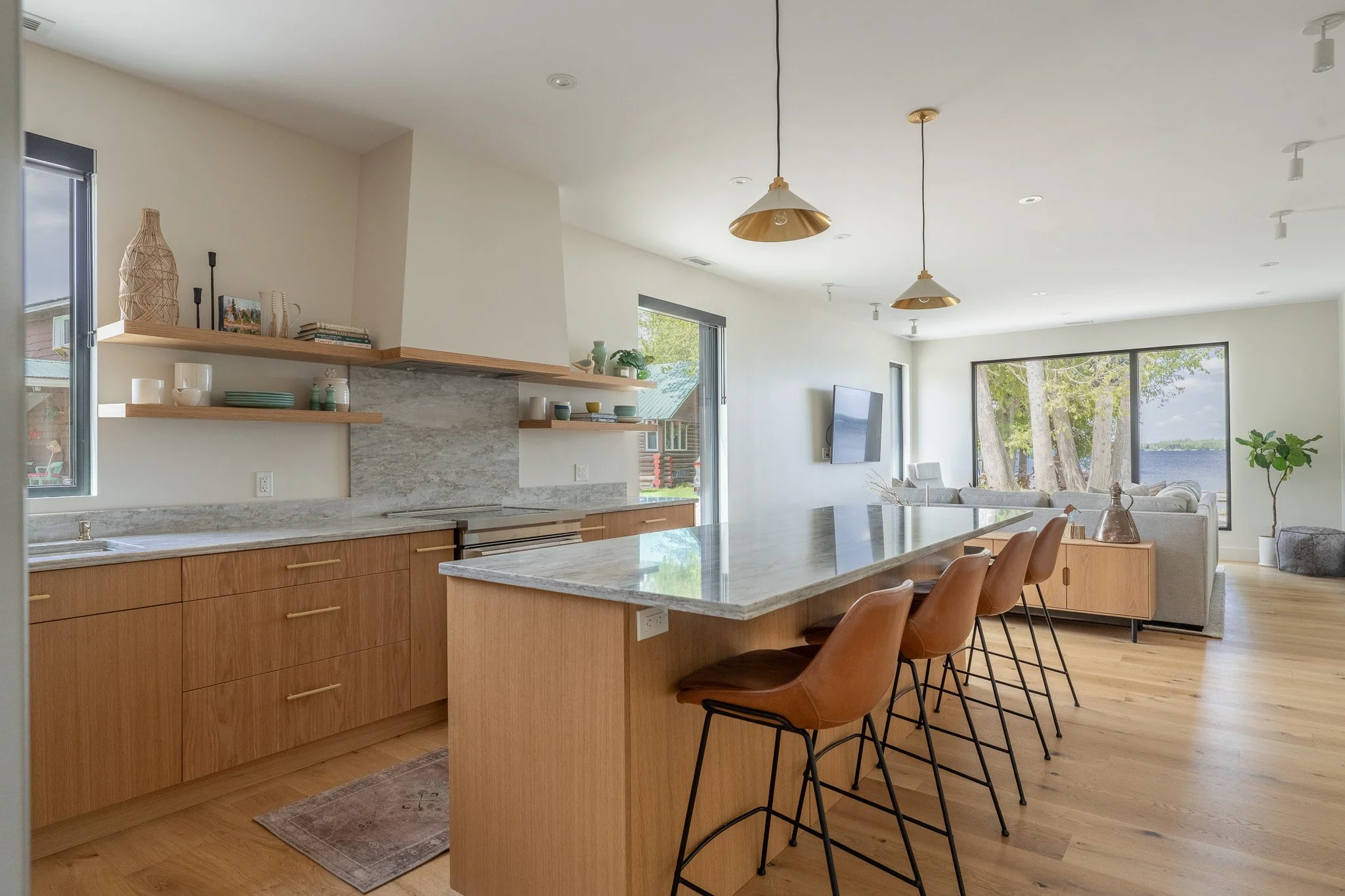
An interior designer customizes lighting by creating personalized, one-of-a-kind fixture ideas. Whether custom-designed or specially sourced, they can create lighting that reflect your home or cottage’s character, ensuring the lighting feels intentional, unique, and truly conversational, not something anyone else will have. These custom birch pendants in our Balsam Lake project are a great example of design ingenuity from Home by Tim + Chris!
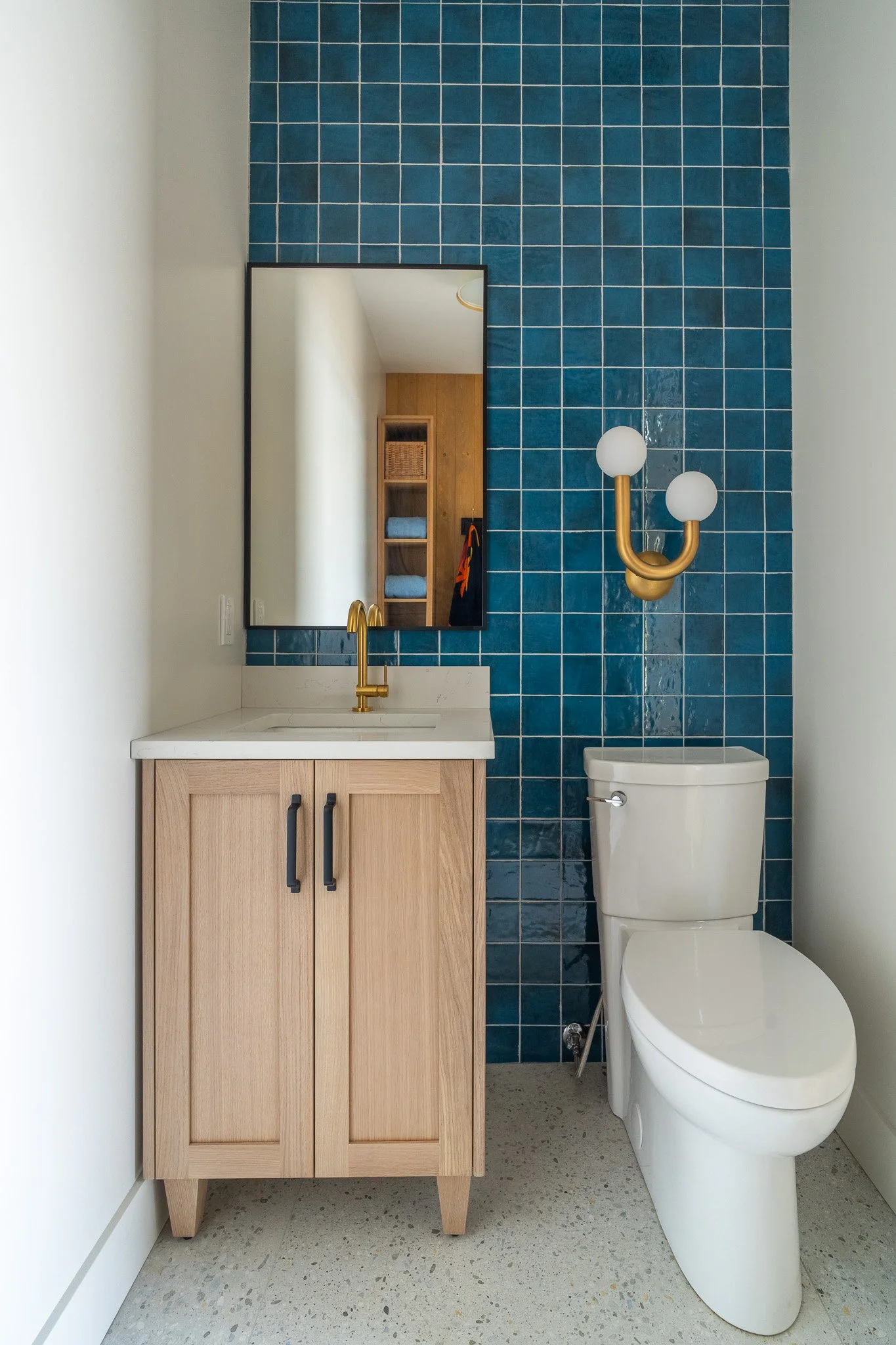
This unique light is a character conversation starter against the eye-catching blue tile!
A shift away from designer as the expert
Client-led design represents a significant shift from the traditional “designer-as-expert” model, where a designer would present a polished, finalized concept to a client who only offered input at specific milestones on a workback schedule. Modern client-led design involves clients in the process from start to finish. While the concept of client first is not new, the idea of client involvement in shaping the direction of the design from the outset is a relatively new approach. The same is happening in construction, there isn’t a silo just for the builder and another one for the designer. In the case of Home by Tim + Chris, we work with our preferred builder in a partnership that means the client drives the requirements. You are seeing this with brands like Apple and Nike where the client is in charge of the vision.
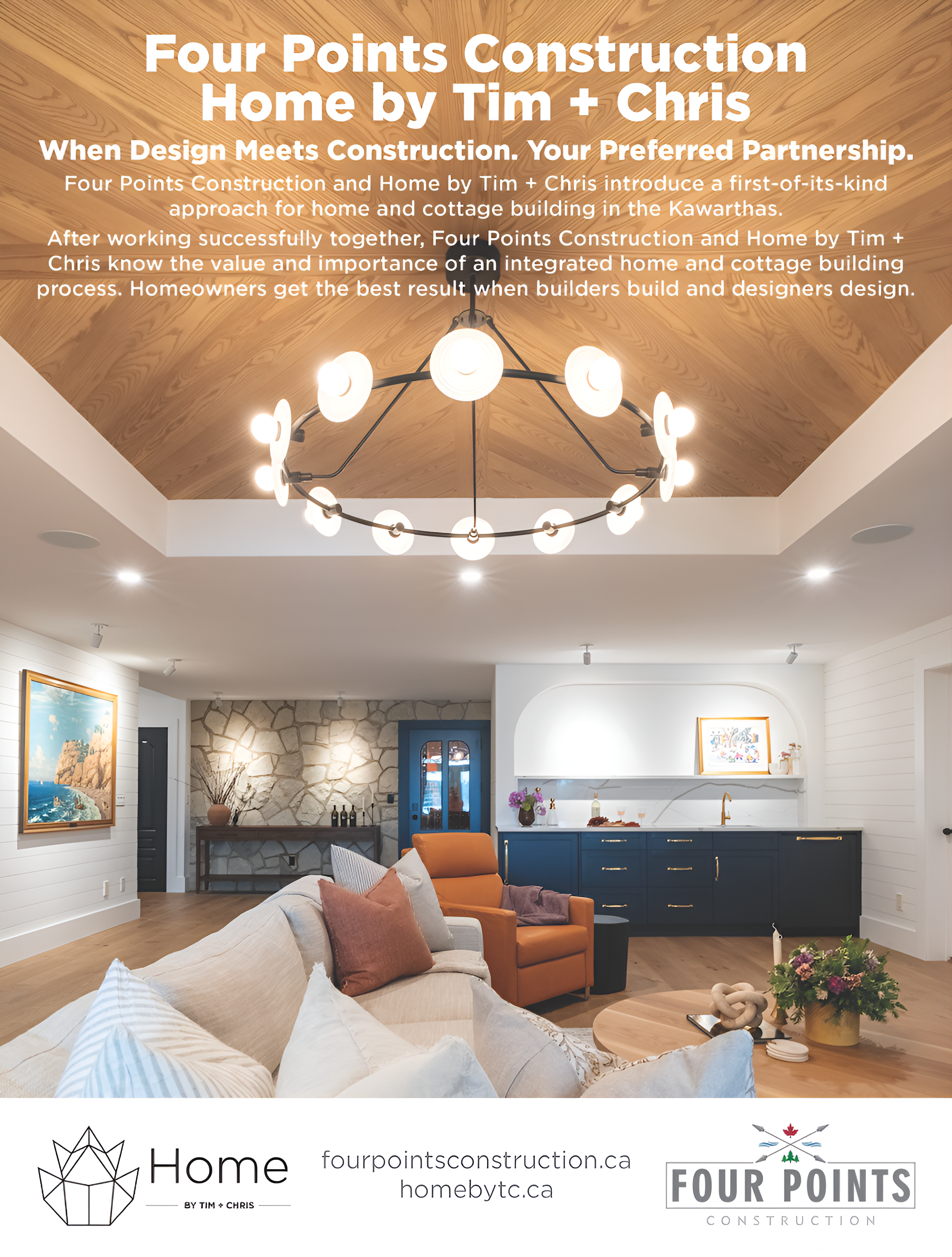
Our preferred builder Four Points Construction is a partnership so we don’t work in a silo. Homeowners get the best result when builders build and designers design. For seasonal residents, you are building a recreational property. A Four Points Home by Tim + Chris means local partnerships work together to make cottage life easier. For locals, you already know our trusted brands and can appreciate how integrity, reputation and word of mouth are the foundation to any successful business.
High value results
Involving the client throughout the process means a more seamless experience can be delivered. We are in an age of high expectations when it comes to design clients and consumers in general. The digital revolution taught us to be more agile, and more iterative with our process. We are delivering more personalized outcomes for our clients and problems are solved earlier on in the design and build journey. We think of it more like “guided discovery.”
Lifestyle first
It’s important as designers that we resist the pull of passing trends. We want to focus on what truly resonates with you, the client. If we hone in on how you live, what you love and what brings you joy, we can stay authentic and interpret your home or cottage into what genuinely feels like home. We still guide, we still work with intention and expertise, but we deliver value and longevity. I recently commented in an article that “I believe smart design is uniquely you. Design that is tailored to your personal lifestyle anchored by form and function. Not a trend filled home but rather a meaningful, timeless space that evolves naturally with you, and will continue to serve and inspire you, for years to come.”
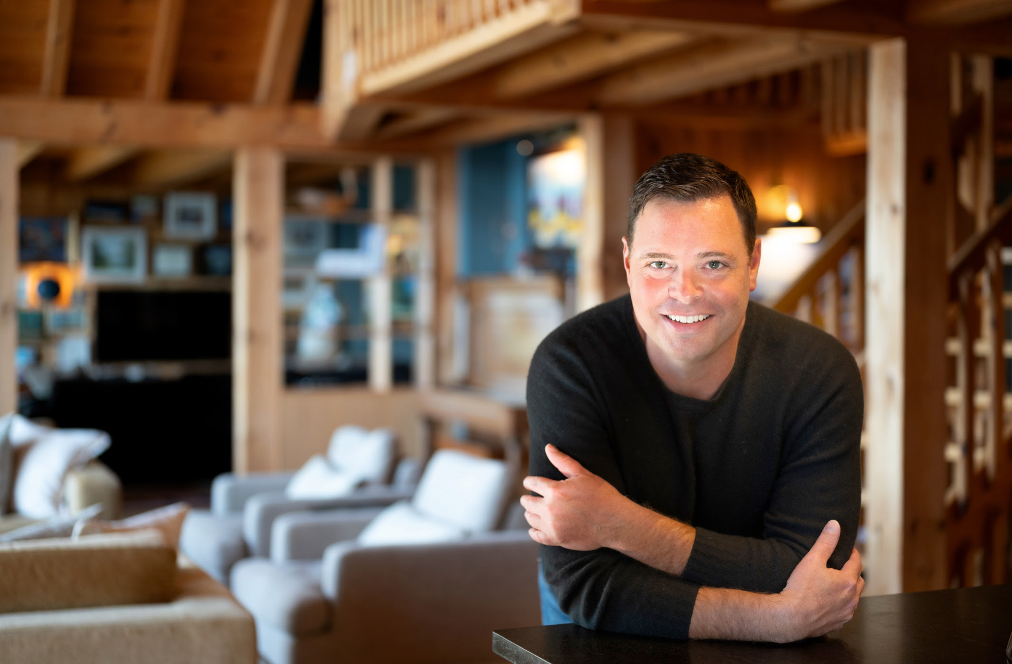
“I believe the most meaningful homes are client led. My role as a designer is to listen deeply, understand how my clients truly live, and then guide them toward a home or cottage that reflects their lifestyle and personal story. When design is rooted in who you are, the result isn’t just beautiful, it feels unmistakably like home.” – Chris Van Lierop Home by Tim + Chris
Learn more about our services: https://www.homebytc.ca/home#services
See our latest Project Portfolio: https://www.homebytc.ca/projects
Sign up on our website for our monthly eNewsletter Lakeside Notes featuring all things art and design. We can keep you informed of what’s new in the design world, projects we are working on, the Grove Theatre, events and art exhibitions.
Tim + Chris