There is something particularly rewarding about exploring wallpaper's history and discovering just how much more there is to its story than meets the eye. From the unapologetic colours and patterns of the 1970s to their contemporary revival, wallpaper has remained a steadfast presence in the decorating world, continually reinventing itself while never losing its appeal. Just when you think wallpaper has left the building, she sweeps back in with a new look, a renewed sense of purpose and plenty more to say!
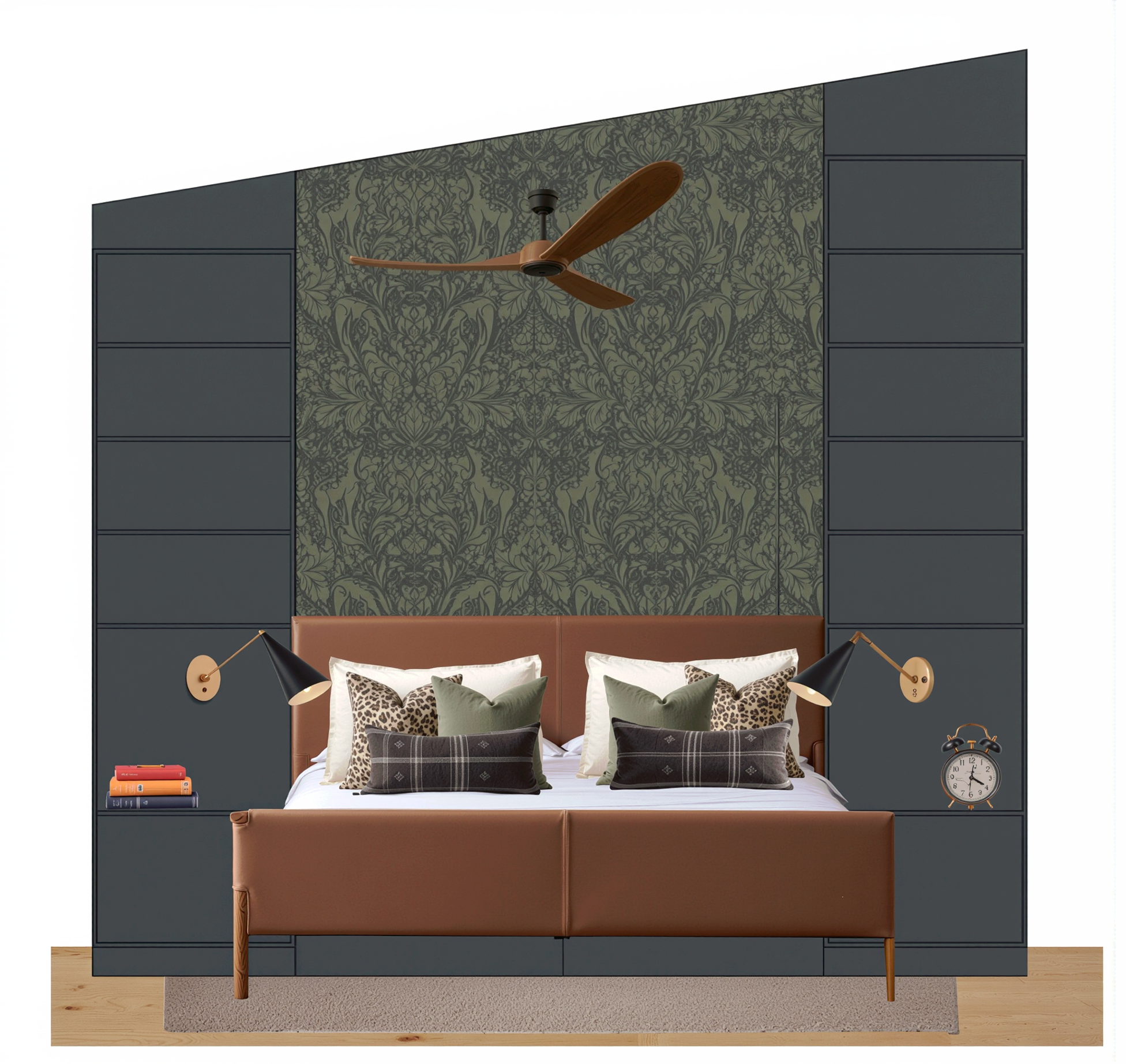
A rendering for a recent client proposal using wallpaper to emphasize a larger piece of wall architecture.
So where did it all begin? Like anything historical there were many variables playing into how wallpaper caught on and continued its rise in popularity. Starting in the 16th century, wallpaper was initially used in cupboards. We see this today on the backs of bookshelves and cabinetry. Fast forward to the 20th century, wallpaper was seen everywhere in all kinds of spaces.
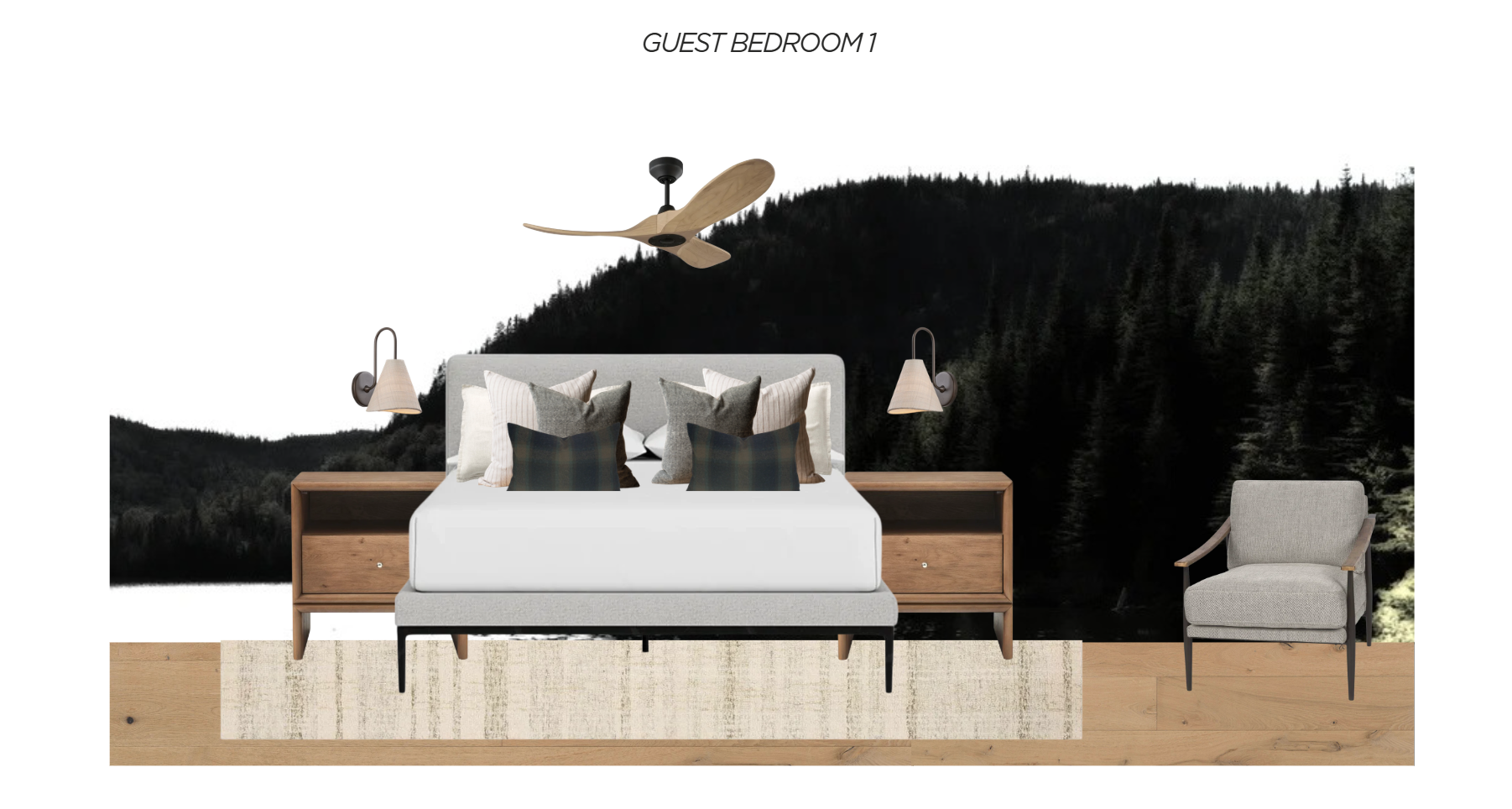
Using a wallpaper mural for this guest bedroom project. The mural brings a moody, atmospheric feel to the room.
Wallpaper was made from ink on paper and started as a very monochrome type of design work. From there the long roll format would emerge along with block printing. You can imagine the very tedious process of printing colours separately, drying each piece and well patience that I can’t imagine anyone having! Some early accounts of William Morris designs are from 1874 and as a revenue producing industry in Britain it really caught on. In 1712 they even had a tax on wallpaper that remained in place for 124 years! But like all of us design aficionados, that didn’t stop it from being a popular and highly purchased fashionable option. And forging wallpaper designs was punishable by death!
The Chinese are believed to have been decorating their walls with rice paper as far back as the Qin dynasty. By the 12th century, wallpaper and its influence were making their way westward, with the Silk Road helping to carry this early form of decorative expression into new cultures and shaping the evolution of interior design along the way. There is a surviving fragment of wallpaper dating as early as 1509 made by Hugo Goes of York. (bbc.com/culture/article/20181106-the-surprising-story-of-wallpaper)
Of course, from there royal warrants were granted and expensive, fancier papers were born.
As floral and flock patterns gained popularity, the influence of upholstery design became increasingly evident in the wallpapers of the day. Interestingly, the applied wool and velvet textures were once considered rather cheap. (Eye roll.) How times have changed! With today's luxurious textural wallpapers, those same finishes and patterns might well be considered the height of sophistication.
An example of how textured wallpaper can ground a colour and décor scheme.
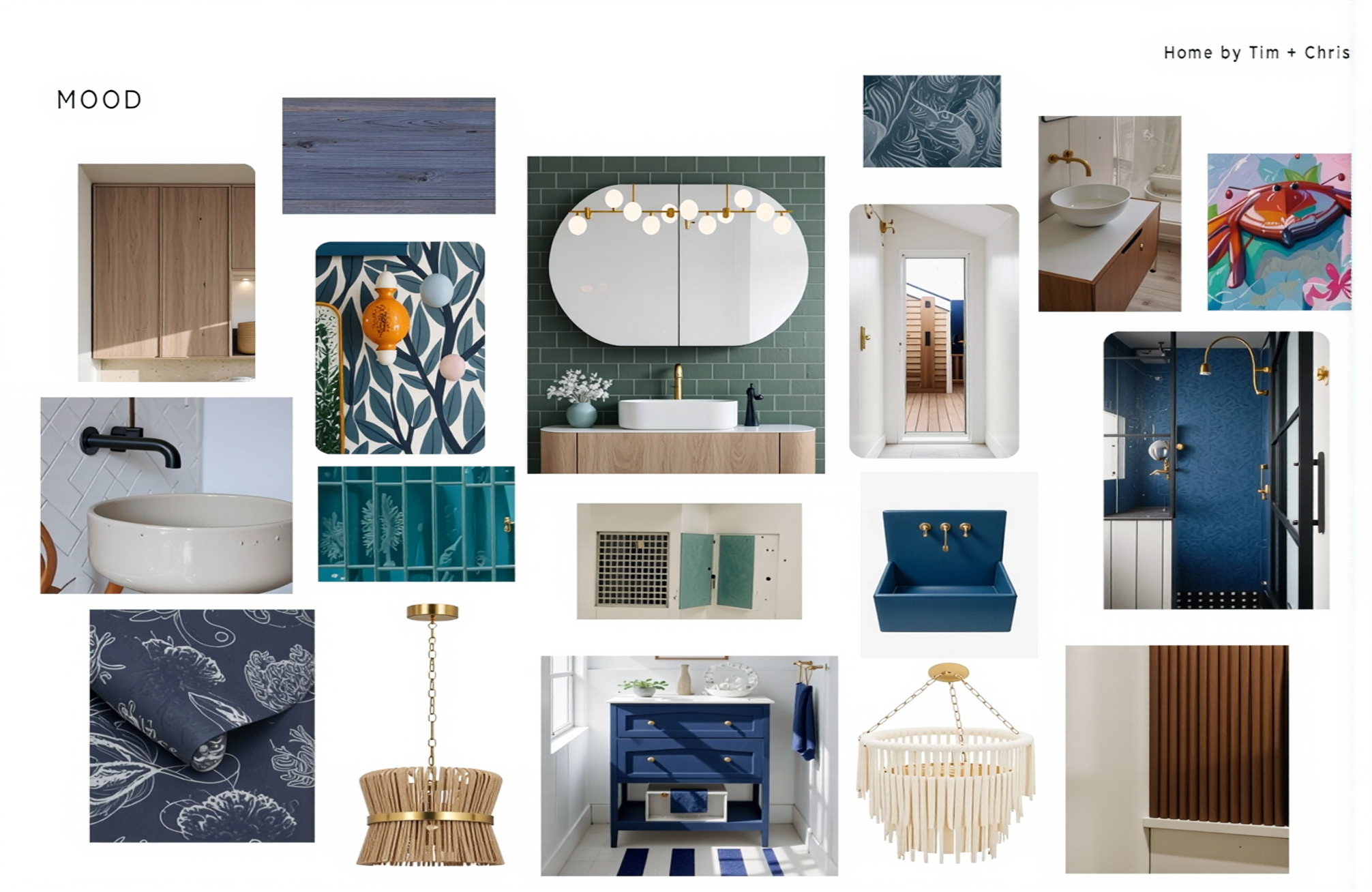
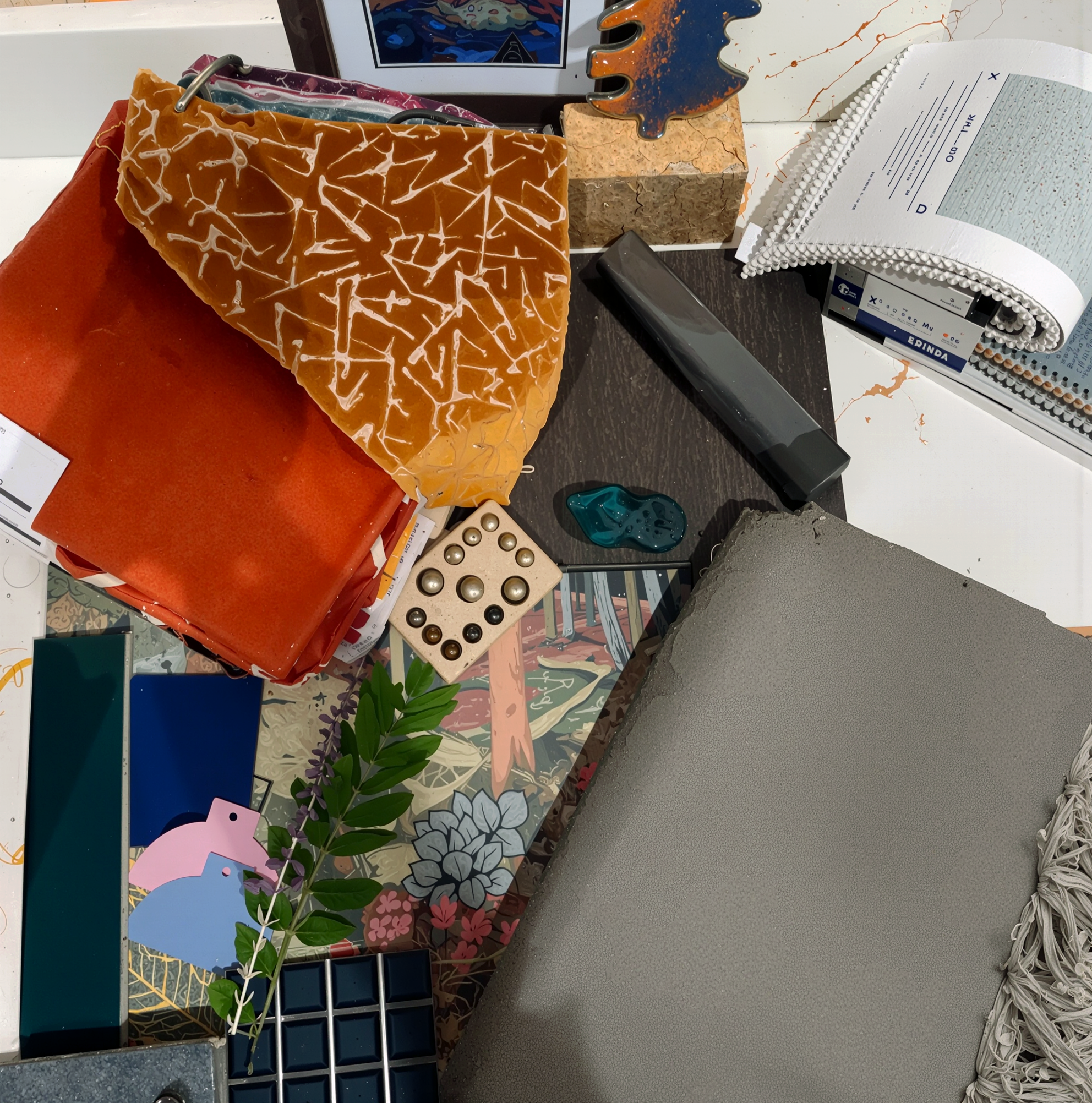
Mood boards that include wallpaper inspiration, help us communicate to clients how a room palette can come together and from there a design direction often takes hold.
The Victorian era ushered in mass wallpaper production and, with it, a change in how wallpaper was perceived. No longer simply a background feature or a means of disguising imperfect walls, wallpaper began to claim its place as a decorative statement in its own right. Influenced by William Morris and the Arts and Crafts movement, designs embraced the natural world, with florals, birds, fruits and foliage taking centre stage. I love this next little hiccup as quoted here (https://www.bbc.com/culture/article/20181106-the-surprising-story-of-wallpaper):
However, a killer was lurking among the brambles and roses: Morris & Co used large quantities of arsenic in their dyes – particularly for the greens in wallpaper. In the 1860s when a number of child deaths were attributed to wallpaper, William Morris refused to accept they had been poisoned. Eventually, he bowed to public pressure and began to produce wallpaper that was advertised as ‘arsenic-free’.
Over the years, some of the most influential designers and wallpaper houses have pushed the boundaries of pattern, print and production, introducing remarkable designs and innovative techniques along the way. Here are a few notable names whose contributions helped shape the history of wallpaper as we know it today:
Zuber & Cie: a French firm dating back to 1797 that sells luxury hand-printed scenic and panoramic wall coverings. These can include cut velvet and tooled leather for panels and embossed papers. They are the oldest surviving wallpaper manufacturer in the world.
Marburger Tapetenfabrik (Kirchhain, Germany): Founded in 1845 by Johann Bertram Schaefer, this fifth-generation family business is one of the world's oldest and largest wallpaper producers, known for major design innovations like non-woven and free-repeat pattern wallpapers.
Cole & Son: Since 1875 they have been stewards of one of the world’s most incredible wallpaper archives, they product historic printworks and invented early print technology along with artist collaborations.
York Wallcoverings (York, Pennsylvania, USA): Founded in 1895, York is recognized as America's oldest and largest operating wallpaper manufacturer.
Wallpaper Styles and Eras
18th Century: Chinoiserie & Grand Damasks
The 18th Century brought finely printed papers with large-scale, repeating silk damask or hand painted. Everything was full of detail like Chinese panoramic murals called Chinoiserie that contained landscapes, flowers and birds.
19th Century: Gothic Revival & Victorian Opulence
This era enjoyed rich, dark spaces full of layers. Gothic Revival featured architectural mock-carvings, heraldry, and spires, which eventually made way for heavily textured embossed papers (like Lincrusta) and rich "flocked" wallpapers with a velvet-like feel that I mentioned earlier on.
Late 1800s: Arts & Crafts Movement
We touched on William Morris earlier in the post and this movement rejected flat, machine-made industrialism. Designs were dense, beautifully stylized interpretations of the British countryside, featuring flatly layered matching flora, repeating fruit branches, and native birds.
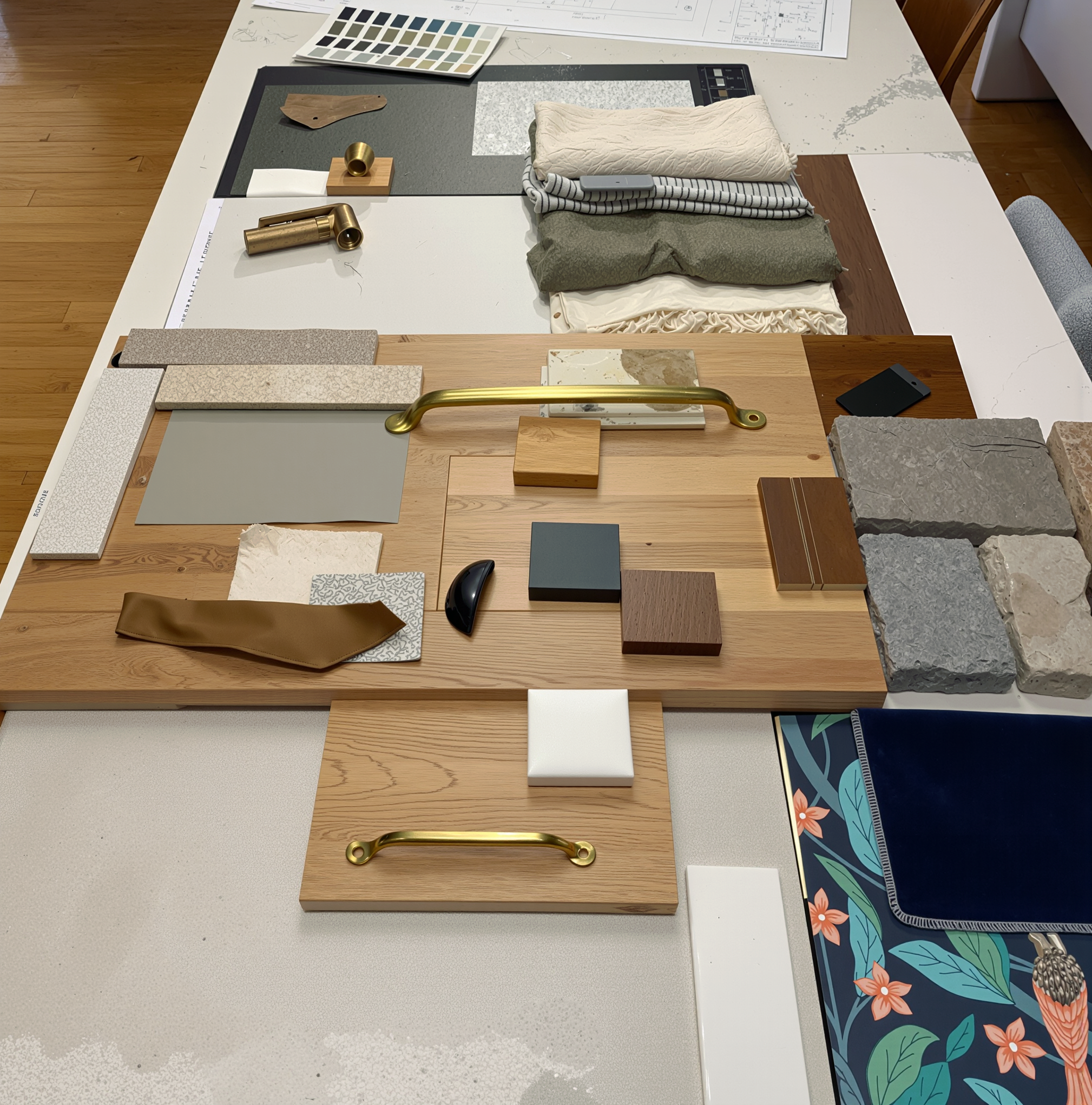
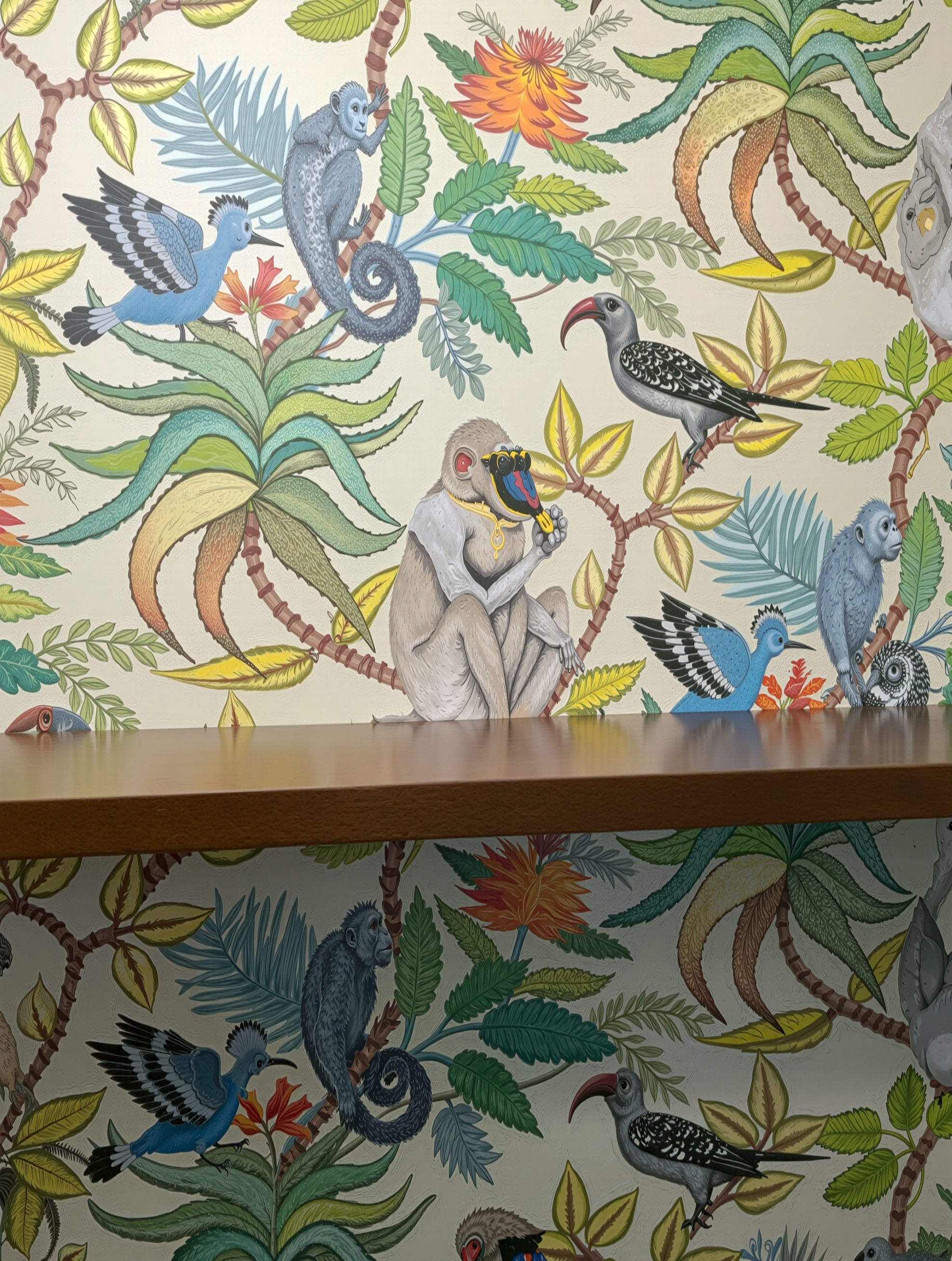
Birds and florals in this modern wallpaper sample bring colour to a neutral palette.
Turn of the Century: Art Nouveau
Art Nouveau moved away from symmetry, and instead focused on long, organic, undulating lines. Wallpapers featured highly stylized whip-lash curves, elegant peacocks, vines, lily pads, and flowing feminine silhouettes.
1920s–1930s: Art Deco
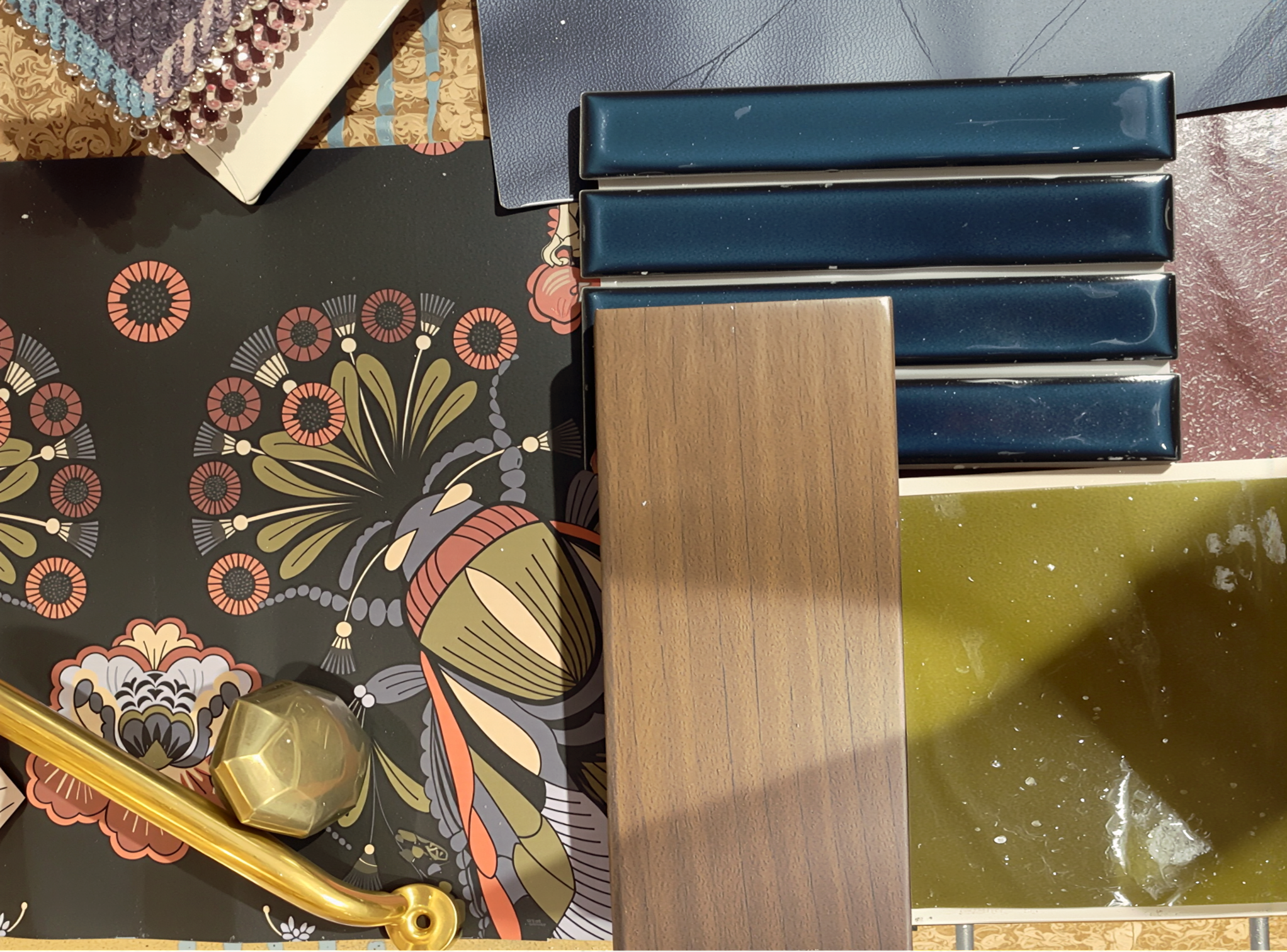
This era embraced the machine age and designers created sharp geometric luxurious patterns for the "Roaring Twenties." Natural curves disappeared in favor of stepped chevrons, metallic gold lines, overlapping fan shapes, stylized sunbursts, and highly symmetrical skyscrapers motifs.
1950s–1960s: Mid-Century Modern & Atomic Age
After the way, there was an optimism that brought abstract, clean-lined, and playful imagery to the world of wallpaper. Popular aesthetics favoured boomerang shapes, "atomic" starburst constellations, intersecting spheres, and minimalist Scandinavian graphics in muted pastel or bright primary colours.
1970s: Psychedelic & Earthy Retro
The 1970s saw two dominant styles: a vibrant, swirling "groovy" look defined by bold, trippy psychedelic lines and melting rainbows; and a more grounded, textured look utilizing massive geometric blocks or stylized daisy patterns in a classic warm palette of avocado green, harvest gold, and burnt orange
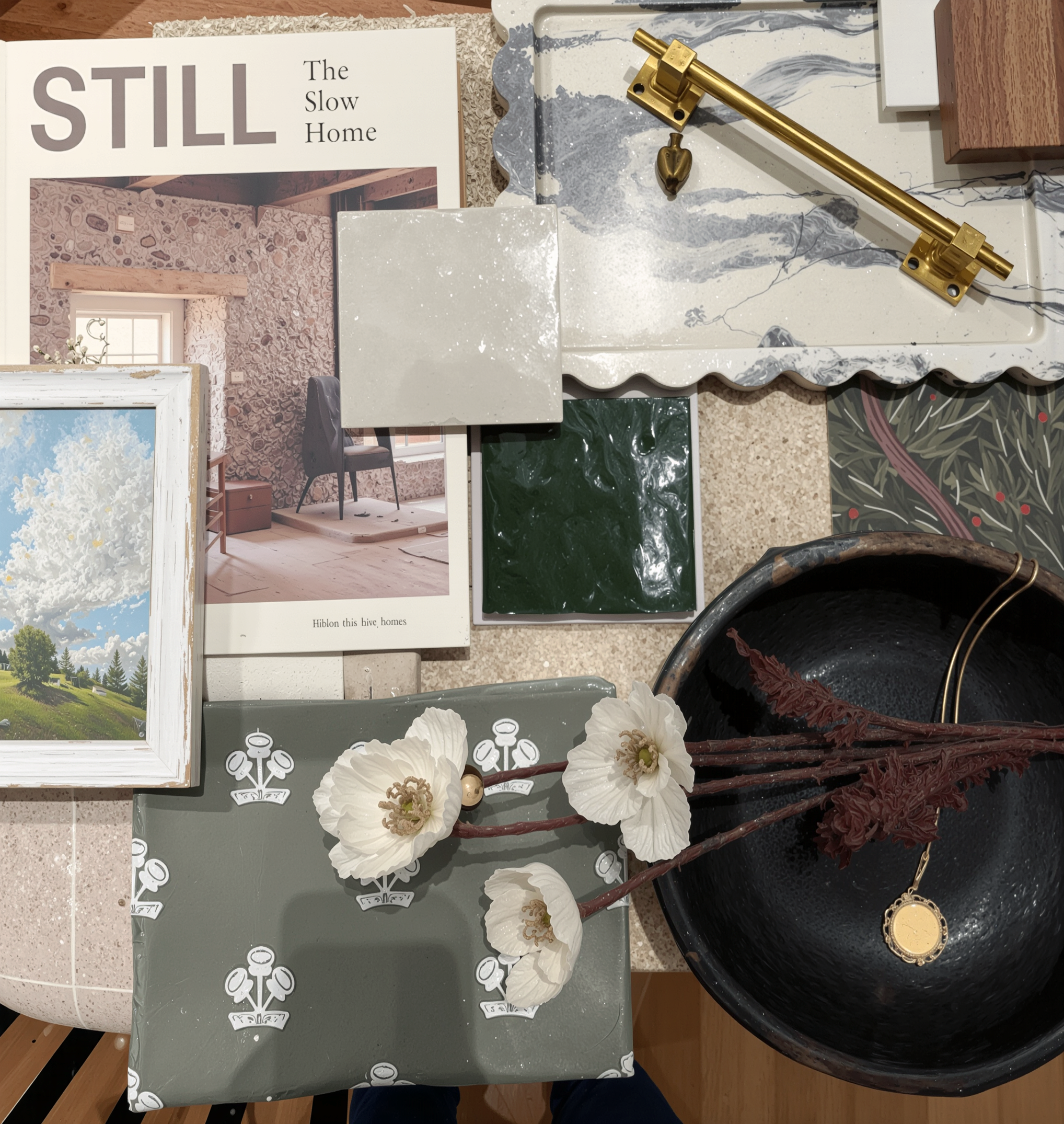
A Home by Tim + Chris designer mood board incorporating wallpaper selections with other inspirational features like hardware, stone and art.
Current: Today’s designs are defined by "warm minimalism" and "biophilic maximalism," shifting away from stark graphics and cool grays toward tactile, earthy storytelling. Historical charm is combining with modern craftsmanship. There is a major resurgence of vintage-inspired botanicals, detailed floral block prints, and classic damask motifs, often rendered in muted earth tones or rich, moody palettes. Beyond traditional flat patterns, there is a strong emphasis on textures like woven grasscloth, embossed linen finishes, and subtle metallic accents. These are adding depth and a sense of warmth to interior spaces. Whether serving as a dramatic accent wall or wrapping an entire room, today's designs prioritize personality, organic warmth, and timeless elegance.
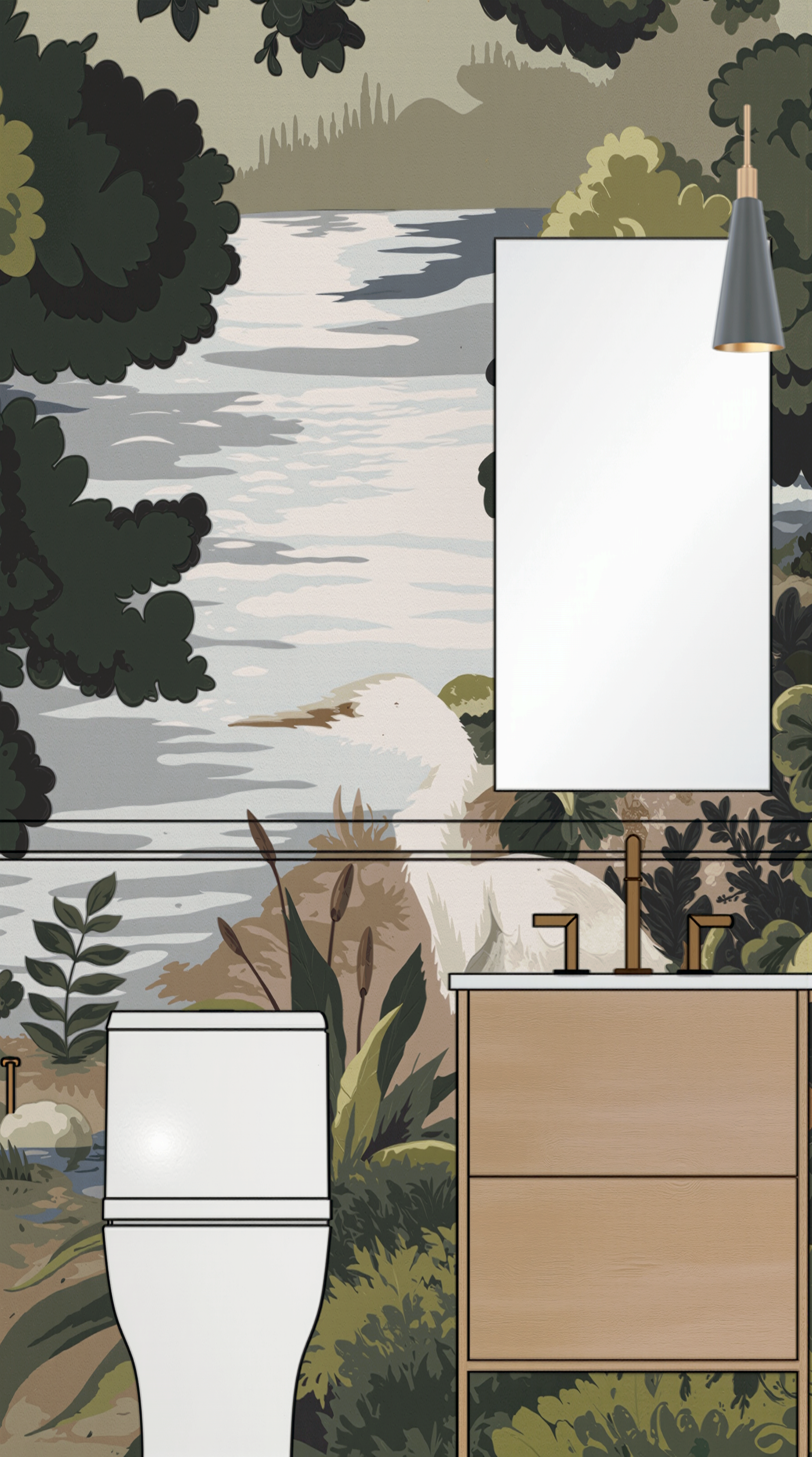
How a modern wallpaper choice by Milton & King brings an art like feel to a powder room for this client project. Our choices are often influenced by location!
A video depicting Milton & King wallpaper in our Balsam Lake project. Here we create mood and colour in a home office overlooking South Bay with a fun and bright print.
A Cole & Son pattern for a project where we made a closet into a laundry room. This fun print brought personality and spirit to a utility space!
How wallpaper can anchor upholstery choices.
As with so many things in decorating, bare walls eventually had their moment in the spotlight again with modernism. But wallpaper wasn't about to disappear. It returned, this time with the endorsement of celebrated designers and some of the world's most recognizable design houses. I have a feeling it's here to stay. The patterns, prints and colourways may evolve with the times, but the desire to surround ourselves with beautiful designs is hardly a passing trend. Wallpaper has well and truly earned its place as a decorating mainstay.
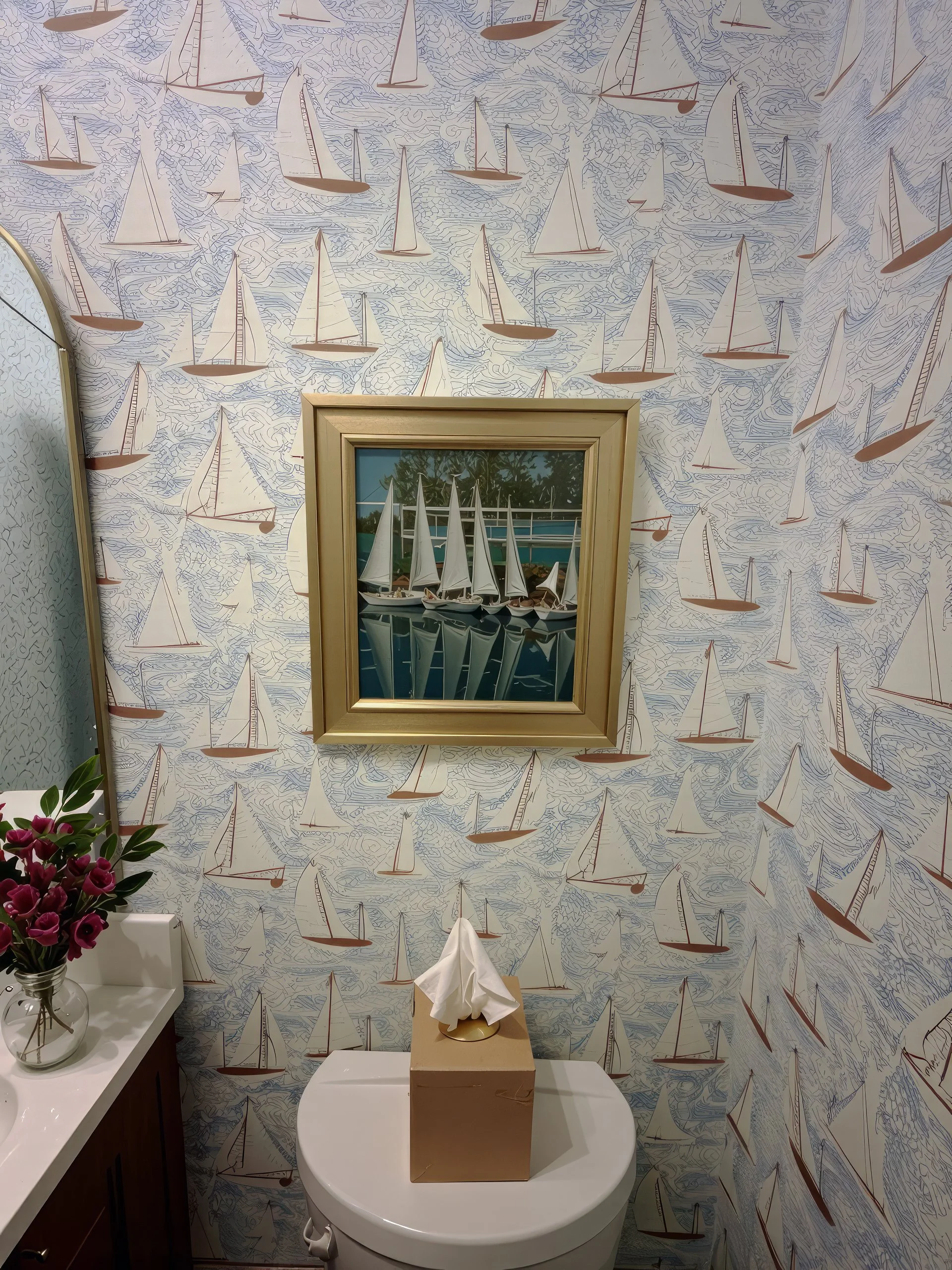
Our Sturgeon Lake powder room project features art by Joan Horsfall Young that pairs fittingly with sailboat wallpaper by Canadian artist Kate Golding.
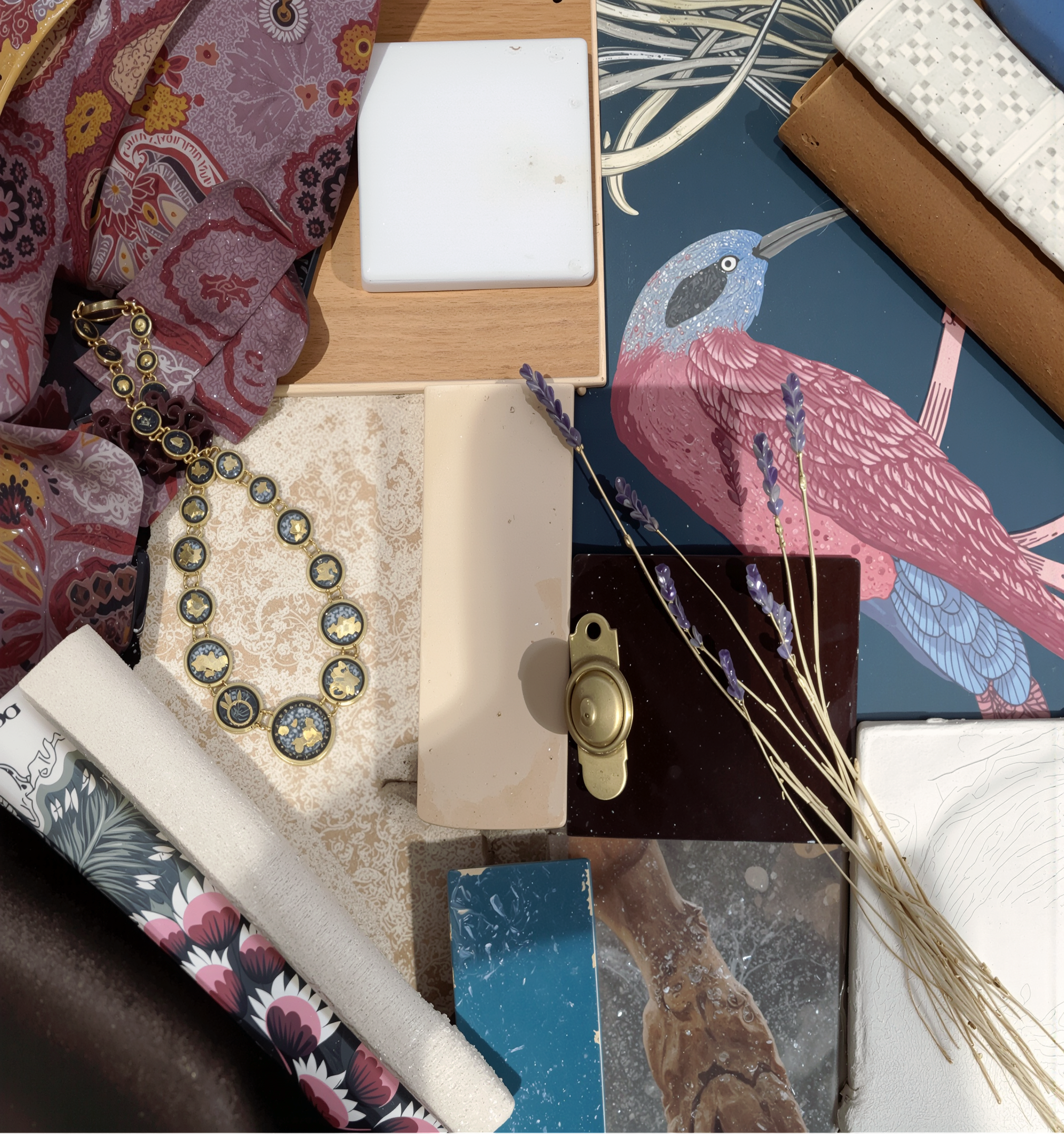
From a contemporary design perspective, wallpaper can play a leading role in shaping a room. Its pattern, colour and texture can influence the direction of an entire project, helping us as designers, establish the palette, mood and overall character of a space.
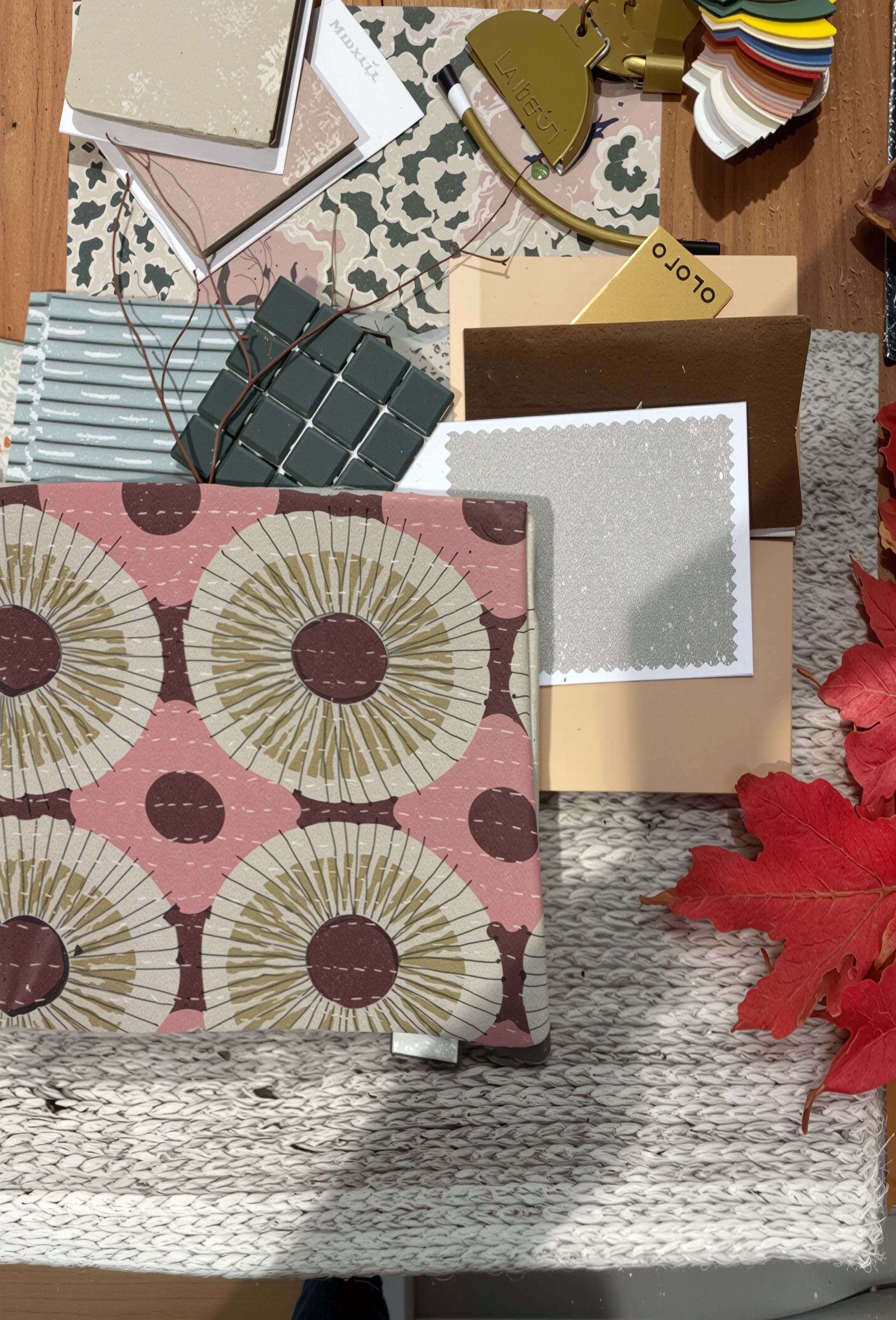
In this example, grasscloth grounds a natural palette for a cottage interior design.
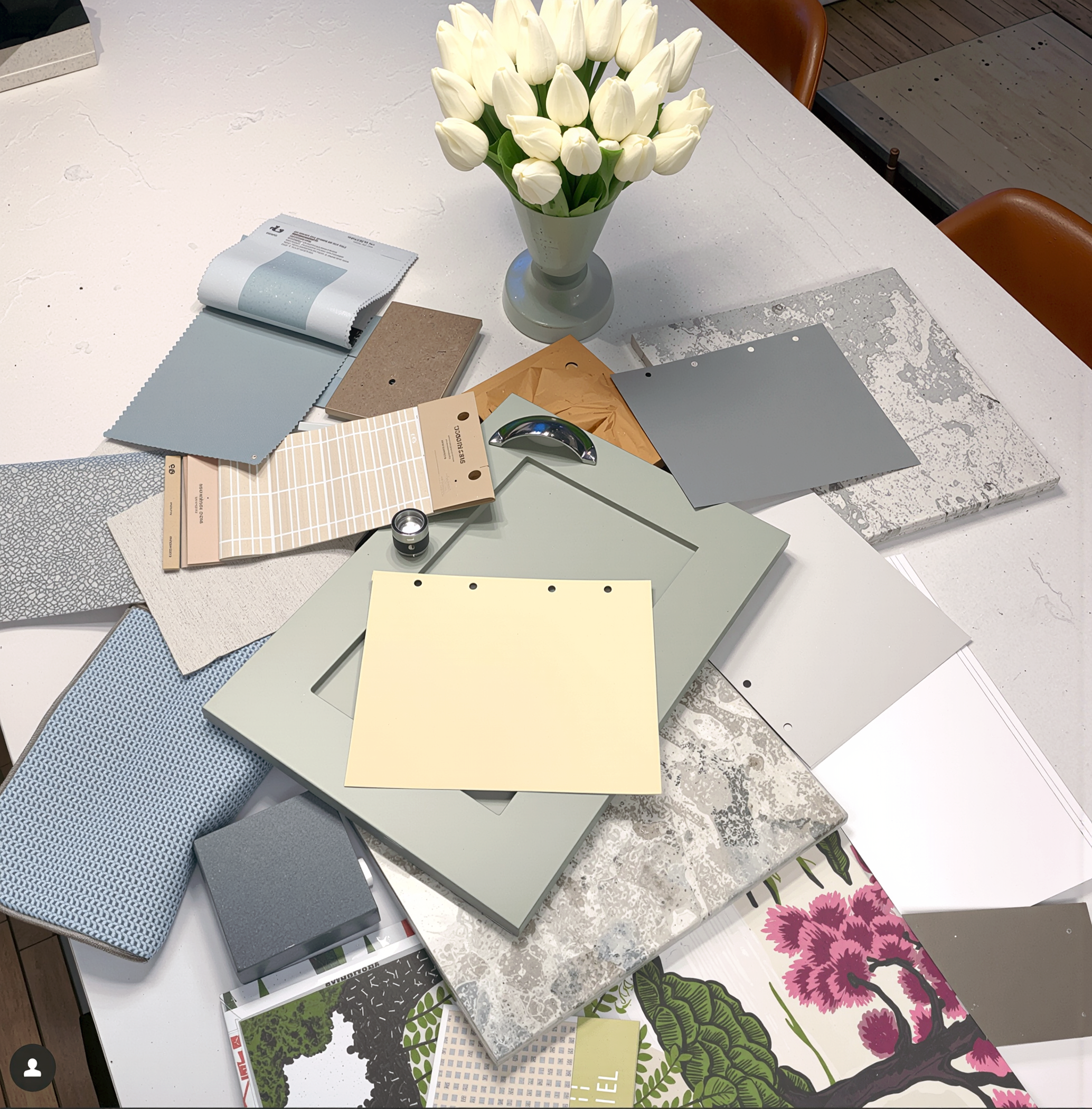
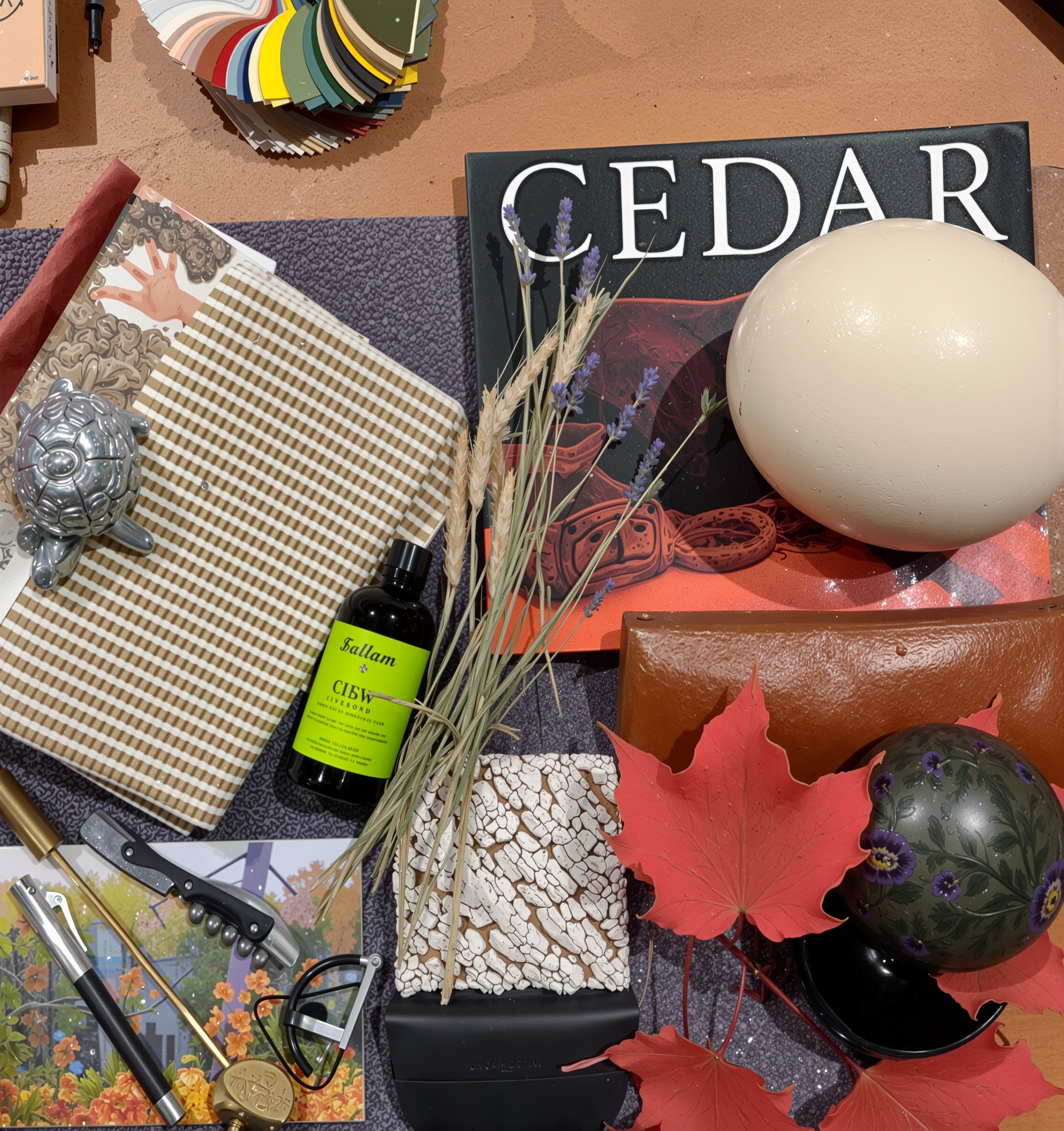
A day in our studio, pulling swatches, wallpaper samples and paint selections for a client proposal.
Discover how Farrow and Ball are celebrating their 80th anniversary of their limited edition Heritage Papers collection.
Learn more about our architectural design and other services.
See our latest Project Portfolio full of architectural and interior design imagery.
Sign up on our website for our monthly eNewsletter Lakeside Notes featuring all things art, culture and design. Stay current on what’s new in the design world, projects we are working on, the Grove Theatre, events and art exhibitions.
Tim + Chris