Slow Design: The Intentional Home
Our previous blog received more attention than we expected, so I thought I’d hone in a little more on the concept of “slow design.” We’ve all heard of the “slow food” movement, and we all enjoy carefully selecting our nutritional finds from the local farmer’s market, growing our own or experiencing new and interesting culinary delights through travelling to countries who have better mastered the art of slow food. In food terms, this means that meals are rooted in local ingredients, seasonal harvests, and time-honoured traditions. This approach celebrates simplicity so that the natural flavours of fresh, locally grown food take centre stage without unnecessary embellishment.
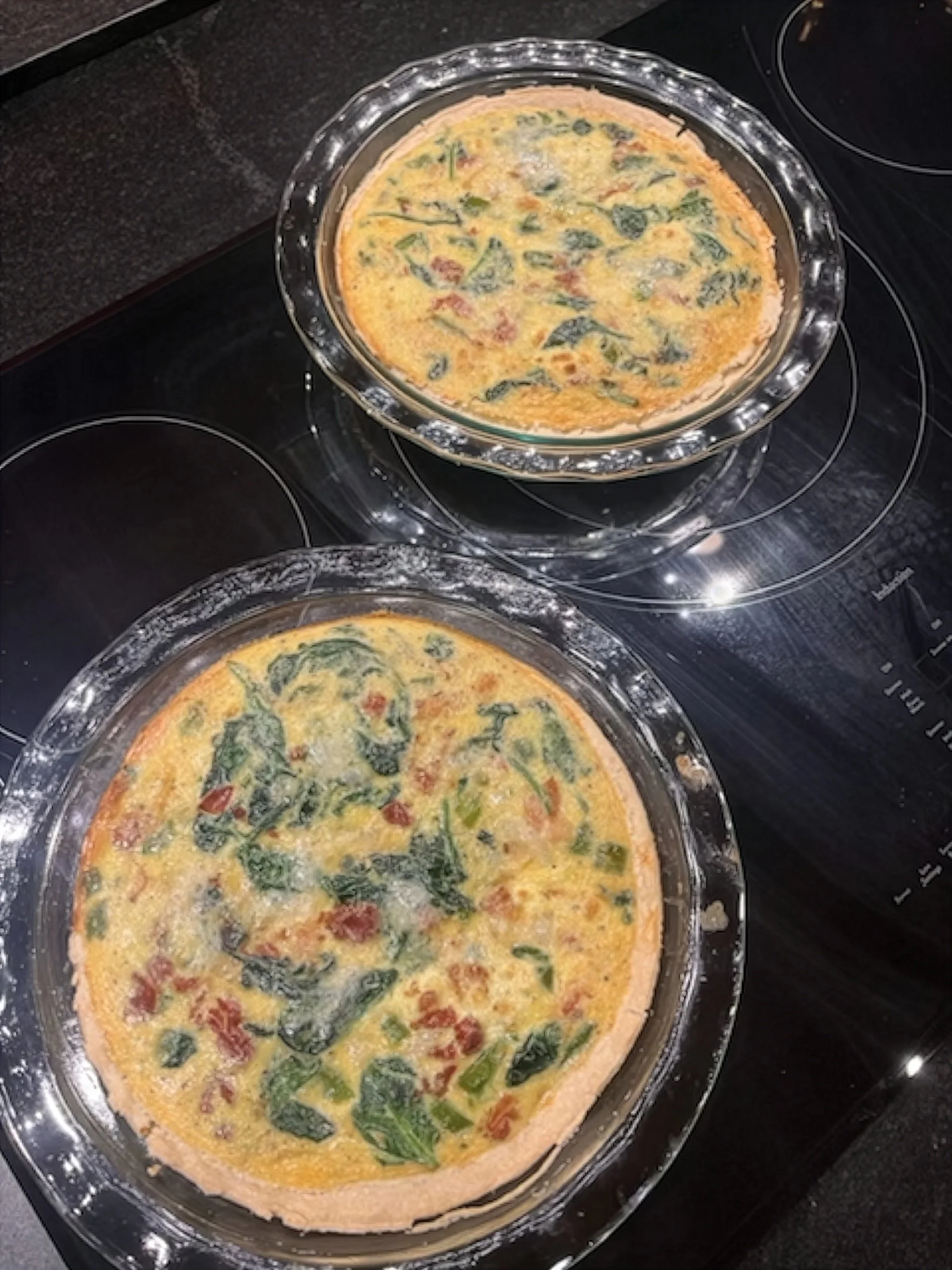

I enjoy baking and cooking whenever I get the chance to! Everything shown here is from our own garden!
Slow food is less about complexity and more about intention. It’s about where and how food is grown, how its local townspeople prepare it and in turn share it. This is what becomes meaningful, beyond just how it tastes. And there are companies who have built followings around “slow travel.” This is the type of travel that goes deep and off the beaten path. Travel that appeals to the inner senses integrating sight, sound and taste. It’s the only kind of travel that truly integrates all aspects of experiencing culture, people, food and drink.
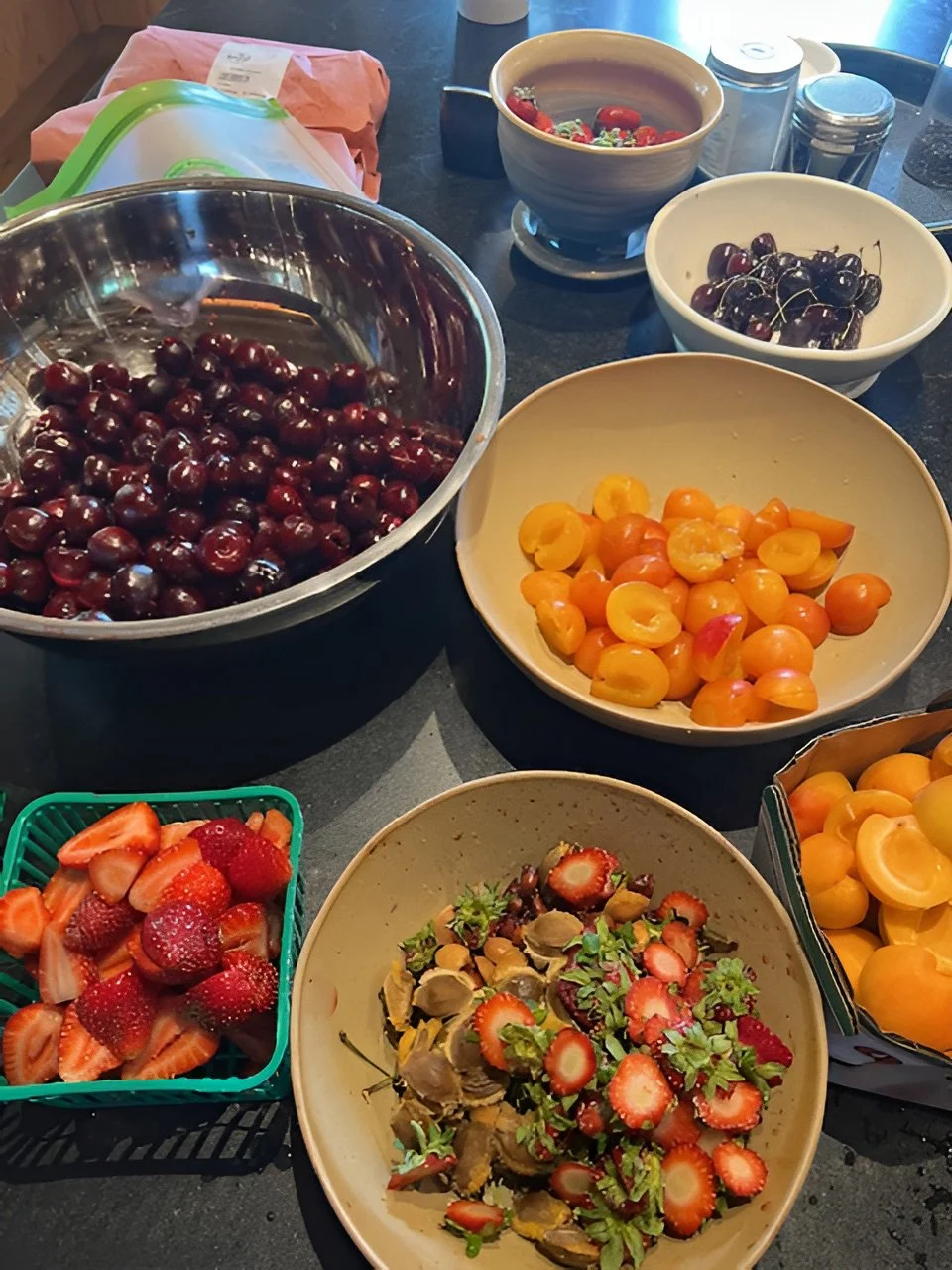
Slow food is often bright and colourful, inspiring a palette of both food and art!
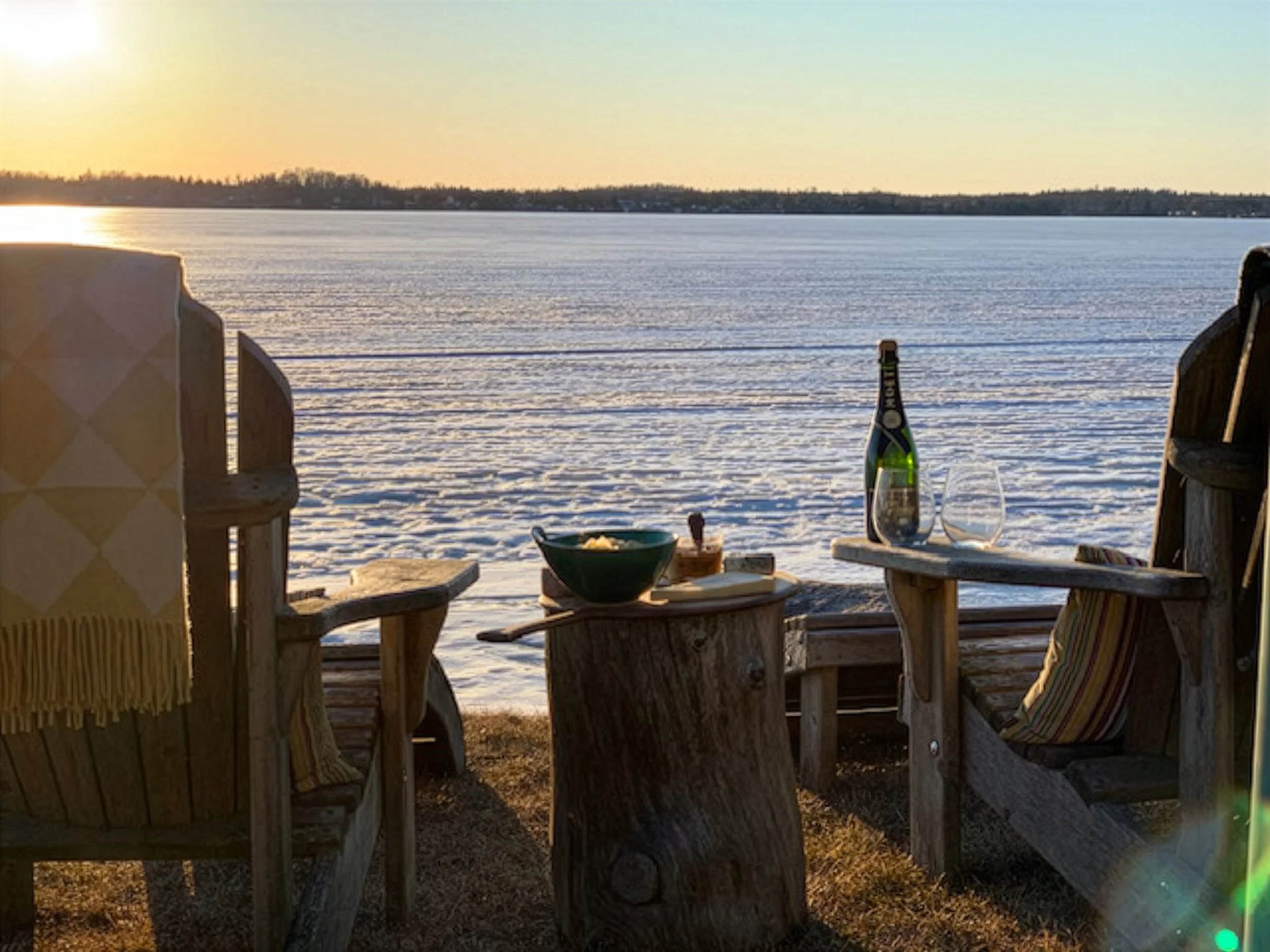
A slow food moment in our own backyard. Using our outdoor space and enjoying food and drink throughout all seasons is one of the reasons we love the Kawarthas so much!
What if we are to apply the same sensory variables to design? What if we were to think in terms of people “experiencing” our homes and cottages vs simply seeing them at a surface level?
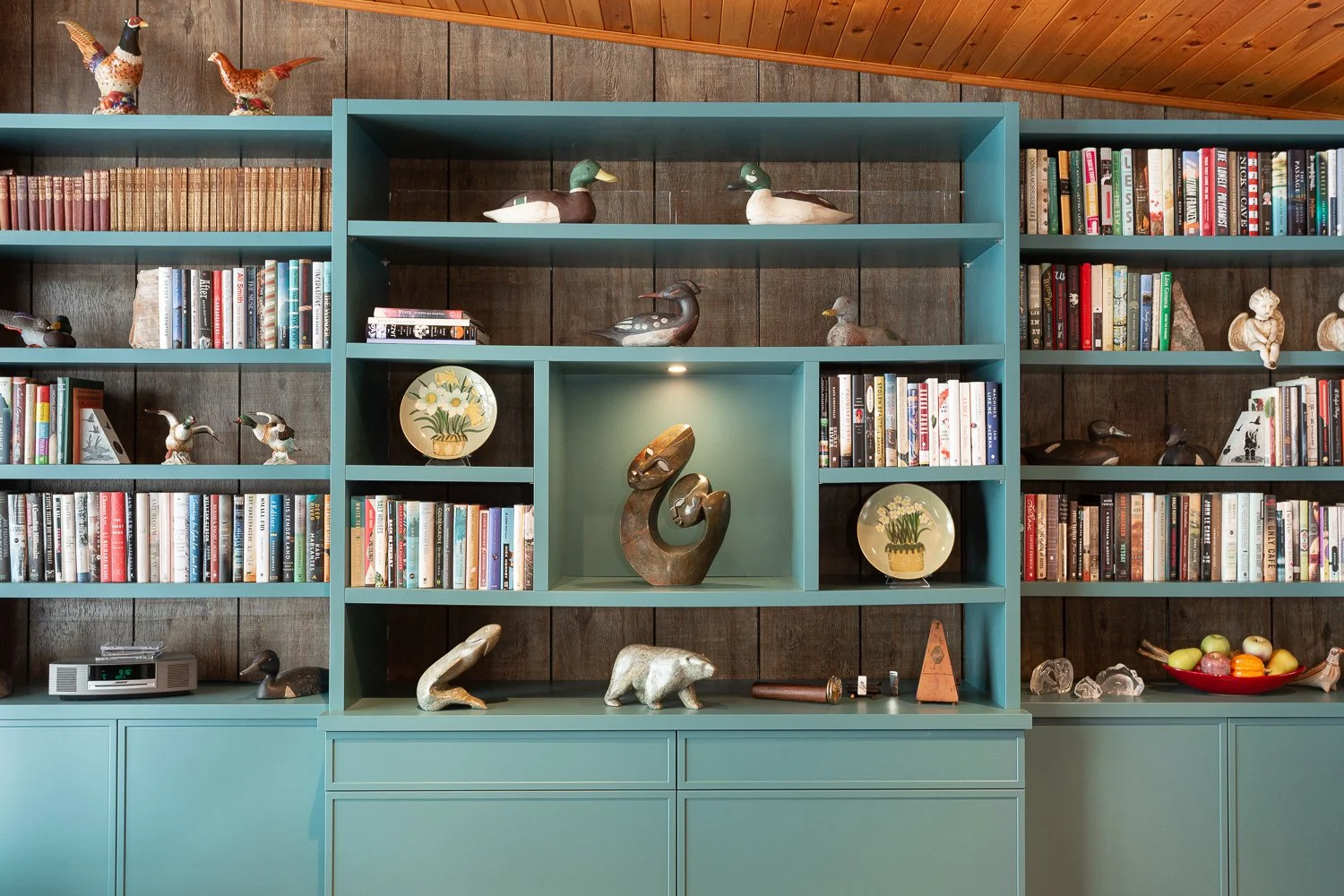
An example of a collected vignette demonstrates how collected things over time can take centre stage and tell a cottage owner's story in this case.
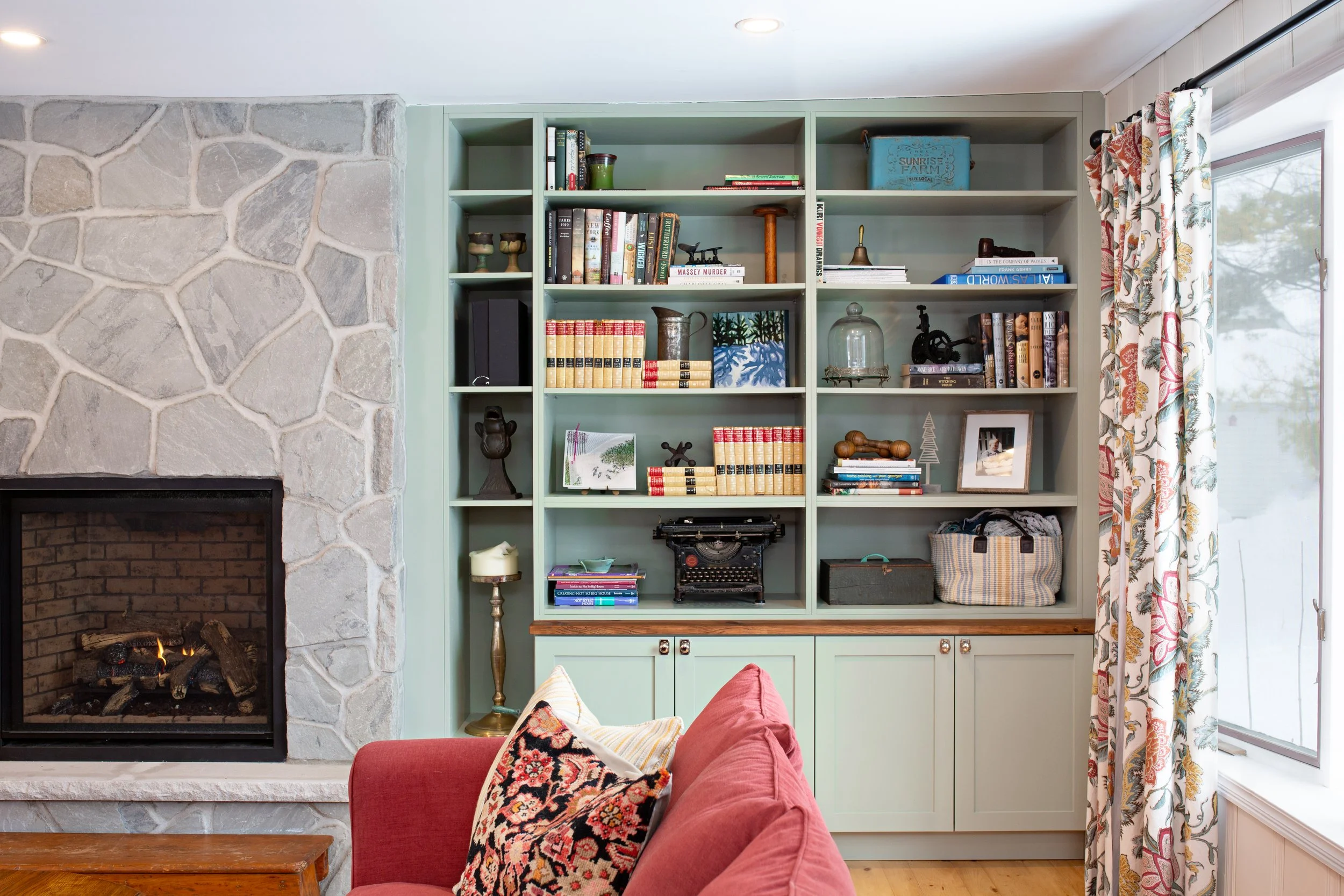
Shelves and built-ins are such an ideal way for displaying special collected moments and art.
Interior design can also embrace the idea of being “slow.” Much like the slow food or slow travel movements, slow design is about resisting haste and trend-driven decisions in favour of spaces that evolve thoughtfully over time. It prioritizes intention over impulse so that rooms can be curated gradually, with pieces chosen for meaning, quality, and longevity. You can always recognize when a room has been filled with mass produced furniture and accessories. It’s not that you can’t sprinkle those items in if they absolutely strike your fancy, but it’s more about how to lead with intentional, thought-out purchases.
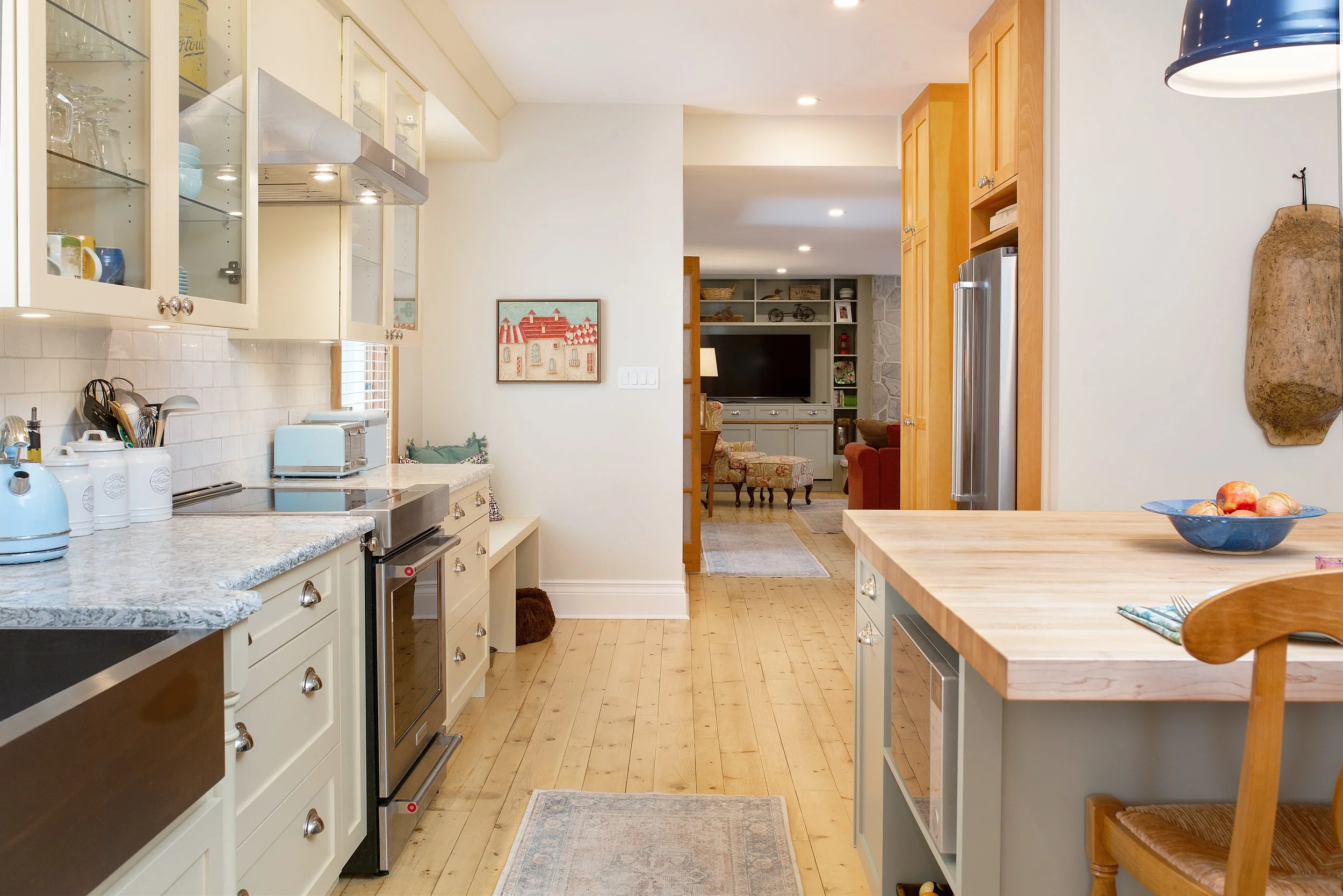
This kitchen in one of our projects is an example of using the homeowner’s antiques and art in thoughtful ways instead of purchasing new. When re-used in a room with considerations like placement, scale and relationship to other furniture, these pieces add character and personality.
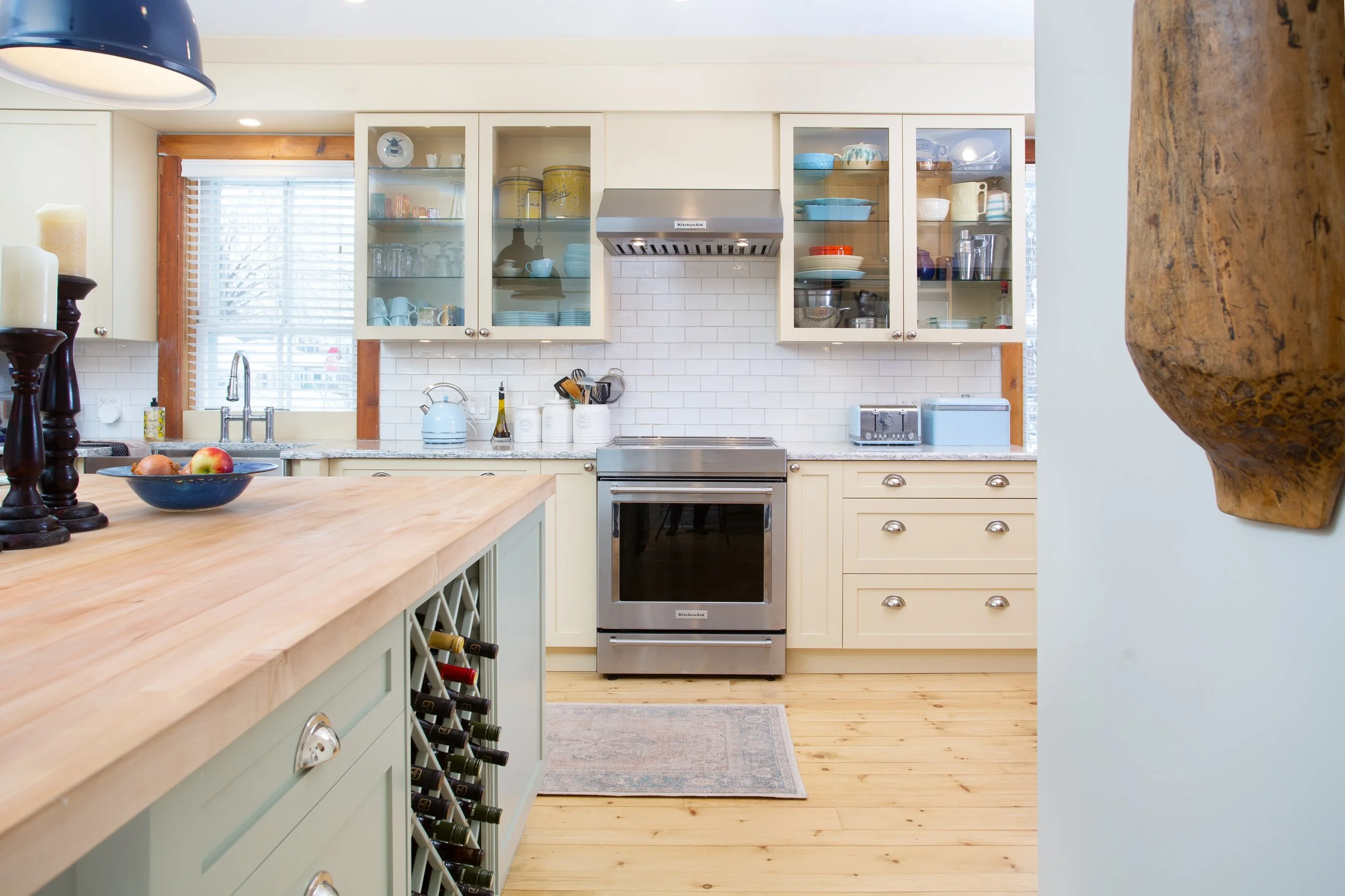
Another view with the homeowner’s bread bowl in the foreground. These antiques had been in the family for two generations and now can be appreciated to warm and style her space.
When I first meet with a client, I seek to understand their story. I want to know the special things that make them and their family unique. It’s about connection for me and once I establish that foundation, I begin to see their collections and accessories in a truly personal sense. Clients have interesting backgrounds, professions and stories which all mesh to help me further define how we are going to approach the design task. The strategy or shall we say rather unplanned approach ensures no two spaces are ever duplicated. I really feel that our firm communicates on a design level with our clients in ways that other firms can’t. This is our differentiation in that we are not building or designing for a one-size-fits-all but rather for a bespoke solution that feels emotional for the client. By designing slowly and intentionally, each room becomes personal and expressive. Never cookie-cutter, but a true reflection of the client’s life, memories, and individuality.
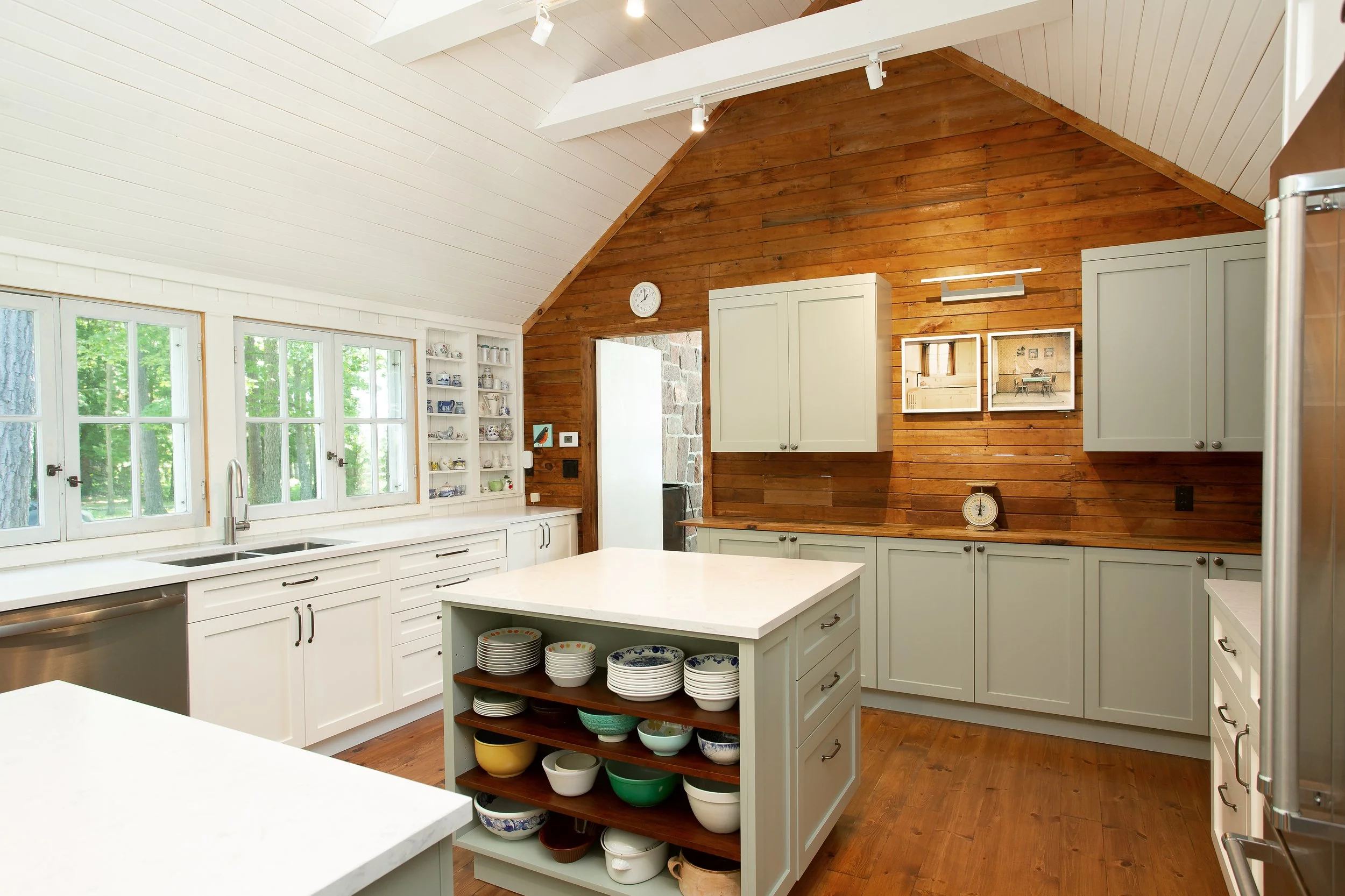
This charming Sturgeon Point family cottage features several collected moments and preserves the cottage feel. Newer items would not leave the same impression and definitely would not stand out.
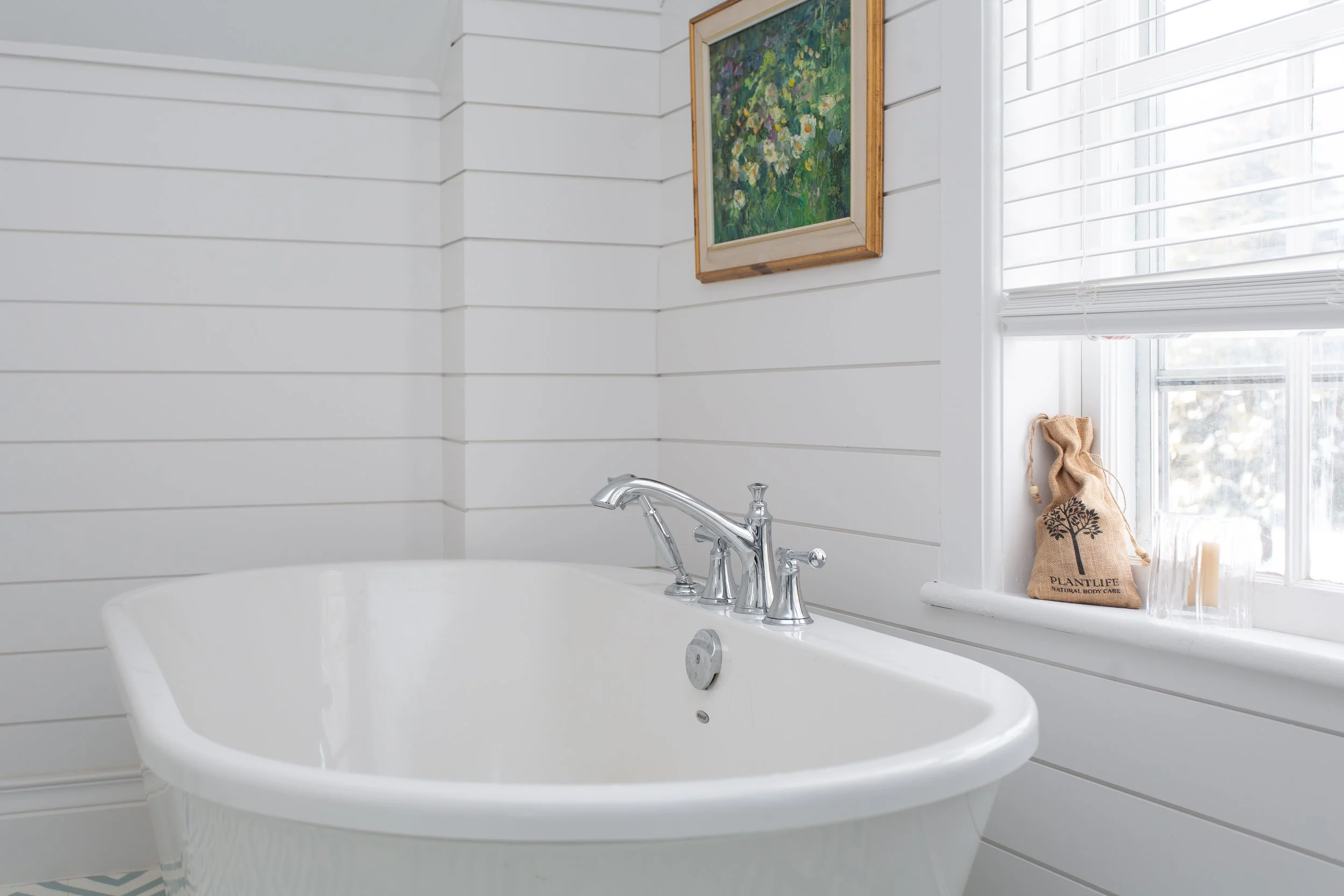
Even simple moments with small details add a personal touch to a space and when well chosen, can elevate a space.
As I’m explaining, slow design is rooted in intentional purchases and the thoughtful use of special, meaningful pieces rather than filling a space for the sake of speed. That said, we understand that homeowners often want their homes or cottages to feel finished and livable right away. As designers, we balance this by sourcing or custom-making pieces that truly reflect the homeowner’s personality and lifestyle, while also using well-considered placeholders. Placeholders are items that function beautifully in the meantime until the perfect piece is found. This approach allows a home to feel complete, yet still evolve with purpose over time. This is an approach you can try yourself if post holidays you are moving furniture around and nesting! I also find that artisan pieces are a way to infuse a slow design feel as they are not mass produced.
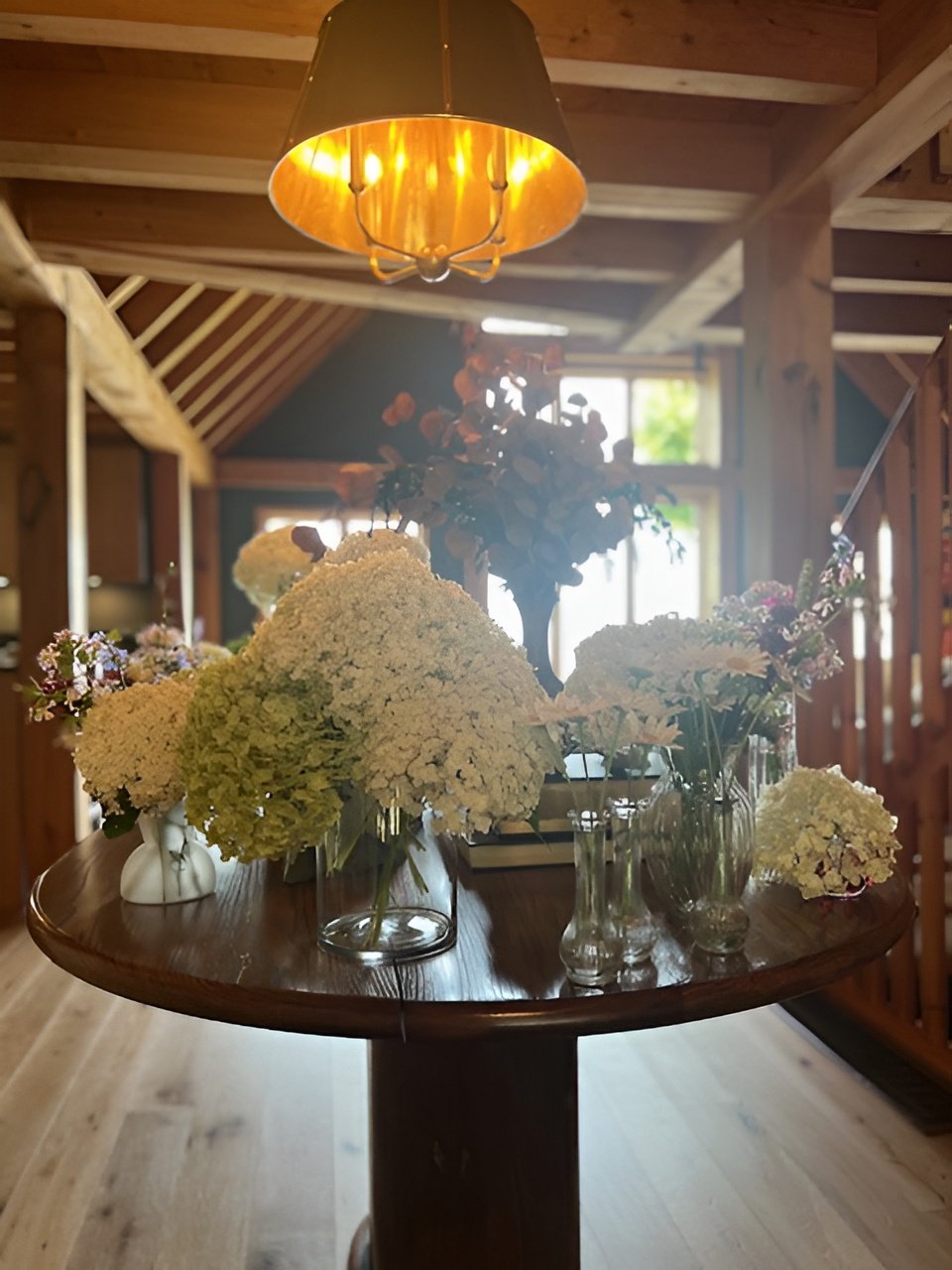
My own “placeholder” entry table that is quickly becoming the permanent piece as it grows on me!
Antiques are making a strong comeback, and they are a perfect example of slow design in action. Each piece is one-of-a-kind, carrying craftsmanship, history, and a story that can’t be replicated. By reintroducing antiques into a home or cottage, you’re not only choosing something timeless, you are also giving new life to a treasured object and allowing its story to continue in a modern context.
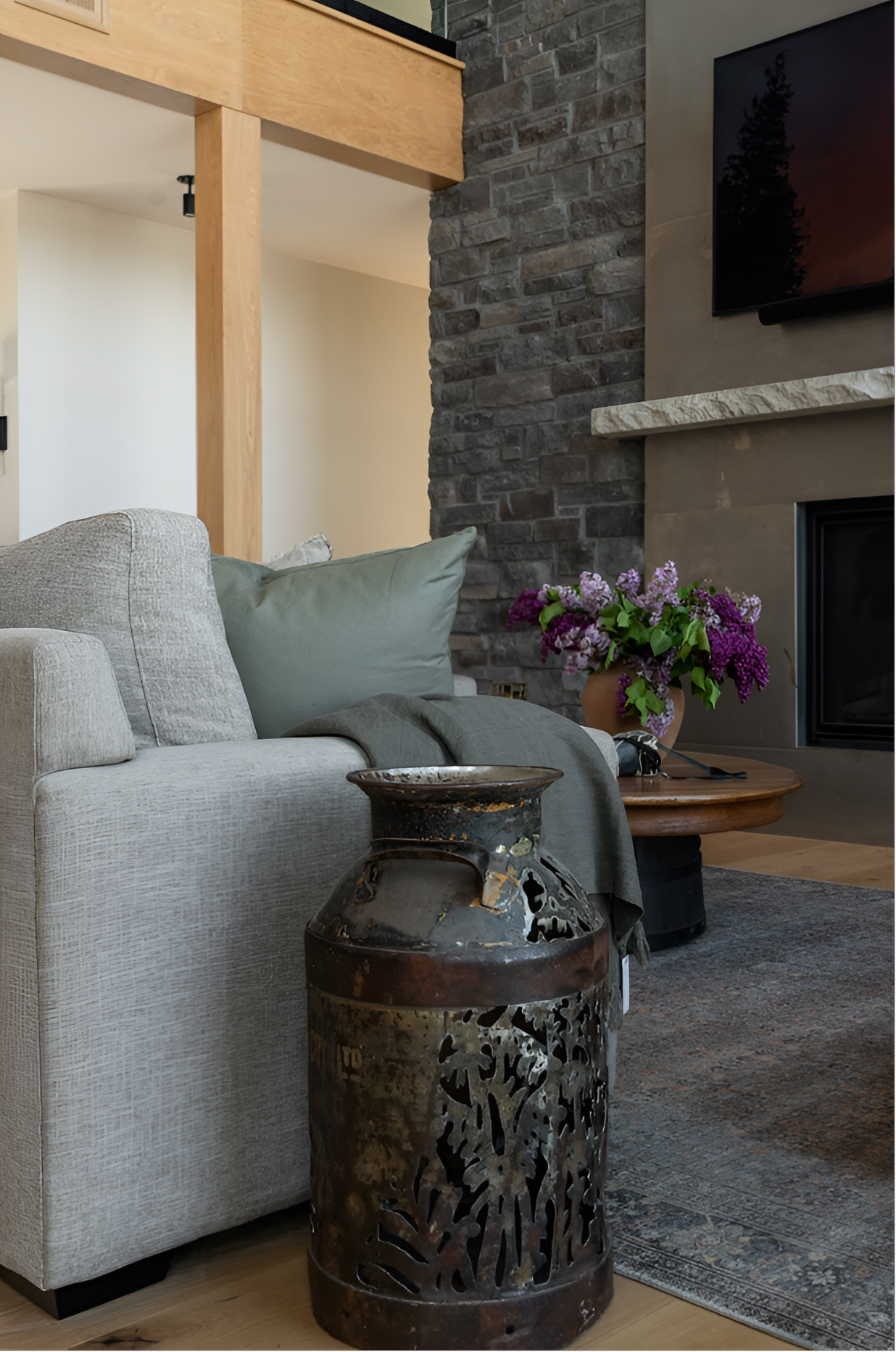
An antique milk can with a punched out design is in stark contrast to this modern cottage backdrop. The fusion of old and new, creates an eclectic and interesting feel.
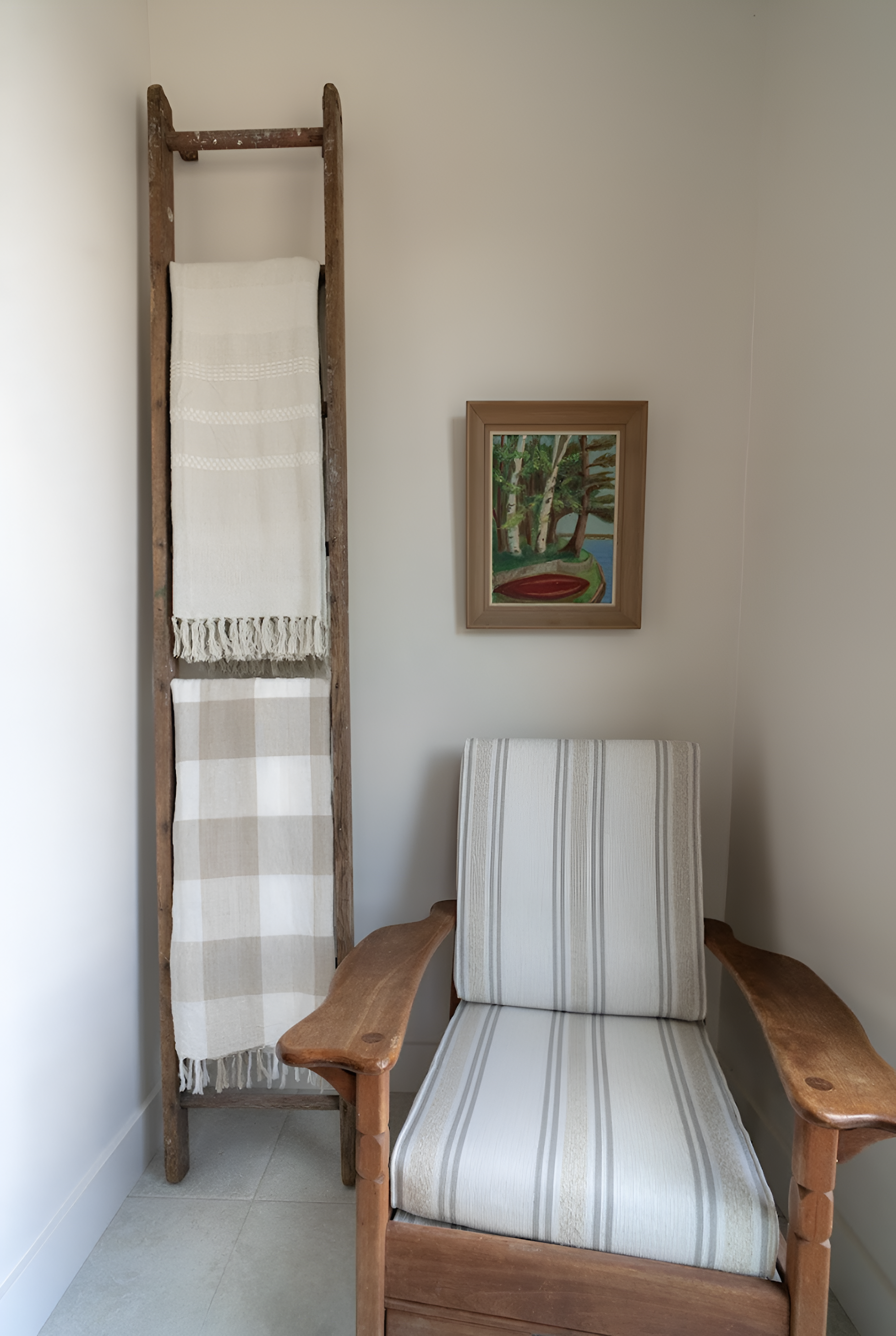
A Morris chair and vintage ladder work together with the colourful painting to decorate a corner in this Balsam Lake build. These were all items the cottage owner had collected over time as family heirlooms.
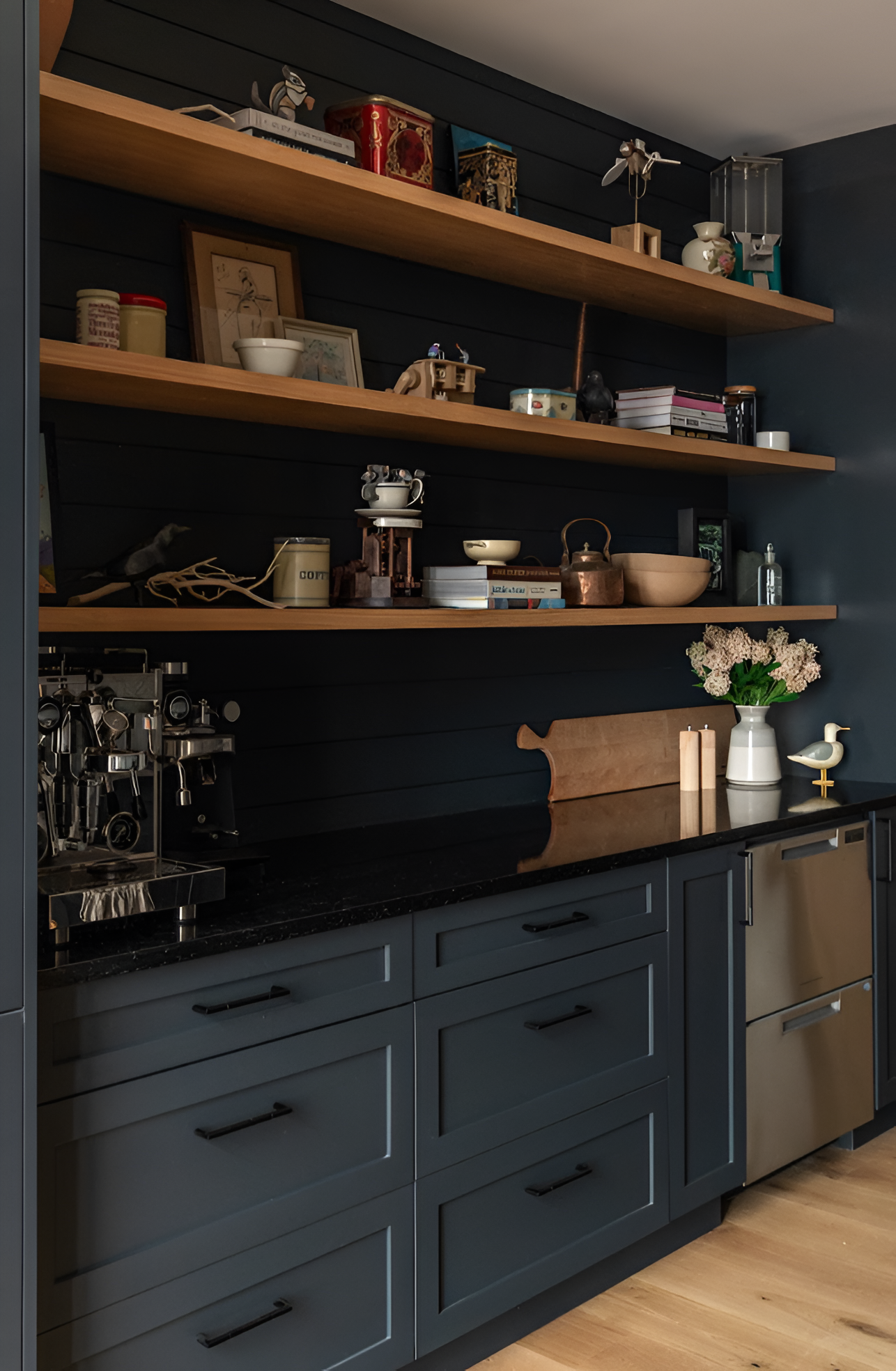
A collected moment captured in this butler's pantry uses collectables to decorate open shelving. A vintage gumball machine, inherited pottery and tin canisters live cohesively with the new millwork.
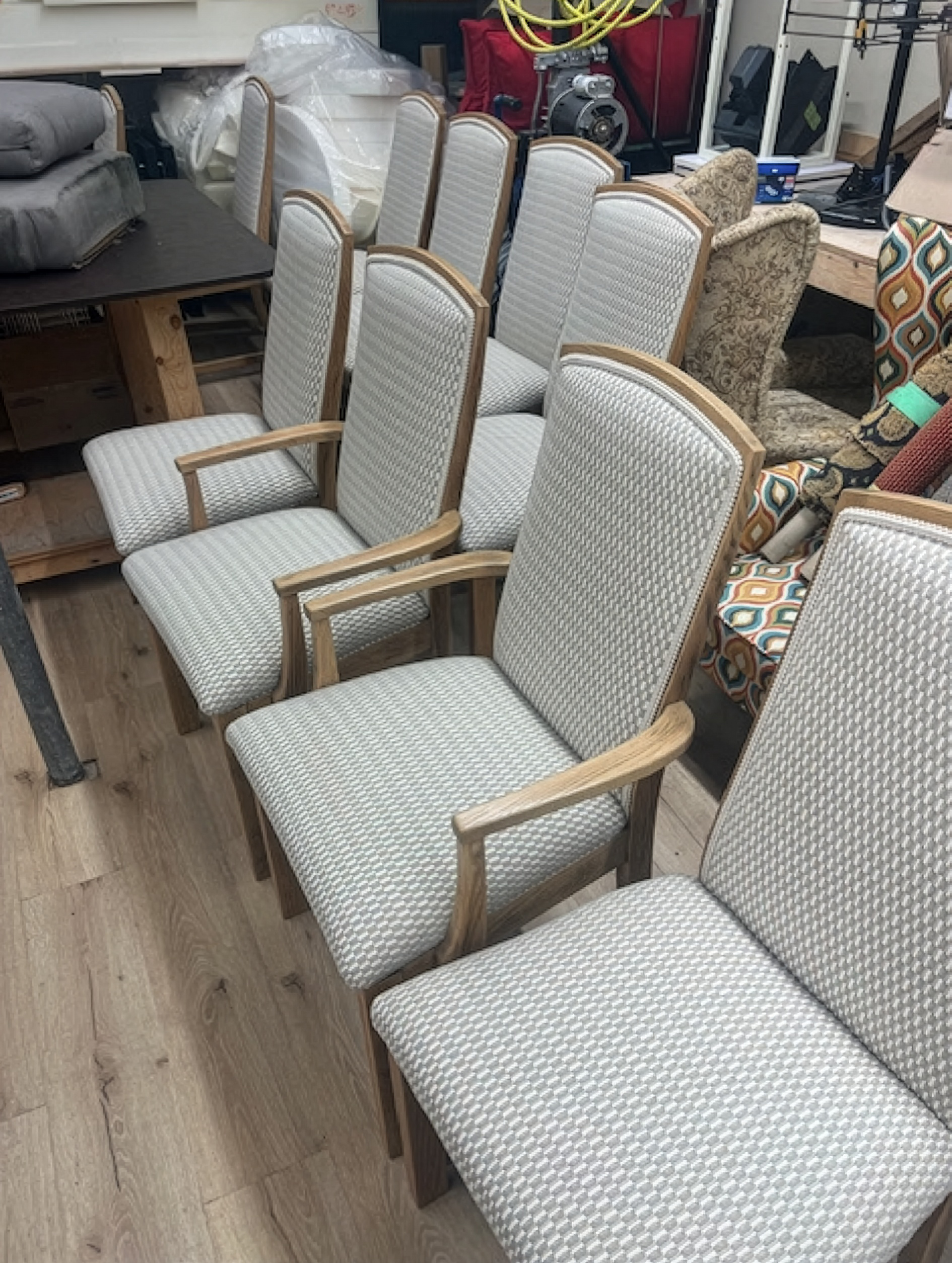
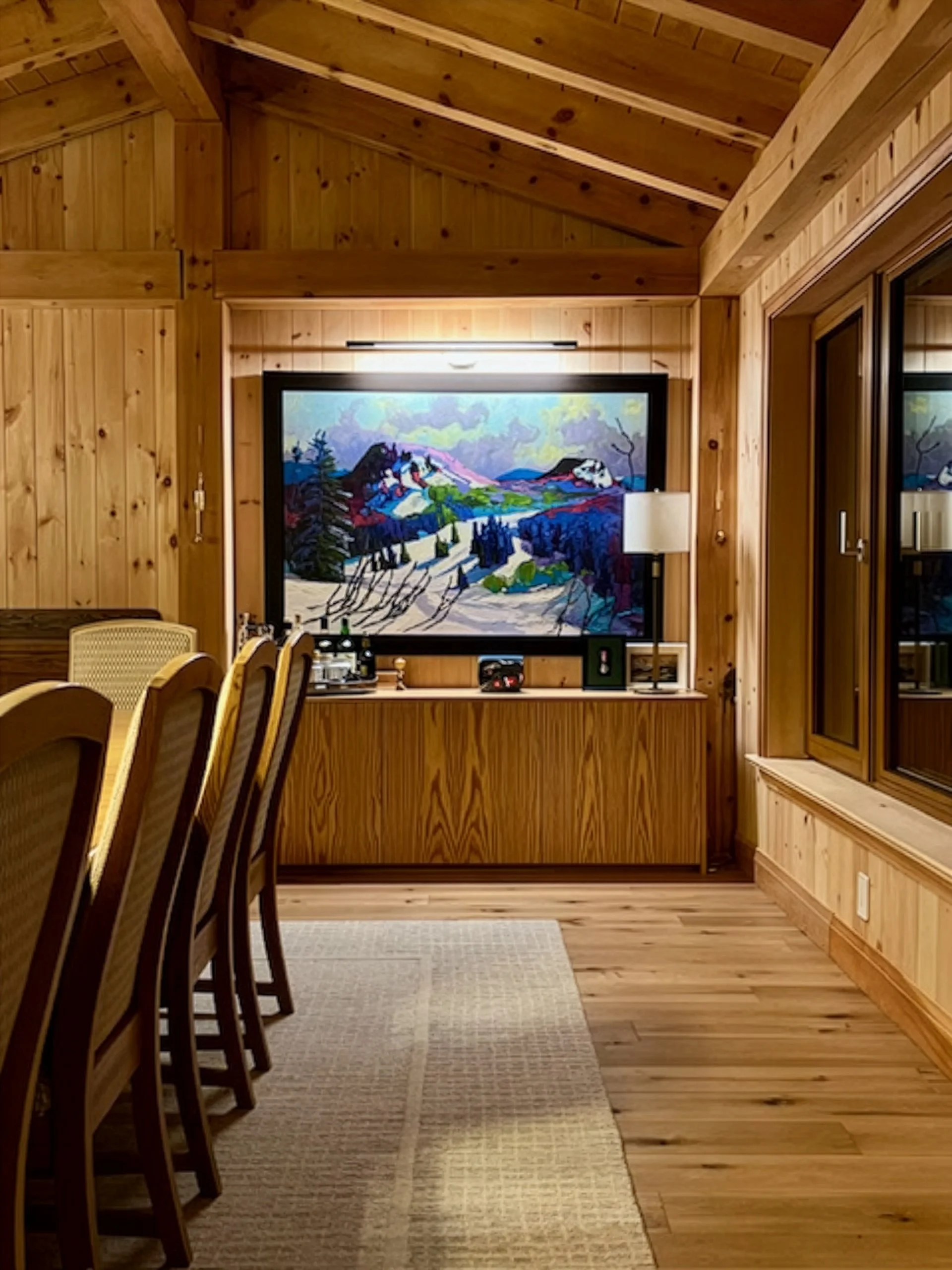
Dining room chairs recovered to hold court in a cottage dining room. Fabric selection is an important part of how I layer the design story onto a room.
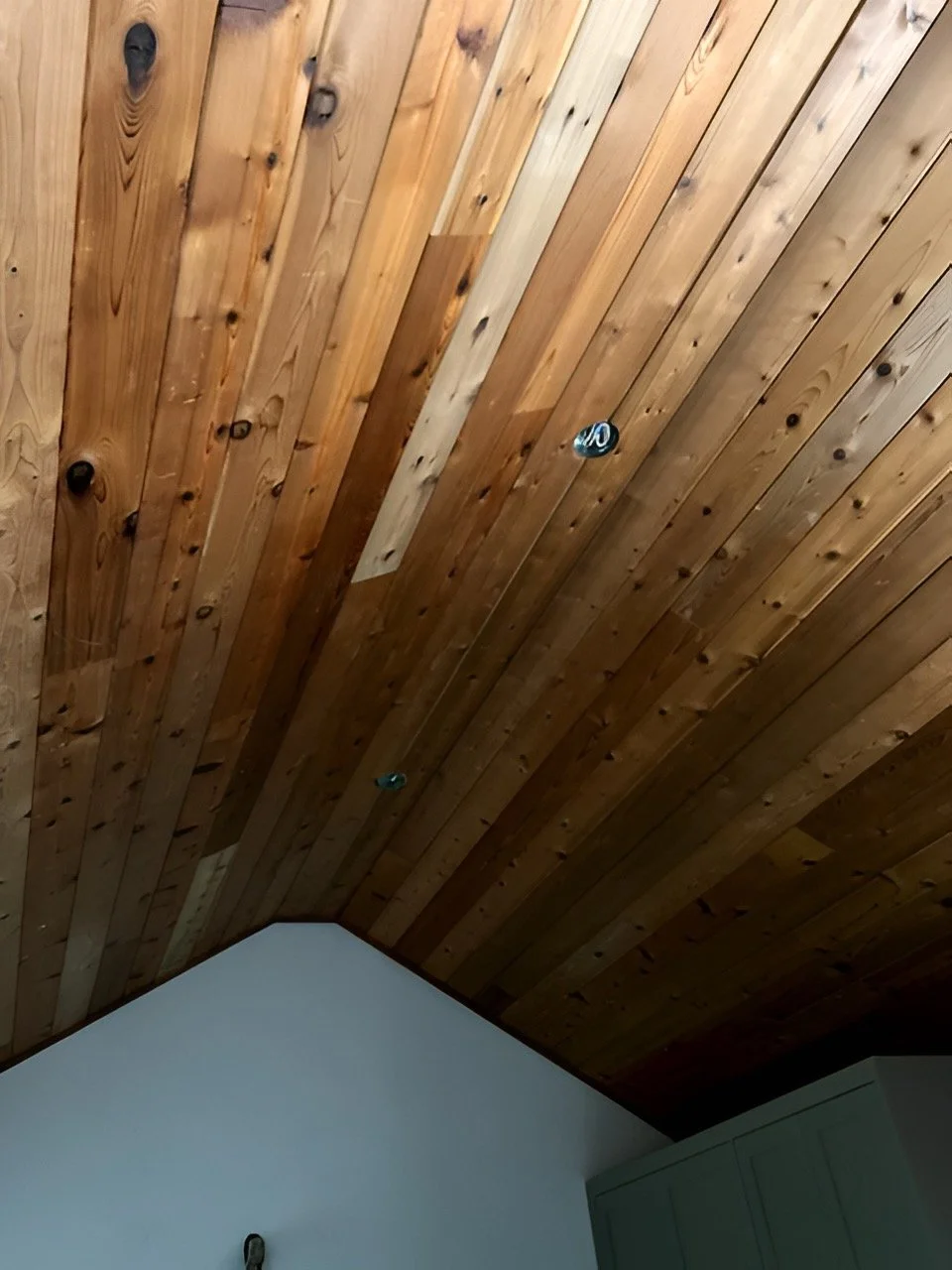
Here is an example of slow design where we re-purposed the cedar from a mudroom to take on new life as a ceiling. This treatment allowed us to maintain that special historical cottage feel but at the same time is a sustainable and practical approach. Slow design is as much about taking your time as it is about re-using something that is already unique and irreplaceable.
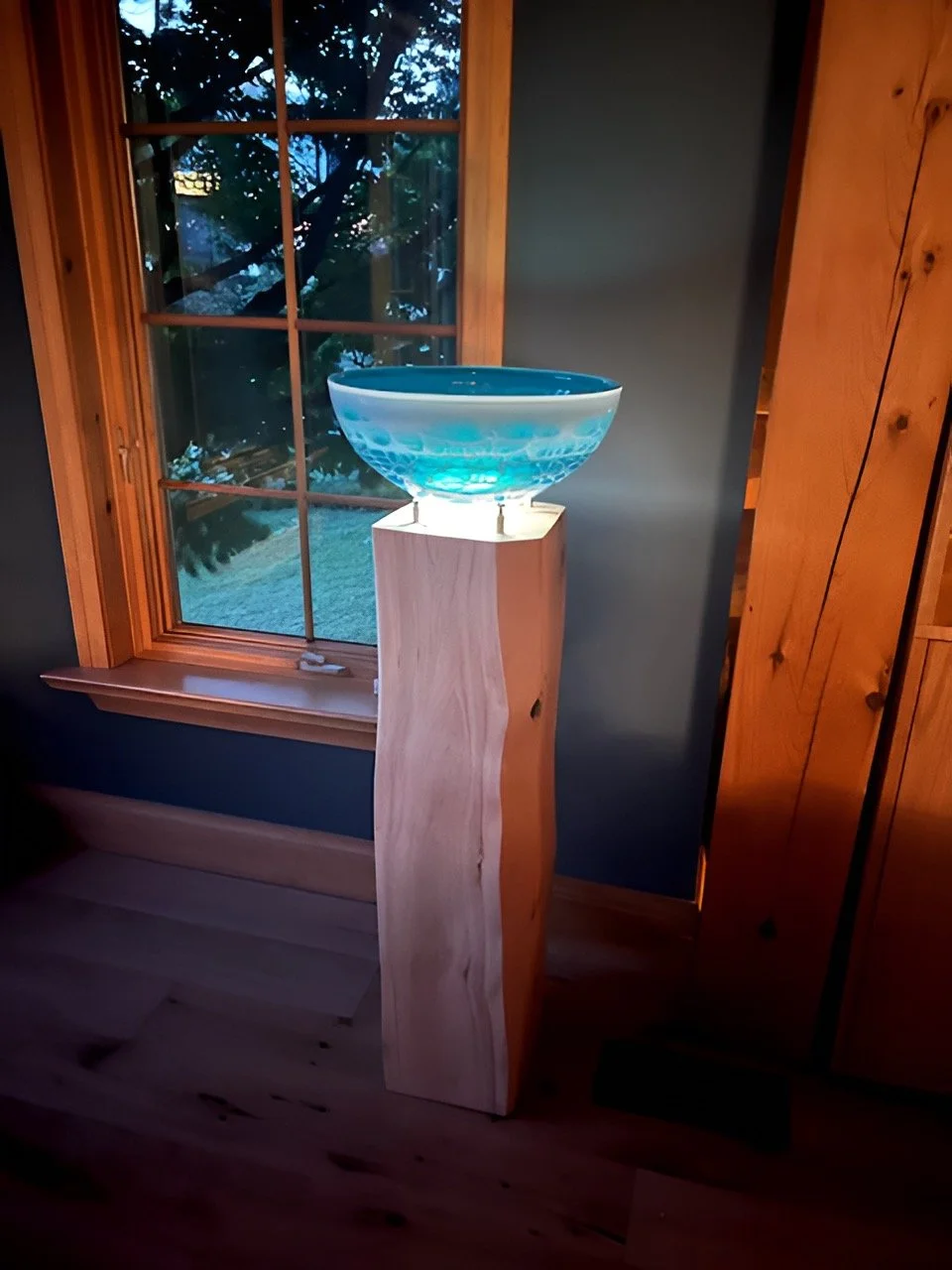
Slow design is also about having something that no one else has! Creating and making are part of that process for not just designers but also for handy and out-of-the-box thinkers. In this case I used a piece of beam to mount this beautiful glass work and installed a light to showcase the artistry and colour this piece lent to this cottage great room.
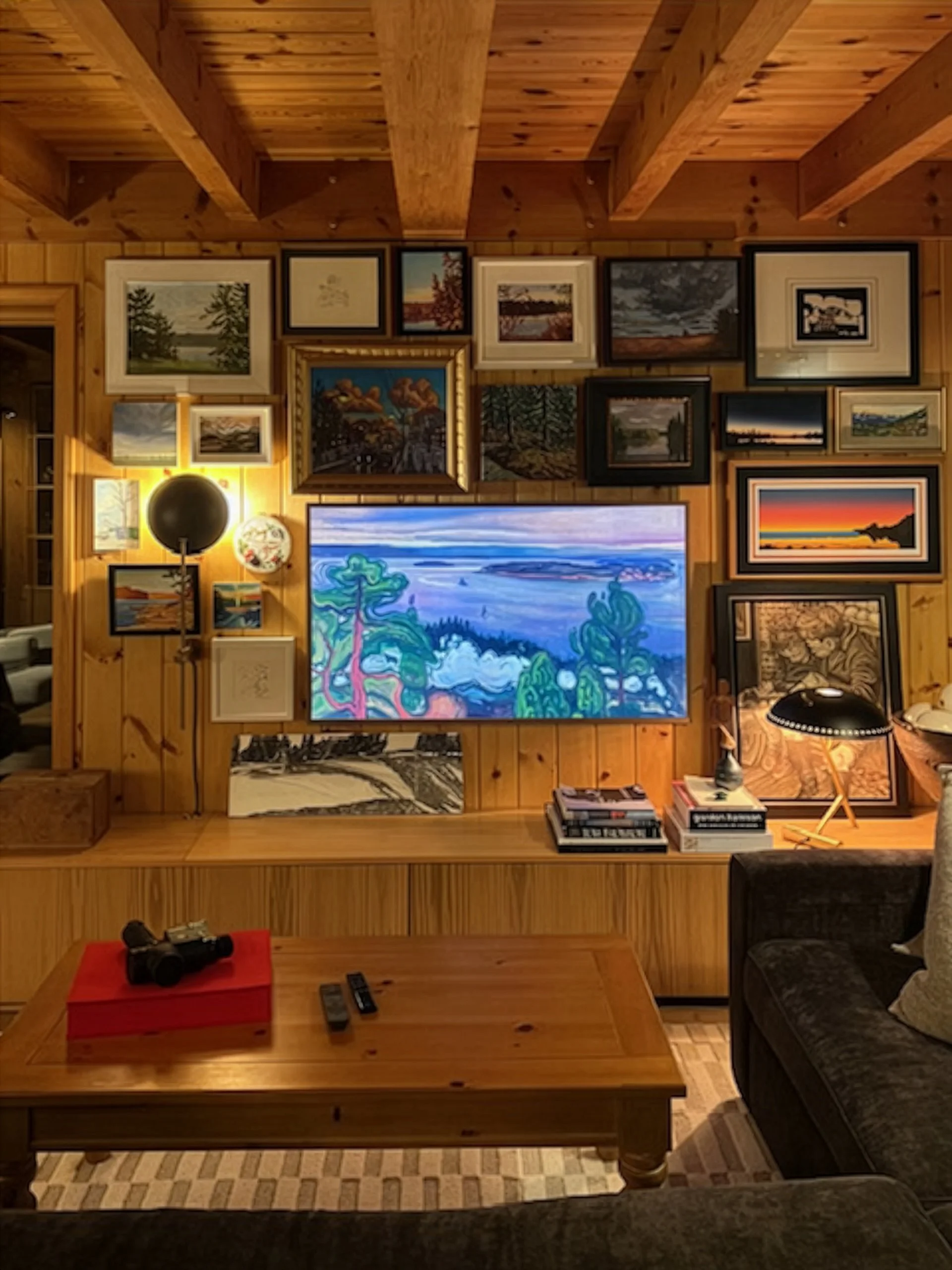
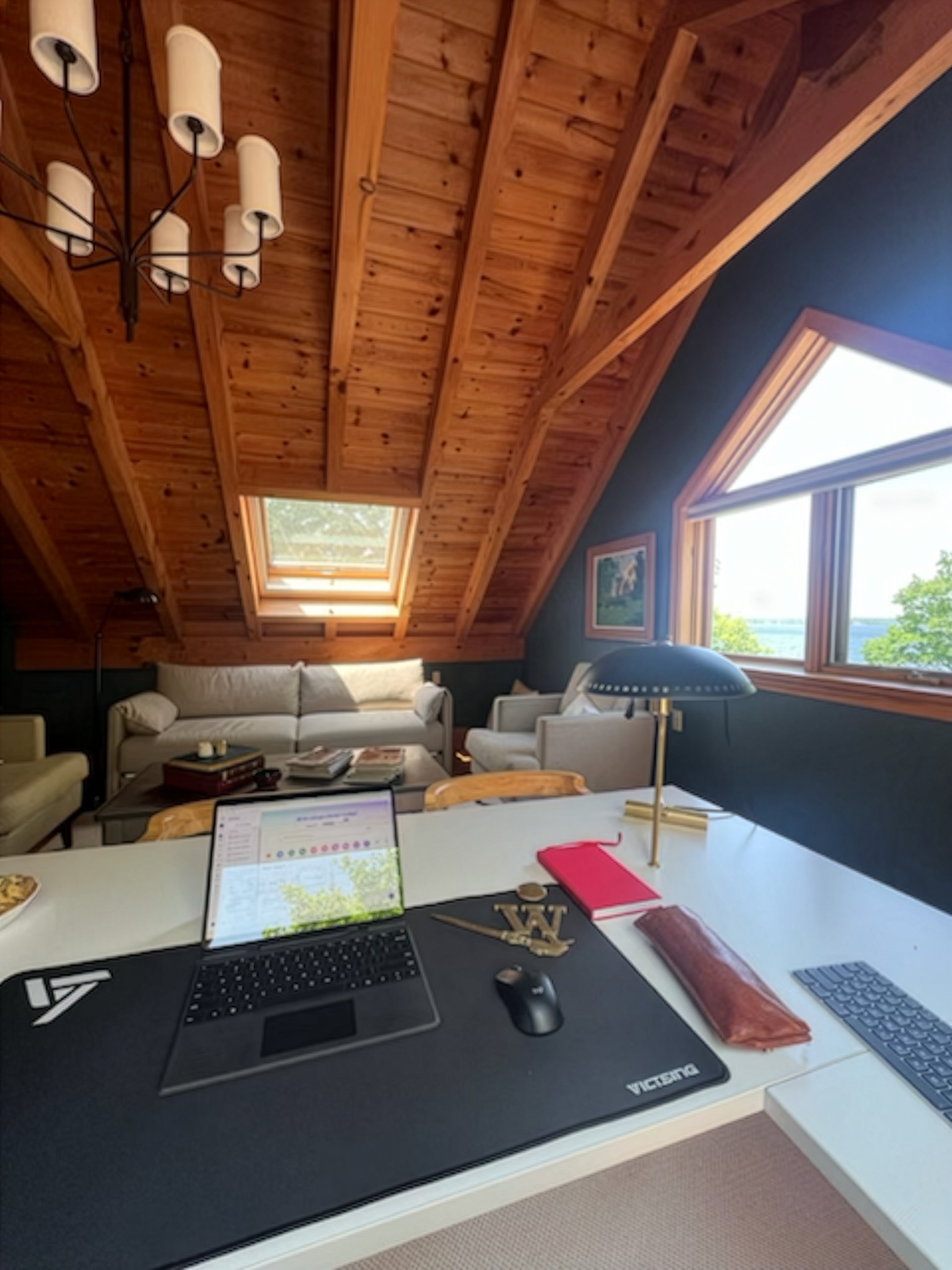
Building a gallery wall is another way to practice slow design in that people often have various pieces that can be grouped together to complete a whimsical and artful display. This Sturgeon Point cottage also uses lighting and books to further emphasize the collection. The home office is another space where personality and special pieces can be displayed to enjoy on a daily basis.
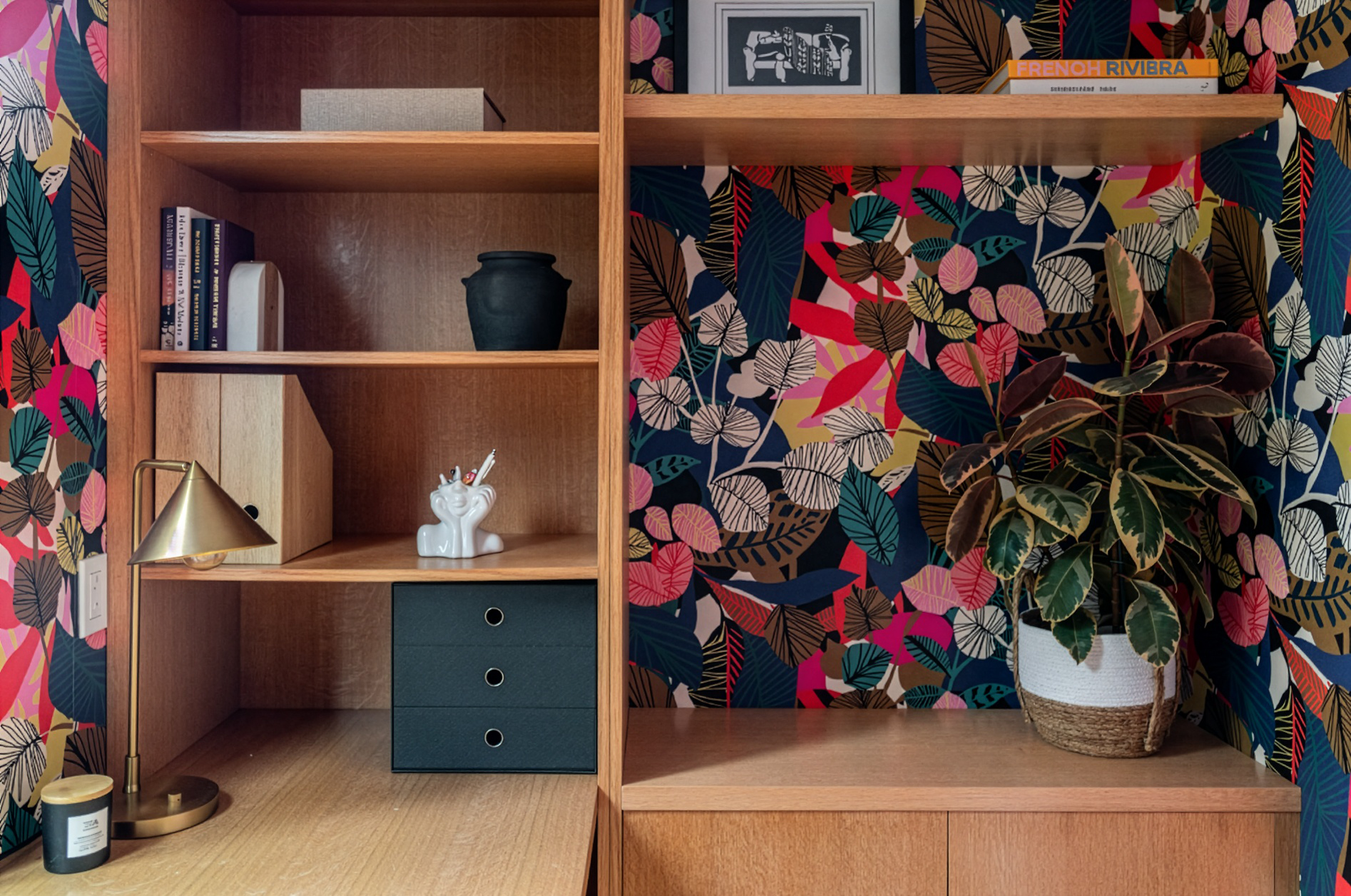
It’s all in the way accessories are displayed that creates uniformity for the eye and effortless at the same time.
Slow interior design is ultimately about crafting a feeling that is layered, personal, and deeply meaningful. It moves away from rushed decisions and trend-driven spaces, focusing instead on intention, storytelling, and thoughtful choices made over time. By valuing quality, emotion, and individuality, slow design creates homes and cottages that feel authentic, lived-in, and truly special. It’s not just about how a space looks but how a home or cottage is meant to be experienced. I strive to bring this level of authenticity and meaning to all of our projects. Designing with slow design in mind can be challenging, as it requires restraint, patience, and a clear vision from the very beginning. Listening to your designer early, especially about the architectural style of your home or cottage is essential, as certain aesthetics naturally support specific design elements; for example, a modern home may not always lend itself to a full collection of antiques without thoughtful balance and intention.
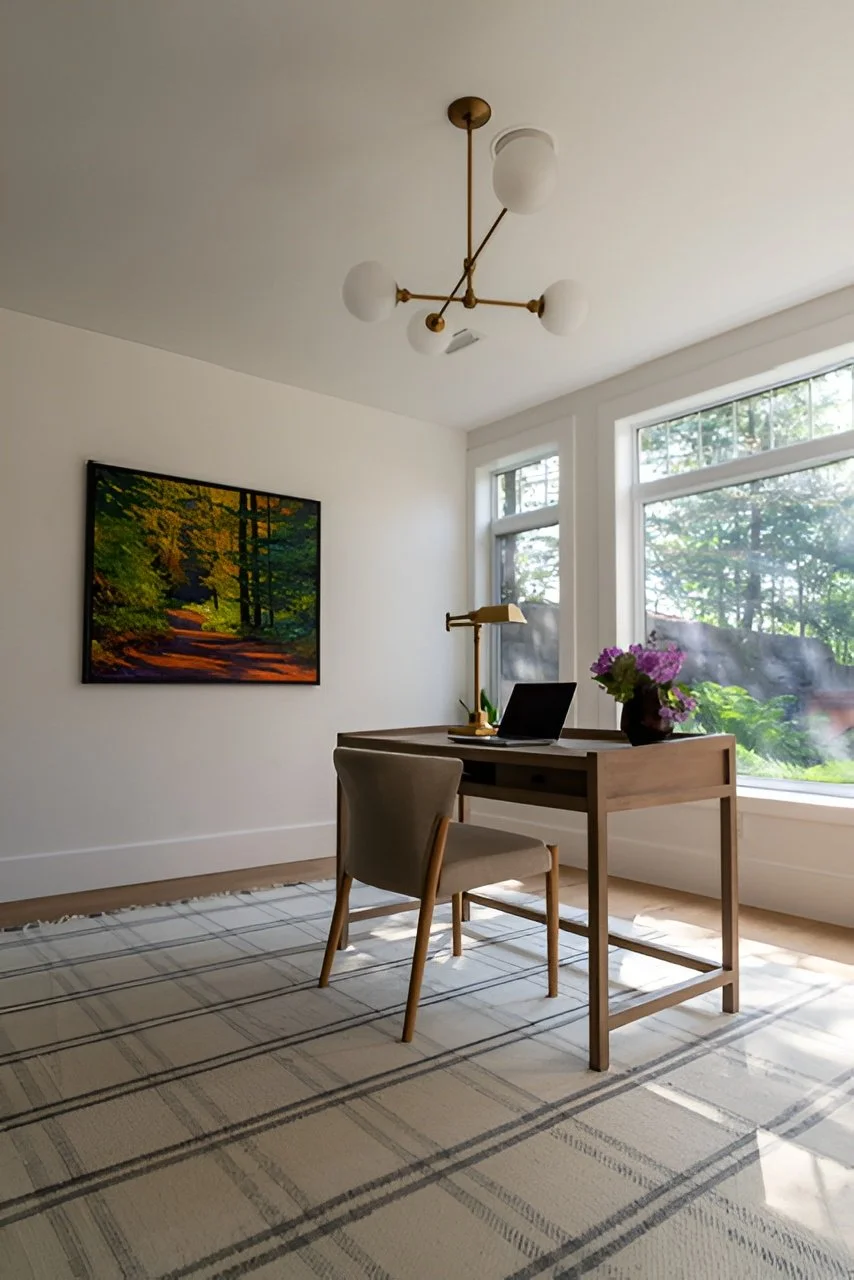
Letting a room breathe means you can add more to it over time. This home office with a view has room to layer on future pieces or can allow the special desk and chair to take centre stage.
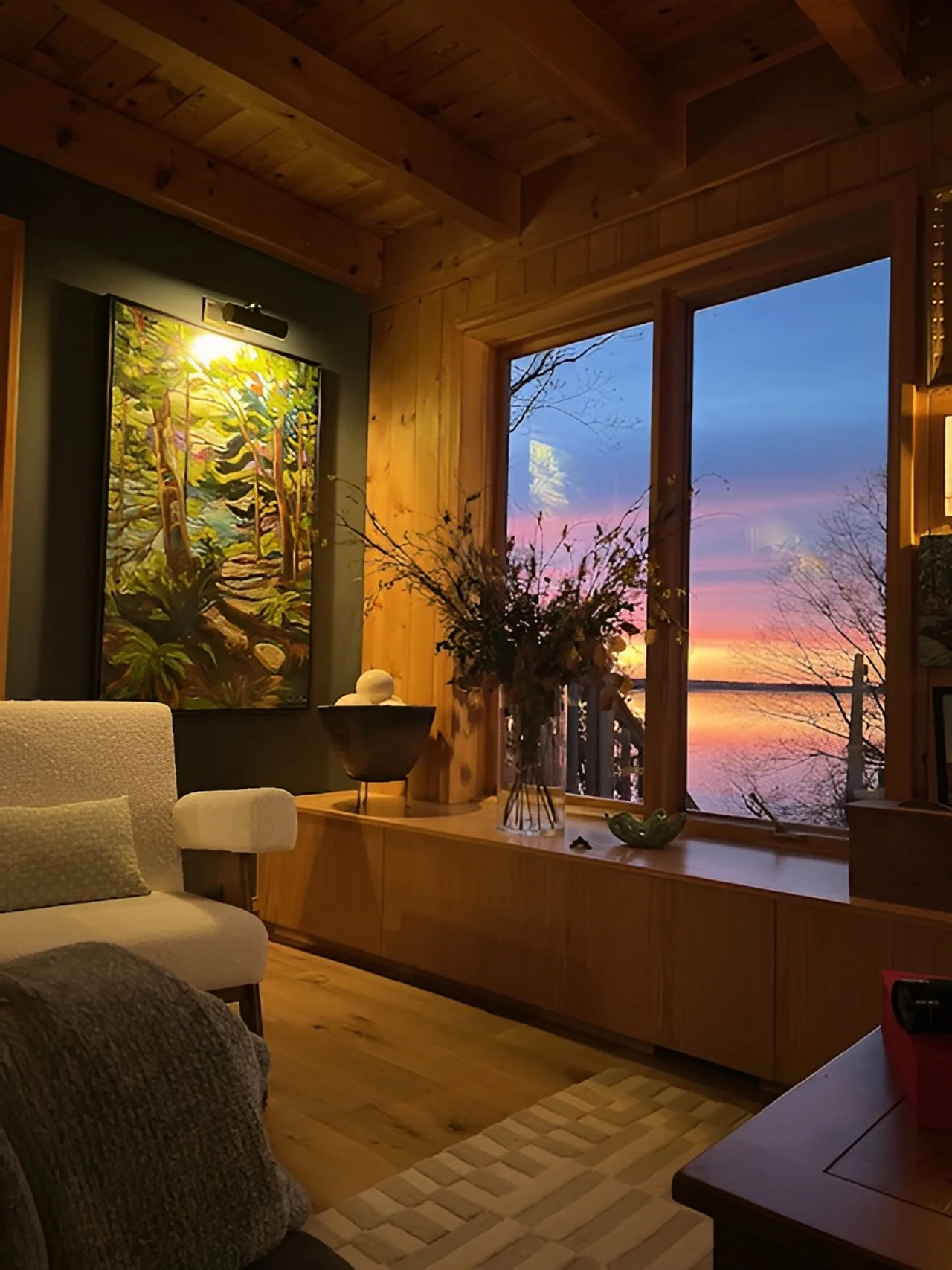
Art with picked greenery creates a slow moment against a vibrant sunset. Selecting a few special pieces to display becomes intentional and allows each item to stand out as a conversation piece.
The rooms we design at Home by Tim + Chris are meant to be experienced, not simply viewed from a distance. They are spaces to move through, gather in, rest, and live within, where light, texture, sound, and comfort all play a role. When a room is designed with experience in mind, it supports everyday moments and emotional connection, making the space feel not only beautiful, but deeply human and inviting.

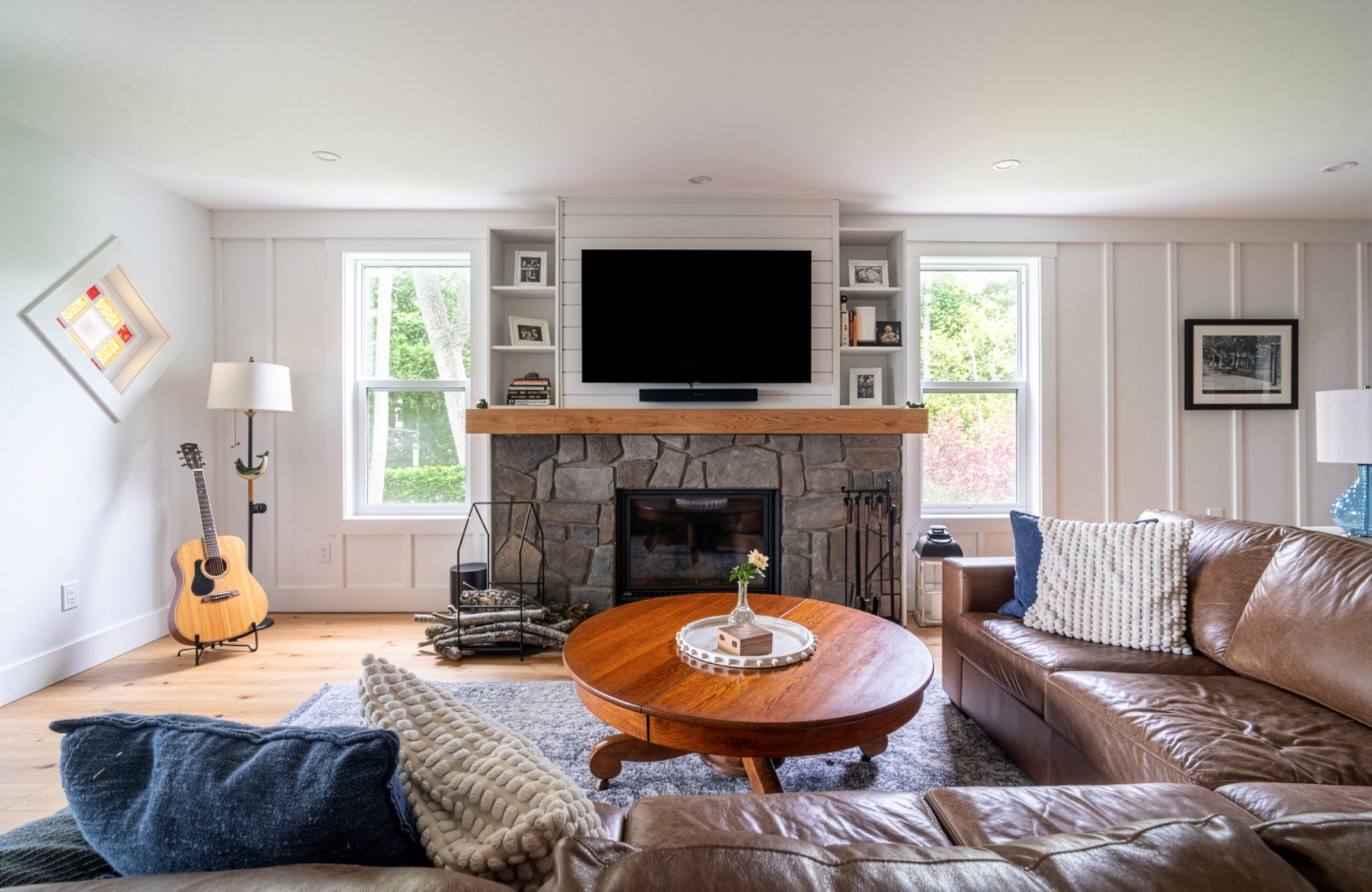
A framed old print of the original cottage to add nostalgia to Corn Cobb, a piece of Sturgeon Point history. The living room allows for frames to be displayed and a few storied pieces to lend the cottage feel.